

Historic Tri-National Nature Reserve Announced Amid Maya Train Controversy
GUATEMALA CITY (AP) — In a landmark move for conservation, the leaders of Mexico, Guatemala, and Belize on Friday announced the creation of a massive tri-national nature reserve aimed at safeguarding the precious Mayan rainforest. This ambitious initiative, however, comes as Mexico continues to press for the expansion of its controversial “Maya Train” project, which environmental groups warn has already inflicted significant ecological damage.
A Monumental Step for Conservation
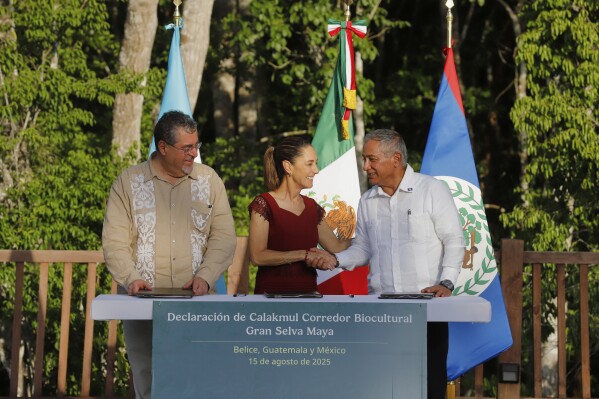
The new nature reserve is envisioned to span an impressive 14 million acres (approximately 5.7 million hectares) across the dense jungle regions of southern Mexico and the northern territories of Guatemala and Belize. Mexican President Claudia Sheinbaum hailed the agreement as “historic,” emphasizing its monumental scale, which she declared would make it the second-largest nature reserve in Latin America, surpassed only by the Amazon rainforest.
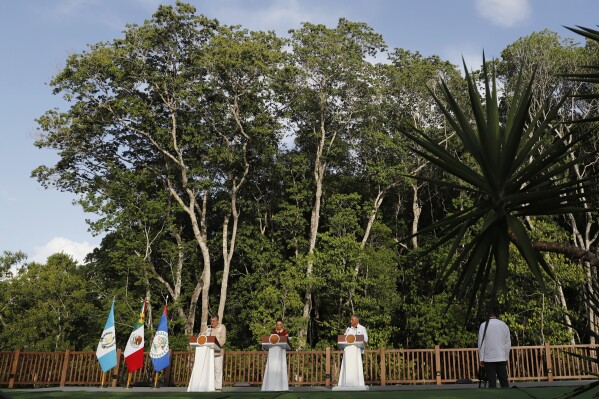
Standing alongside Guatemalan President Bernardo Arévalo and Belize Prime Minister Johnny Briceño, Sheinbaum passionately described the region as “one of Earth’s lungs, a living space for thousands of species with an invaluable cultural legacy that we should preserve with our eyes on the future.”
Environmental Concerns Persist Over Maya Train
While environmental organizations like Mexico-based Selvame cautiously welcomed the announcement as a “monumental step for conservation,” they expressed reservations, hoping the reserve would be more than merely “symbolic.” The group issued a stark warning, stating, “We’re in a race against the clock. Real estate and construction companies are invading the jungle, polluting our ecosystems, and endangering both the water we consume, and the communities that depend on it.” Selvame called for the establishment of a robust and effective monitoring system to actively “stop any destructive activities.”
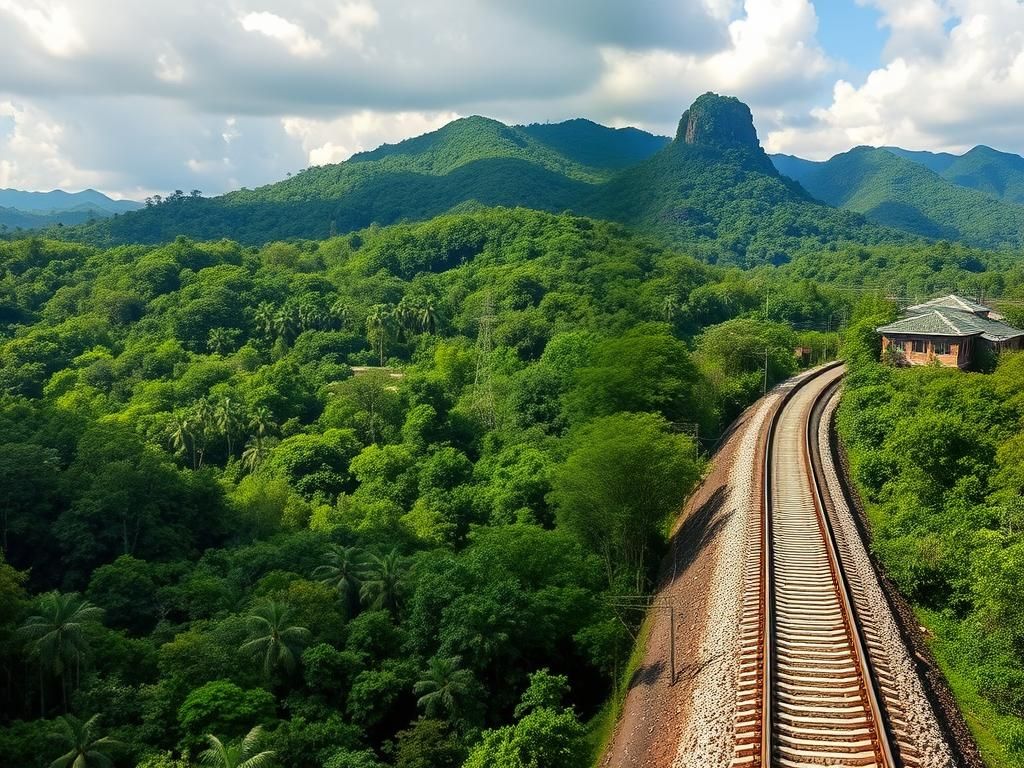
Compounding these environmental concerns, the trilateral meeting also involved discussions on Mexico’s proposal to extend the “Maya Train” railway network into Guatemala and Belize. The existing thousand-mile (approximately 1,600-kilometer) train line, which primarily loops around Mexico’s Yucatan peninsula, was originally conceived to link popular Caribbean tourist destinations with remote jungle areas and ancient Mayan archaeological sites, aiming to spur economic development in underserved rural communities.
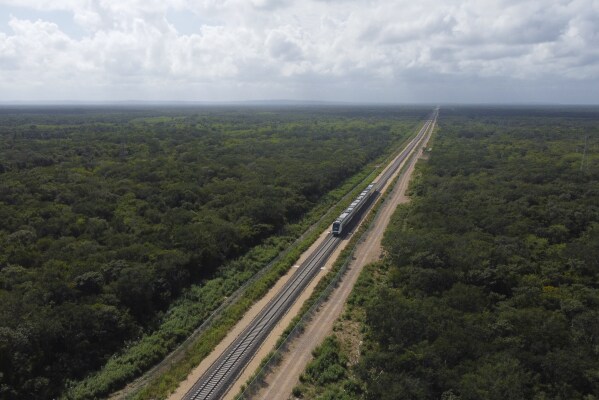
However, the Maya Train has been embroiled in controversy and numerous legal battles due to its significant environmental impact. Over the past four years, government figures indicate approximately 7 million trees have been felled, and delicate cave systems, crucial sources of water for the region, have been severely damaged. Former President Andrés Manuel López Obrador, Sheinbaum’s predecessor and mentor, fast-tracked the project, often proceeding without thorough environmental studies and, at times, publicly dismissing and ignoring judicial orders to halt construction in the face of ecological warnings.
Balancing Development and Preservation
Despite the contentious history, President Sheinbaum has reiterated her commitment to extending the railway, reiterating its potential to bring economic opportunities to remote areas. Guatemalan President Arévalo, however, has maintained a firm stance, publicly stating that Guatemala’s national laws would prohibit the train from traversing protected jungle regions within the country.
On Friday, Arévalo acknowledged the project’s economic promise but underscored his unwavering commitment to preventing the kind of environmental degradation witnessed in Mexico. He indicated that careful environmental studies would be paramount and that the leaders were exploring an alternative route that would loop around, rather than directly cut through, the sensitive jungle habitats of Guatemala and Belize. The exact implications of this proposed expansion on the newly announced protected area remain to be fully clarified.