

Amazon’s $20 Billion AI Bet: Fueling Cloud Growth and Tech Dominance
NEW YORK – Amazon is significantly escalating its investment in artificial intelligence and other advanced technologies, announcing an additional $20 billion in capital spending for 2024. This assertive move, which raises the company’s total projected capital expenditure to $220 billion, comes on the heels of robust second-quarter earnings, largely propelled by a remarkable surge in its Amazon Web Services (AWS) cloud computing division. The Seattle-based e-commerce and tech titan is betting big on its future, signaling an era of intense technological expansion.
Robust Q2 Earnings & AWS Surge
For the fiscal second quarter ending June 30, Amazon reported impressive financial results. Net income soared to $62.65 billion, a substantial increase from $18.16 billion in the same period last year. Net sales climbed to $200.6 billion, up from $167.7 billion a year ago, surpassing analyst expectations of $197.03 billion.
The standout performer was AWS, Amazon’s powerhouse cloud computing unit, which saw sales jump by a remarkable 37% during the April-June period. This acceleration marks the fastest growth rate for AWS in 18 quarters, a significant leap from the 28% clip recorded in the previous quarter, underscoring the escalating global demand for cloud infrastructure. CEO Andy Jassy highlighted that AWS’s AI and chips businesses alone have each eclipsed impressive run rates of more than $25 billion.
The $220 Billion Capital Plan: AI, Robotics, and Beyond
Jassy confirmed to investors that the augmented capital spending plan, now at $220 billion, will primarily fund advancements in AI, alongside investments in robotics, semiconductors, and satellite technology. This figure represents a 10% increase from the $200 billion investment plan announced in February and a substantial rise from the $128 billion spent in all of last year. The CEO attributed the increase largely to the higher cost of crucial memory chips.
Despite this massive outlay, Jassy conveyed an almost insatiable demand, stating, “Even at the $220 billion level, Amazon will not have enough capacity to meet all of the demand it has this year.” He further projected this dynamic to extend into the foreseeable future, adding, “I believe this dynamic will also be true in 2027 too. In fact, the demand we already have for 2028 is striking.”
The AI Arms Race: Amazon’s Position
Amazon’s increased spending provides a crucial insight into the tech industry’s intense race for AI dominance. The company was among the last of the tech giants to report its latest earnings, offering investors a clearer picture of AI and cloud computing growth across the sector.
Google parent Alphabet recently announced a higher full-year capital expenditure forecast, leading to a stock tumble due to investor apprehension about rising costs. In contrast, Microsoft, while reporting strong Azure cloud growth, did not signal a significant increase in its AI investment plans, which helped boost its shares. This divergence highlights a key concern for investors: whether the colossal spending on AI will translate into commensurate productivity gains and profits, or if it will simply eat into cash flows.
E-commerce Innovation and Strategic Partnerships
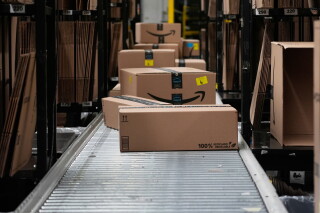
Beyond its cloud and AI ambitions, Amazon continues to innovate in its core e-commerce business. The company reported record delivery speeds for its Prime members in the first half of the year, with 40% more items delivered either same-day or overnight. This focus on speed has been a game-changer, even helping Amazon dethrone Walmart in February as the nation’s largest company by revenue, according to Fortune’s ranking of top U.S. corporations.
Amazon is rapidly expanding its ultrafast delivery network, opening small order processing hubs in dozens of U.S. and international cities to facilitate 30-minute deliveries for everyday necessities. Furthermore, its online pharmacy service saw a doubling of new customers and nearly a five-fold increase in same-day prescription deliveries in the first six months. The company also strategically moved its annual Prime Day sale event to June from July this year.
In April, Amazon forged significant partnerships with leading AI companies, including OpenAI, Anthropic, and Meta. Notably, the “major expansion” of its collaboration with ChatGPT maker OpenAI came just a day after OpenAI signaled a loosening of its ties with longtime supporter Microsoft, indicating Amazon’s aggressive push into the AI ecosystem.
However, Amazon is not immune to broader economic headwinds. The company is currently navigating higher tariff costs stemming from former President Donald Trump’s foreign trade policies, and rising global oil prices, exacerbated by conflicts like the Iran war, are contributing to increased shipping costs that could impact its e-commerce revenue.
Outlook and Investor Confidence
Despite the strong second-quarter performance and ambitious investment plans, Amazon offered a cautious sales outlook for the current quarter, projecting net sales in the range of $197 billion to $202 billion, slightly below analysts’ expectations of $203.9 billion.
Nevertheless, the company’s shares rose more than 9% in after-hours trading following the earnings announcement, reflecting investor confidence in its long-term strategy and robust growth engines.