

Late-Night TV in Turmoil: A Shifting Audience, Deeply Divided
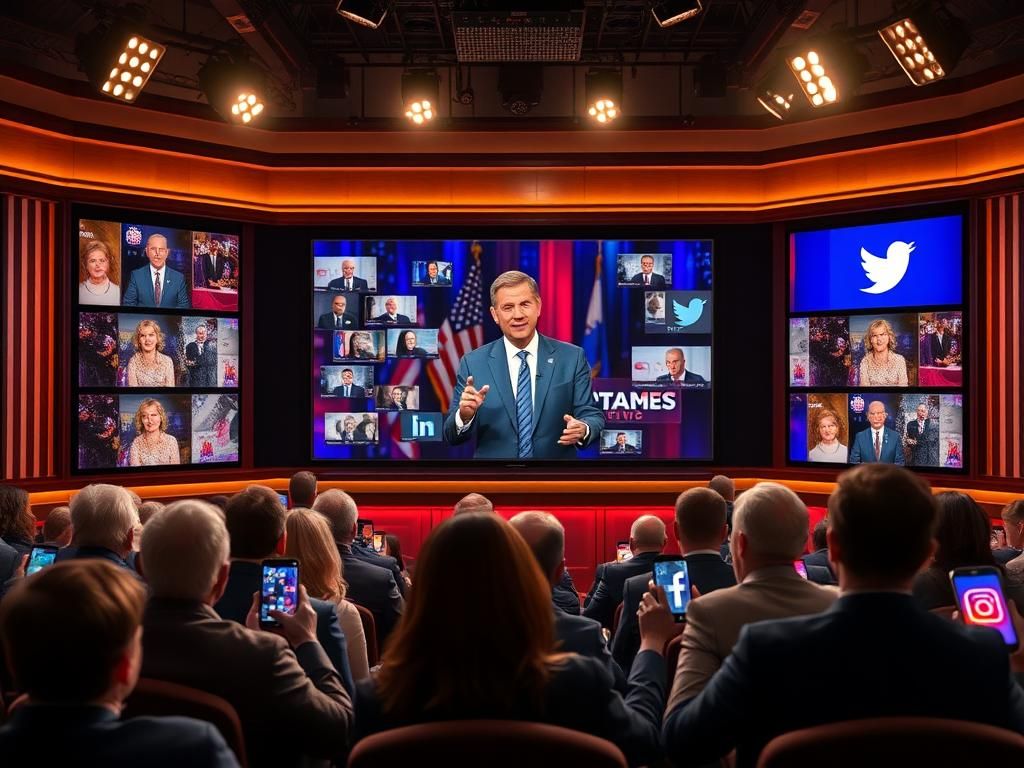
WASHINGTON (AP) — Late-night television, long a staple of American entertainment, is navigating a turbulent era marked by significant public scrutiny, evolving viewer habits, and pointed political debates. A new national poll reveals that while most Americans have largely tuned out traditional broadcasts, the dedicated audience that remains is overwhelmingly Democratic, deeply engaged, and increasingly consuming content through digital clips.
Conducted by The Associated Press-NORC Center for Public Affairs Research from August 21-25, the survey of 1,182 adults offers a snapshot of late-night viewership at a pivotal moment. The poll arrived in the wake of heightened controversy surrounding shows like ABC’s “Jimmy Kimmel Live!”, which faced a temporary suspension, and ongoing public discourse fueled by political figures, including former President Donald Trump, who publicly celebrated Kimmel’s suspension and called for other hosts to be fired. Adding to the pressure, the head of the Federal Communications Commission, Brendan Carr, has voiced intentions to address what he terms “liberal bias” within broadcast networks. Beyond political pressures, the genre also grapples with profound economic challenges and an audience increasingly fragmented by a myriad of streaming options.
A Shrinking Audience, Politically Defined
The poll found that only about one-quarter (25%) of Americans regularly make late-night talk or variety shows a monthly routine. This demographic, however, exhibits a distinct partisan lean: nearly half of Democrats (approximately 47%) report watching late-night clips at least once a month in the past year. In stark contrast, only about a quarter of Republicans (25%) and independents (25%) report similar monthly engagement with online clips. The disparity extends to full program viewership, with roughly one-third of Democrats (33%) tuning in monthly, compared to about 20% of Republicans and independents.
Follow-up interviews illuminated the reasons behind this partisan divide. Many Republicans expressed a sense of alienation, citing a perceived shift in the shows’ tone.
Cyndi Christner, a 70-year-old Republican from Michigan, articulated a common sentiment among those who have stepped away from late-night. “When I watch a late-night show, I would like to be entertained, and they just got ugly,” she explained. Christner believes that recent comedy segments lack a “universal” appeal, feeling less like genuine humor and more like “just political hacks trying to keep a small minority audience.” For her, the “bottom line” is that the shows “got ugly, and it wasn’t entertaining anymore.”
Conversely, Richard Zamorano, a 66-year-old moderate Democrat, voiced his alarm over recent events, including Kimmel’s suspension and the broader political rhetoric targeting late-night hosts. While not a regular viewer of entire programs, Zamorano enjoys tuning in for specific segments like Jimmy Fallon’s monologues or recording shows for later viewing. He cherishes comedians’ historical role in satirizing presidents and fears that political pressure could stifle this tradition. “If these guys aren’t careful what they say, we’re going to lose all of the late-night broadcasting,” Zamorano lamented, adding, “I don’t recognize my country.”
The Rise of the Clip Culture
The survey underscores a broader transformation in how audiences engage with late-night content. While approximately half of U.S. adults have watched all or most of a late-night show at some point in the past year, consistent full program viewership is dwindling. The more prevalent consumption method is through short-form content: around 60% of U.S. adults have watched clips from late-night shows in the past year, indicating a clear preference for curated highlights over full episodes.
This “clip culture” is particularly pronounced among younger demographics. Seven in ten Americans under the age of 30 reported watching late-night clips in the past year, significantly higher than the 56% of Americans aged 60 or older. Interestingly, no significant age differences were observed for those who watch entire late-night programs.
John Burns, an independent from Oregon, represents many who appreciate the commentary but struggle with live viewing. He respects hosts like Stephen Colbert, admiring his comedic style and praising his writers as “masterful.” Burns expressed concern about the potential loss of these critical, humorous voices. “I just hate to lose the voices that represent so many of us. They’re doing it in a humorous way,” he stated. “We have to be able to laugh at ourselves, so I just feel like, in losing that, we’re losing a part of what makes America America.”
Ben Majetich, a 61-year-old Republican from Washington, reflected on the golden age of late-night with hosts like Johnny Carson, Jay Leno, and David Letterman, recalling a time when the shows offered “entertainment and escapism.” He believes the genre has since devolved into “partisan attacks” that are “slanted one direction,” “critical and biting,” and possess “an undercurrent of almost viciousness.” Majetich urged caution, emphasizing the responsibility of public figures like Kimmel to be mindful of their words. While acknowledging the need for presidents to focus on governance rather than social media commentary on TV hosts, he remains hopeful for a future where late-night returns to its “nonpartisan” roots of entertainment, rather than pushing a specific message.
The AP-NORC poll of 1,182 adults was conducted from August 21-25, 2024, using a sample drawn from NORC’s probability-based AmeriSpeak Panel, designed to be representative of the U.S. population. The margin of sampling error for adults overall is plus or minus 3.8 percentage points.