


Russia Cuts Key Rate to Boost War-Strained Economy
BY DAVID MCHUGH
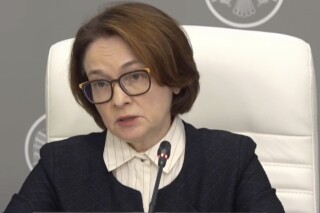
Russia’s central bank announced Friday a one percentage point cut to its benchmark interest rate, bringing it down to 17%. This strategic move is intended to bolster an economy showing signs of strain under the weight of the protracted war in Ukraine, which has now spanned three and a half years.
Initial Rate Hikes and Business Discontent
The decision comes after the central bank had aggressively hiked the key rate to an unprecedented 21% in the initial phases of the conflict to combat soaring inflation. However, growing discontent from business leaders and legislators regarding the stifling effect on economic activity appears to have prompted this reversal.
Inflationary Concerns Persist
Despite the rate reduction, the central bank’s accompanying policy statements underscored persistent inflationary concerns. While inflation eased slightly in July and August, it remains elevated at 8.2%. The bank explicitly warned that “inflation expectations have not changed considerably in recent months” and “remain elevated,” potentially hindering a sustained slowdown in price increases.
Economic Tensions: Monetary Policy vs. Fiscal Spending
This tension highlights a core friction within the Russian economy. On one side, the central bank endeavors to curb inflation through monetary policy. On the other, the finance ministry is actively injecting substantial funds into the economy, primarily through lucrative defense orders and military recruitment bonuses aimed at sustaining its war effort. These government expenditures have inadvertently fueled both economic growth and inflationary pressures.
Slowing Economic Growth
Economic indicators reflect a noticeable deceleration. Year-over-year growth slowed to 1.1% in the second quarter, a significant drop from 1.4% in the first quarter and a robust 4.5% at the end of the previous year. More tellingly, when compared to the preceding quarter, the second quarter registered a negative 0.6% growth, signaling a sharper loss of economic momentum.
Fiscal Health Under Pressure
The nation’s fiscal health is also under pressure. The budget deficit swelled to 4.9 trillion rubles (approximately $58 billion) during the January-July period, a dramatic increase from 1.1 trillion rubles in the same period last year. Data from the Kyiv School of Economics reveals that government spending reached 129% of the planned amount. Concurrently, vital oil and gas revenues plummeted by 19% compared to the previous year, partly due to fluctuations in global oil prices.
Surprising Resilience Amidst Sanctions
Remarkably, despite stringent international sanctions that have curtailed foreign investment in key industries and significantly reduced natural gas exports to Europe, the Russian economy has demonstrated a surprising resilience. Unemployment rates have hit record lows, household incomes are on an upward trajectory, and military recruitment bonuses have injected much-needed cash into less affluent regions. Furthermore, critical oil shipments have remained consistent even amidst fluctuating global prices.
Financing the Deficit
To finance its growing deficit, the Russian government has effectively sold ruble-denominated bonds to domestic banks. These financial institutions have shown a readiness to purchase these bonds, anticipating that the central bank will continue to ease interest rates in the future.