


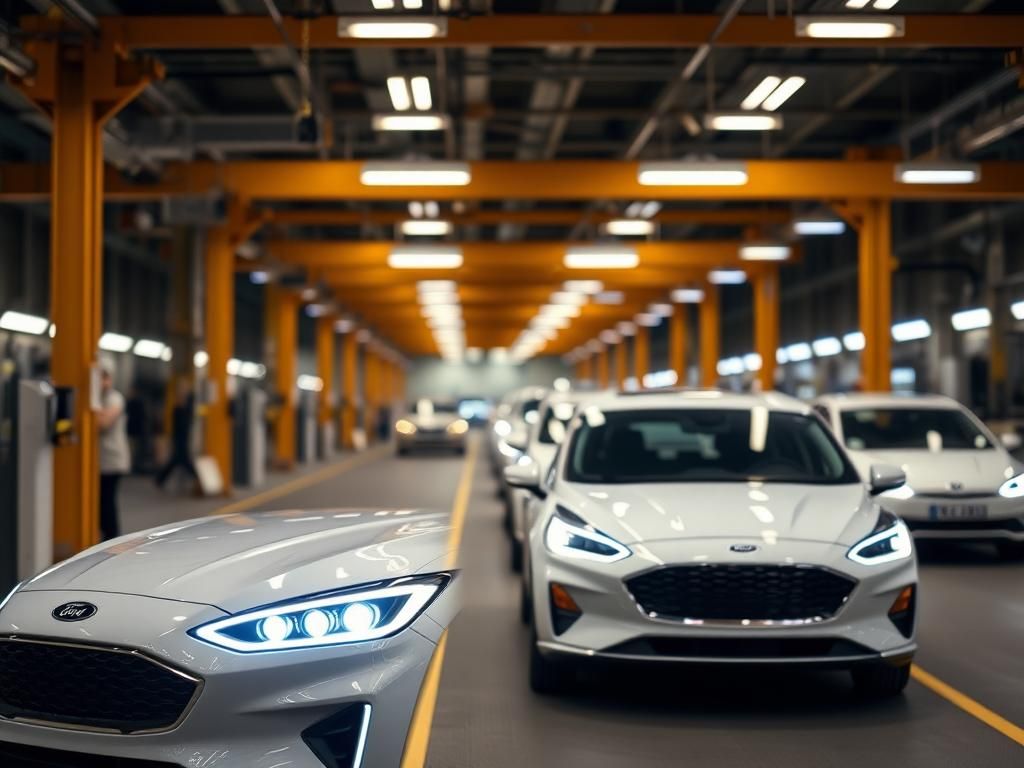
Ford Cuts 1,000 Jobs in Germany Amid Sluggish European EV Demand
FRANKFURT, Germany (AP) — Ford Motor Co. announced Tuesday its decision to reduce up to 1,000 jobs at its electric vehicle (EV) manufacturing plant in Cologne, Germany. This move comes as a direct response to significantly lower-than-expected demand for battery-powered cars across Europe, marking a strategic adjustment for the automaker as the continent’s ambitious shift to electrification encounters unexpected challenges.
Job Reductions at Cologne EV Center
The job cuts at the Cologne facility are primarily slated to be achieved through voluntary departures and buyout packages. This plant is currently undergoing a transformative €2 billion (approximately $2.2 billion) investment to become the “Cologne Electric Vehicle Center,” Ford’s pioneering dedicated EV production site in Europe. This initiative follows a broader restructuring plan unveiled in November 2024, which outlined intentions to reduce Ford’s European and UK workforce by 4,000 positions, with 2,900 of those impacting operations in Germany.
Ford confirmed that the Cologne plant, responsible for producing the all-electric Explorer SUV and a new sports crossover, will transition from a two-shift daily operation to a single shift starting in January. The company stated, “In Europe, the demand for electric cars is significantly below industry forecasts,” highlighting the critical need to adjust production volumes to align with prevailing market realities.
European EV Market Faces Headwinds
Despite an overarching upward trend in EV adoption, the pace of growth has been slower than initially anticipated. Data from the European Automobile Manufacturers’ Association indicates that electric vehicles accounted for 15.6% of the European market share through July of the current year, an increase from 12.5% during the same period last year. However, this growth has not met the ambitious projections set forth by the industry.
A significant contributing factor to this slowdown, particularly within the crucial German market, has been the withdrawal of government purchase subsidies. These incentives previously played a key role in encouraging consumers to transition to electric models, and their absence has demonstrably impacted demand.
Ford’s Commitment Amidst Challenges
For the first seven months of the year, Ford sold 260,000 vehicles of all types across Europe, representing a modest 0.7% increase, and successfully maintained its market share at 3.3%. While Ford remains steadfast in its long-term “Model e” electrification strategy, which targets 100% electric passenger vehicle sales in Europe by 2030, these recent job cuts underscore the immediate challenges posed by a fluctuating market and an evolving consumer landscape.


