


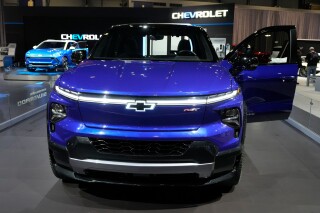
General Motors Faces $6 Billion Charge Amidst EV Sales Slowdown and Policy Shifts
DETROIT – General Motors (GM) is set to record approximately $6 billion in charges during its fourth fiscal quarter, a significant financial hit stemming from a slowdown in electric vehicle (EV) sales. This setback follows the U.S. government’s decision to cut critical tax incentives for EV purchases and ease auto emissions standards, prompting the Detroit automaker to reassess its ambitious electrification strategy.
The announcement sent GM’s shares sliding almost 3% on Friday, reflecting investor concern over the challenging landscape for electric vehicles. This latest charge builds on a previous $1.6 billion impairment that GM disclosed in October for the preceding quarter, indicating a growing financial strain as the industry navigates a complex transition.
Understanding the $6 Billion Financial Hit
GM’s filing with the Securities and Exchange Commission (SEC) detailed the $6 billion in charges, which includes roughly $1.8 billion in non-cash impairments and other non-cash charges. The bulk, approximately $4.2 billion, is attributed to supplier commercial settlements, contract cancellation fees, and various other related charges.
Factors Driving the EV Slowdown
A major contributing factor to the sputtering EV sales was the expiration of federal tax credits in September. Previously, these incentives offered up to $7,500 for new electric vehicles and as much as $4,000 for used ones, significantly lowering the entry cost for consumers. The simultaneous easing of auto emissions standards by the U.S. government has also reduced regulatory pressure on automakers to rapidly shift away from internal combustion engine vehicles.
GM’s Ambitious Electrification Vision Under Scrutiny
Just a few years ago, GM was at the forefront of the U.S. auto industry’s electrification push. In 2020, the company pledged a substantial investment of $27 billion into electric and autonomous vehicles over five years, representing a 35% increase from its pre-pandemic plans. GM had projected that over half of its factories in North America and China would be capable of producing EVs by 2030, and aimed to invest nearly $750 million more in EV charging networks by 2025. The ultimate goal was to transition the vast majority of its vehicles to electric by 2035, with the entire company achieving carbon neutrality five years later, by 2040.
The Evolving Global EV Landscape
However, these ambitious timelines have been shaken by the pronounced differences in economic and environmental policies across successive U.S. administrations. Meanwhile, the global EV market continues to evolve rapidly. China, in particular, has emerged as a dominant force in electric vehicle technology, boasting extensive manufacturing capabilities and a burgeoning charging infrastructure. This shift in the global landscape was underscored recently when China’s BYD dethroned Tesla as the world’s largest EV automaker, producing an impressive 2.26 million electric vehicles last year, compared to Tesla’s reported figures.
Conclusion
General Motors’ substantial financial charges highlight the complex and often volatile nature of the electric vehicle transition. While automakers initially charged ahead with ambitious electrification plans, shifts in government incentives and a rapidly evolving global market are forcing a strategic re-evaluation. The challenges faced by GM underscore the need for adaptability and robust long-term planning in an industry undergoing profound transformation.