


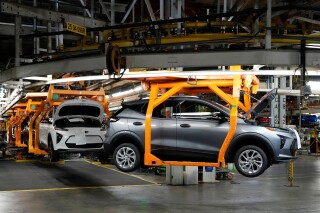
Michigan’s Automotive Heartland at a Crossroads: A Call to Action
Michigan, the historic heartland of American automaking, finds its colossal $348 billion automotive industry at a precipice. A new, urgent report from MichAuto, the statewide industry advocacy group, warns that the state faces a “critical time” in the sector’s history, demanding decisive action to safeguard its economic bedrock. “We are at an inflection point like we’ve never seen before,” declared Glenn Stevens, executive director of MichAuto, underscoring the necessity for immediate change to protect the industry that underpins 20% of Michigan’s jobs and generates an $83 billion annual payroll.
Seismic Shifts Threaten Michigan’s Automotive Dominance
The automotive landscape is undergoing a seismic transformation, presenting Michigan with multifaceted threats. Globally, the industry is racing towards electrification, a shift where China is “advancing at an astounding rate” and “attempting to dominate.” Domestically, southern U.S. states are aggressively cultivating a “battery belt,” actively luring automakers and their crucial suppliers, including those traditionally rooted in Michigan.
Adding to these external pressures are significant internal shifts. The past year saw the industry grappling with fluctuating tariff policies and evolving fuel economy standards. A notable pivot came in December when Ford Motor Co., a foundational pillar of Michigan’s auto sector, announced a staggering $19 billion hit to redirect its electric vehicle (EV) capacity towards gas-powered vehicles, simultaneously integrating new energy storage systems into its remaining EV battery lineup. This move, reflective of broader industry adjustments to federal changes and market forces, highlights the volatile nature of the transition.
Beyond Legacy: The Urgent Need for Innovation
The MichAuto report, deliberately shifting from its typical data updates to a stark “call to action,” emphasizes that Michigan can no longer rely on its storied automotive legacy. The rise of automation and the digital economy necessitates a strategic elevation of innovation to foster job creation and economic growth. This alarm echoes concerns from other prominent state analyses. The Detroit Regional Chamber has pointed to the need for a stronger education system, while Business Leaders for Michigan’s November 2026 “Michigan in a New Era” roadmap painted a concerning picture:
- Michigan ranks 50th nationally in household income growth over the past 25 years.
- High-wage professional jobs in the state have seen flat growth over two decades, starkly contrasting with a 35% national increase.
- The state plummeted from 16th to 44th in fourth-grade reading proficiency over a 30-year span.
- Michigan grapples with one of the nation’s highest chronic school absenteeism rates.
Furthermore, University of Michigan economists warned in November that Michigan is likely to miss out on projected national job growth in 2026, primarily due to an aging workforce and stagnant population growth.
MichAuto’s Roadmap: Strategies for a Resilient Future
To counter these formidable challenges, MichAuto’s forthcoming roadmap, set for launch over 2026, will outline critical strategies across policy, economic development, and talent attraction. A central tenet is the imperative to “double down on the research and development part of the industry.” Michigan currently leads the nation in privately funded auto R&D, a significant asset that Stevens believes must be leveraged more effectively. Innovation hubs, such as the Ford and state-funded Michigan Central, are envisioned to play a much larger role, fostering not only automotive advancements but also supporting diversified sectors like the life sciences.
Key Recommendations from MichAuto:
- Prioritizing Workforce Development: This includes reversing funding cuts to crucial training programs like “Going PRO,” boosting the number of bachelor’s degrees, and establishing robust pipelines to replace an aging workforce.
- Improving the Business Climate: Implementing strategic tax and regulatory reforms to enhance the state’s competitiveness for automotive investments.
- Establishing Sustainable Economic Development Incentives: Acknowledging past controversies, such as the 2025 legislative decision to defund the $2 billion Strategic Outreach and Attraction Reserve (SOAR) Fund, MichAuto stresses the need for reliable, long-term incentive programs.
- Supporting Industry Transition: Providing targeted assistance to companies and workers to adapt to rapidly evolving technologies, advanced manufacturing processes, and new skill requirements, thereby retaining vital auto jobs within the state.
The Road Ahead: A Pivotal Moment for Michigan
While federal tariff policies in 2025 yielded a slightly positive, albeit uncertain, impact on the auto sector, and light vehicle production is expected to increase by 2.7% with new vehicle prices climbing 6.6% (an average increase of about $3,100 per vehicle, from November’s average of $49,814), Michigan’s vulnerability remains clear. The Detroit Three’s (General Motors, Ford, and Stellantis) share of U.S. light vehicle sales dipped from 36.1% in 2023 to 34.2% in 2024, though U-M economists project a reversal in 2026 due to new federal policies.
The collective message from industry leaders and economists is unequivocal: Michigan stands at a pivotal moment. The decisions made and actions taken in the coming years will determine whether the state not only retains its historical automotive leadership but also secures a prosperous economic future amidst a rapidly changing global industry. The call to innovate, adapt, and strategically invest has never been more urgent.