

France Re-appoints Sebastien Lecornu Amidst Deep Political Turmoil
In a dramatic twist to France’s ongoing political turmoil, President Emmanuel Macron on Friday re-appointed Sebastien Lecornu as prime minister, just days after Lecornu’s abrupt resignation. The move comes as Macron, facing a second term until 2027 increasingly mired in gridlock, seeks to navigate France through mounting economic challenges and a profound governmental instability that has alarmed both domestic and European observers.
Lecornu’s Abrupt Return and Renewed Mission
Lecornu’s re-appointment on Friday night, announced in a terse one-sentence statement from Macron’s office, followed intense negotiations and a whirlwind week in French politics. His initial resignation on Monday, a mere hours after he had unveiled a new cabinet, plunged the nation deeper into crisis, driven by infighting and opposition from a key coalition partner. Macron had pledged on Wednesday to name a successor within 48 hours, ultimately turning back to Lecornu in a desperate bid to form a stable government and deliver a crucial national budget by year-end.
Accepting his renewed mandate “out of duty,” Lecornu articulated his mission to “do everything to give France a budget by the end of the year and respond to the daily problems of our compatriots.” He also declared that any future cabinet members would need to renounce ambitions for the 2027 presidential election, signaling a desire for unity and focus, stating the new cabinet would “incarnate renewal and a diversity of skills.” Lecornu emphasized the urgency of ending “this political crisis that exasperates the French, and to this bad instability for France’s image and its interests.”
The Roots of Political Deadlock
The political deadlock stems directly from Macron’s audacious decision in June 2024 to dissolve the National Assembly. The subsequent snap elections resulted in a hung parliament, leaving Macron’s centrist bloc without a clear majority in the 577-seat chamber. This lack of stable parliamentary support has crippled Macron’s agenda, leading to successive minority governments collapsing in quick succession and stalling efforts to address critical national issues.
Mounting Economic Pressures
Economically, France is grappling with significant headwinds. The nation’s public debt surged to 3.346 trillion euros ($3.9 trillion) by the end of the first quarter of 2025, representing a staggering 114% of gross domestic product. Compounding these fiscal woes, France’s poverty rate hit 15.4% in 2023, its highest level since records began in 1996. These escalating financial and social pressures are generating considerable anxiety among financial markets, international ratings agencies, and the European Commission, all of whom are pressing France to adhere to EU debt limitations.
Lecornu’s Fraught Path Forward
Lecornu’s path forward remains fraught with difficulty. He must now painstakingly forge compromises to avert an immediate vote of no confidence from the National Assembly. A particularly contentious hurdle is the widely unpopular pension reform, enacted in 2023 without a parliamentary vote despite widespread protests, which gradually raises the retirement age from 62 to 64. Opposition parties are united in their demand for its repeal, and Lecornu may find himself compelled to abandon this signature Macron policy.
Opposition Remains Skeptical
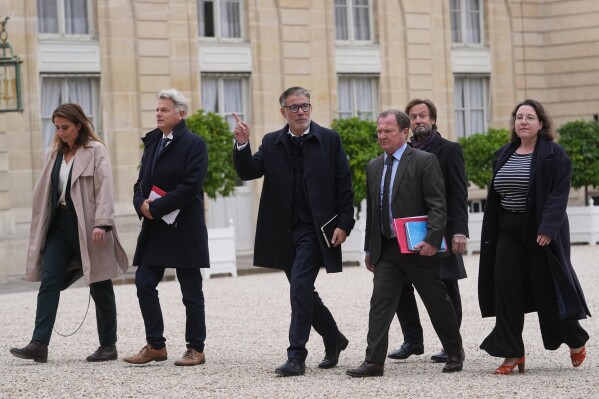
Opposition leaders remain skeptical of Macron’s strategy. Green Party leader Marine Tondelier expressed a sentiment shared by many, stating, “How can one expect that all this will end well? The impression we get is that the more alone he is, the more rigid he becomes.” Notably, the two largest opposition factions, the far-right National Rally (which advocates for fresh legislative elections) and the far-left France Unbowed party (which calls for Macron’s resignation), were conspicuously absent from Friday’s discussions with the President.
A Glimmer of Hope?
Despite the formidable obstacles, Lecornu maintains a glimmer of hope, arguing that a functional government could still be assembled through collaboration between Macron’s centrist bloc, its allies, and amenable segments of the opposition. “There’s a majority that can govern,” he affirmed. “I feel that a path is still possible. It is difficult.” However, the repeated failures to establish a stable government underscore the deep political and personal rivalries that continue to hobble France at a critical juncture.