

China’s Vision for a New Global Order: Xi Jinping Unveils Ambitious SCO Plans
TIANJIN, China – Chinese President Xi Jinping recently unveiled a comprehensive vision for an expanded and more influential Shanghai Cooperation Organization (SCO), signaling a concerted effort to challenge the existing U.S.-led international framework. Speaking at the annual summit in Tianjin, Xi announced plans to fast-track the establishment of a development bank, launch an international platform for energy cooperation, and pledged a substantial $1.4 billion in loans to member states over the next three years.
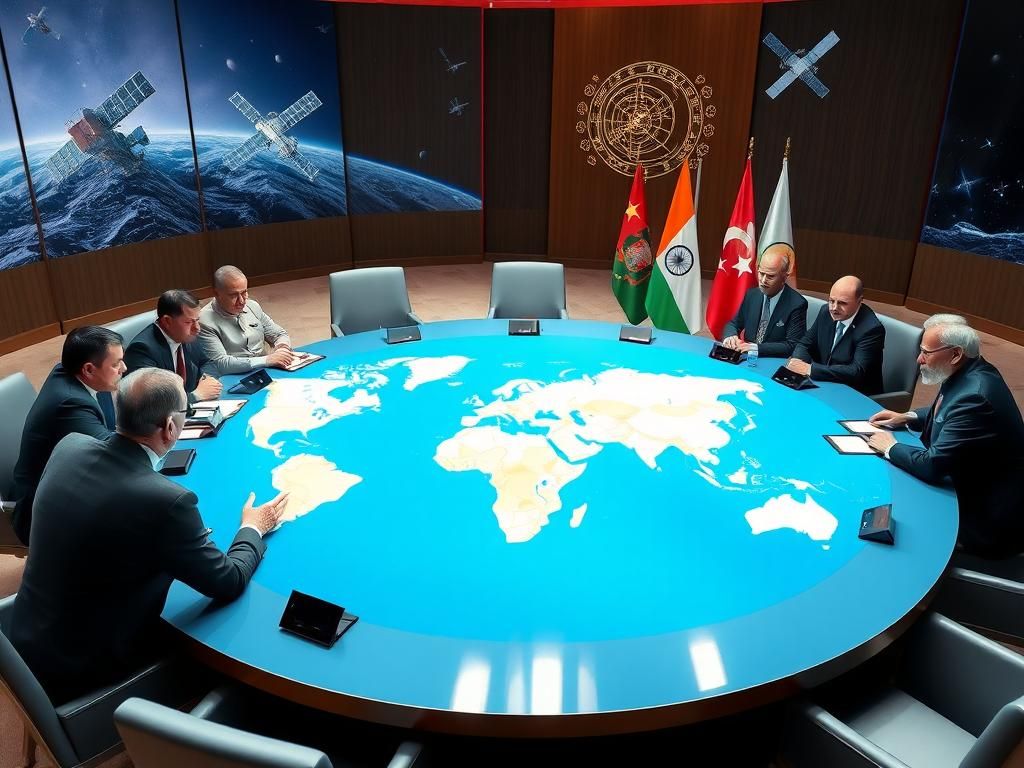
The high-stakes gathering brought together key global figures, including Russian President Vladimir Putin and Indian Prime Minister Narendra Modi. Their presence underscored the SCO’s growing prominence as a geopolitical bloc, initially conceived in 2001 to counter U.S. influence in Central Asia, now evolving into a broader forum for economic and political alignment.
Forging an Alternative Global System
At the core of Xi’s address was a call for a new, multipolar world order that rejects “Cold War mentality,” rival power blocs, and unilateral “bullying.” He asserted that the world is at a “new crossroads,” requiring a more “just and balanced global governance system” centered on the United Nations. Echoing this sentiment, President Putin expressed strong support for Xi’s initiatives, emphasizing the SCO’s potential to assume a “leading role” in shaping a more equitable global system.
Beyond financial pledges, China is also extending its technological reach. Xi announced that member states would gain access to China’s BeiDou satellite system, offering a strategic alternative to the U.S.-controlled Global Positioning System (GPS) and further cementing the organization’s independence in critical infrastructure.
Alfred Wu, a professor at the National University of Singapore’s Lee Kuan Yew School of Public Policy, highlighted the strategic intent behind China’s moves: “Xi is seeking to provide an alternate world order, because the U.S.-led world order is very much in decline.”
Expanding Influence and Membership
The SCO has significantly expanded its footprint since its inception. What began with six founding members now boasts 10 full members, including major powers like China, Russia, India, Iran, and Pakistan, alongside Kazakhstan, Kyrgyzstan, Belarus, Tajikistan, and Uzbekistan. Additionally, Afghanistan and Mongolia hold observer status, and 14 other nations, including several from the Middle East, participate as “dialogue partners.” The recent inclusion of Laos as a partner brings the combined strength of the group to 27 nations, demonstrating its widening appeal.
Key Bilateral Engagements and Economic Diplomacy
The summit provided a platform for crucial bilateral discussions. President Xi met with Prime Minister Modi, where both leaders committed to resolving a long-standing border dispute that had strained relations since 2020. President Putin, who arrived on Sunday, is also scheduled to attend a military parade in Beijing commemorating the 80th anniversary of Japan’s World War II surrender. Notably, North Korean leader Kim Jong Un and Myanmar’s military government leader, Senior Gen. Min Aung Hlaing, are also expected to be present at the parade.
Ahead of the summit, Putin also held discussions with Xi, updating him on recent Russia-U.S. talks regarding the Ukraine conflict held last month in Alaska. In an interview with China’s Xinhua news agency, Putin criticized “discriminatory sanctions” that impede global socioeconomic development and advocated for reforms to the International Monetary Fund and World Bank, urging an end to “the use of finance as an instrument of neocolonialism.”
Security Focus Under Scrutiny
Historically, the SCO has prioritized security, particularly in combating “terrorism, separatism, and extremism.” However, this focus has drawn criticism. Derek Grossman, a professor of international relations at the University of Southern California, suggested that the organization’s “anti-terrorism exercises are more about countering threats to authoritarian regimes rather than countering terrorism in its own right.” This perspective is often cited in discussions surrounding Beijing’s 2018 detention of over 1 million Uyghurs, Kazakhs, and other largely Muslim minorities in what China described as vocational training centers aimed at combating extremism.
Despite ongoing debates about its ultimate effectiveness, the SCO summit underscored a clear trend: China’s assertive diplomatic push to reshape global governance. As Grossman observed, “China is on a diplomatic uptick and the U.S. is self destructing,” highlighting a pivotal moment in the shifting landscape of international power dynamics.