


Controversial $1.2 Billion Contract for Immigrant Detention Facility Raises Alarm
WASHINGTON (AP) — A colossal $1.2 billion contract awarded by President Donald Trump’s administration to establish what is slated to become the nation’s largest immigration detention complex has ignited a firestorm of questions and concerns, centering on the remarkably small and seemingly inexperienced Virginia company chosen for the monumental task. Acquisition Logistics LLC, a firm with no public track record of managing correctional facilities and whose largest previous federal contract barely reached $16 million, has been entrusted with building and operating a vast tent camp at Fort Bliss in west Texas.

The secrecy surrounding the award to Acquisition Logistics LLC has only intensified since the facility, dubbed Camp East Montana, began admitting its first detainees last week. Both the Pentagon and the Department of Homeland Security have remained tight-lipped, refusing to release the contract or explain why this particular company was selected over more than a dozen other bidders. This opaque process has already prompted a formal complaint from at least one competitor, Texas-based Gemini Tech Services, which alleges Acquisition Logistics lacks the necessary experience and resources.
A Small Company, A Massive Undertaking
Acquisition Logistics LLC, a company that operates without a functioning public website, lists its headquarters at a modest suburban home in Virginia owned by Ken A. Wagner, a 77-year-old retired Navy flight officer and its president and CEO. Attempts to reach Wagner for comment have been unsuccessful, and property records confirm his ownership of the listed address. Federal records indicate the company’s past endeavors include repairing small boats for the Air Force, providing information technology support to the Defense Department, and constructing temporary offices for immigration enforcement – none of which suggest the scale or specialized nature of managing a large-scale detention center.
Legal experts in federal contracting, like attorney Joshua Schnell, expressed significant unease. “The lack of transparency about this contract leads to legitimate questions about why the Army would award such a large contract to a company without a website or any other publicly available information demonstrating its ability to perform such a complicated project,” Schnell stated.
Driving Trump’s Mass Deportation Agenda
This secretive and rapid contracting process is seen by experts as a clear indicator of the government’s urgent drive to fulfill President Trump’s ambitious pledge to arrest and deport an estimated 10 million migrants residing in the U.S. without permanent legal status. As part of this escalated enforcement, the administration is increasingly leveraging military resources for tasks traditionally handled by civilian agencies.
The new detention facility, Camp East Montana, is located on a 60-acre site within Fort Bliss, nestled in the Chihuahuan Desert. This region is notoriously harsh, with summertime temperatures frequently soaring above 100 degrees Fahrenheit, contributing to common heat-related fatalities. Its proximity to the U.S.-Mexico border and the El Paso International Airport, a crucial hub for deportation flights, underscores its strategic importance to the administration’s immigration agenda.
Echoes of Past Controversies and Concerns
The camp has drawn immediate comparisons to “Alligator Alcatraz,” a $245 million tent complex in the Florida Everglades previously used to house ICE detainees. That facility faced extensive complaints regarding unsanitary conditions and multiple lawsuits, ultimately leading to a federal judge’s order for its shutdown. With the vast majority of the approximately 57,000 migrants currently detained by ICE housed in private prisons run by industry giants like Florida’s Geo Group and Tennessee-based CoreCivic, the demand for more capacity is evident, pushing ICE to explore additional temporary sites at military bases across California, New York, and Utah.
Congresswoman Veronica Escobar, a Democrat whose district encompasses Fort Bliss, voiced serious apprehension after touring the nascent camp. She highlighted the inherent risks of entrusting such a critical operation to an inexperienced private firm, fearing that “standards to slip” when profit margins override governmental accountability. Advocacy groups echo these concerns, with Setareh Ghandehari, a spokesperson for Detention Watch, drawing stark parallels to the internment of Japanese Americans at Army camps during World War II, including Fort Bliss itself. Ghandehari warned that military facilities, due to their limited access and oversight, are “especially prone to abuse and neglect.”
A Contentious Bidding Process and Legal Battle
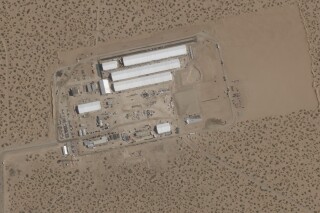
Construction at Fort Bliss commenced just days after the Army issued the contract on July 18, though preliminary site work had reportedly begun months earlier, even before Congress passed a significant tax and spending cuts bill that allocated a record $45 billion for immigration enforcement. The Defense Department’s initial announcement specified only that the Army was funding the first $232 million for the complex’s initial 1,000 beds. Satellite imagery reveals three massive white tents, each approximately 810 feet (250 meters) long, already erected, flanked by a half-dozen smaller structures.
The solicitation for the Fort Bliss project explicitly requires the contractor to oversee all aspects of the detention center, including security and medical care, while also mandating strict secrecy and directing all media inquiries to ICE. The bidding process itself was restricted to small firms, with Acquisition Logistics benefiting from its classification as a veteran and Hispanic-owned small disadvantaged business – a set-aside program maintained despite the Trump administration’s broader efforts to curb diversity, equity, and inclusion initiatives.
Gemini Tech Services, a losing bidder, has formally protested the award to the U.S. Government Accountability Office (GAO), Congress’s independent oversight body. Their complaint centers on Acquisition Logistics’ alleged lack of experience, staffing, and resources. While a GAO ruling is not anticipated until November, a separate legal appeal is also pending in a U.S. federal court in Washington, further clouding the future of this controversial project. The possibility remains that Acquisition Logistics may be operating as a front for a larger, more experienced contractor, a common practice in federal procurement. Indeed, Geo Group CEO George Zoley hinted in a recent earnings call that his company had partnered with an “established Pentagon contractor,” though he declined to name the firm, and Geo Group did not respond to further inquiries. CoreCivic, another major private prison operator, explicitly denied any partnership with either Acquisition Logistics or Gemini.
As the tent camp at Fort Bliss takes shape, the absence of transparency, the questions surrounding the chosen contractor’s qualifications, and the chilling historical echoes continue to fuel intense public and political scrutiny over what could become a cornerstone of the Trump administration’s expanded immigration enforcement architecture.