


Trump Administration Halts Revolution Wind Project Citing Vague ‘National Security Interests,’ Igniting Fierce Backlash
By ISABELLA O’MALLEY, JENNIFER MCDERMOTT, and MATTHEW DALY
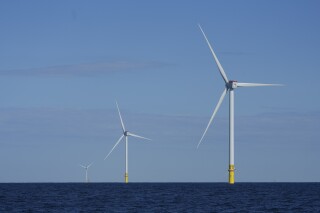
Washington D.C. – The Trump administration has issued a sudden stop-work order on the Revolution Wind project, a massive offshore wind farm located near Rhode Island, despite the project being approximately 80% complete with 45 of its 65 turbines already installed. The unexpected halt, justified by vague “national security interests,” has ignited a fierce backlash from state leaders and renewable energy advocates, further intensifying the ongoing political battle over America’s energy future.
Unexplained Halt Sparks Confusion and Outrage
The Bureau of Ocean Energy Management (BOEM) delivered the order on Friday, stating the federal government requires further review to “address concerns related to the protection of national security interests of the United States.” Crucially, the BOEM did not elaborate on the nature of these concerns, leaving project developers and state officials in the dark regarding the specific threats. This decision comes after the Revolution Wind project had successfully navigated years of rigorous federal and state regulatory reviews, signifying a significant reversal at an advanced stage of development.
Revolution Wind: A Key Project for New England’s Energy Future
Developed by Danish wind farm giant Orsted, Revolution Wind was on track to become Rhode Island and Connecticut’s first commercial-scale offshore wind farm. Situated more than 15 miles (24 kilometers) south of the Rhode Island coast, 32 miles (51 kilometers) southeast of the Connecticut coast, and 12 miles (19 kilometers) southwest of Martha’s Vineyard, the project was designed to power more than 350,000 homes across the two densely populated New England states. For these states, which face severe limitations on land-based energy infrastructure, offshore wind is considered a vital component for achieving ambitious climate goals. Construction commenced in 2023, with full operational status anticipated for the coming year.
Trump’s Anti-Renewable Stance Underpins Federal Action
The administration’s move aligns with President Donald Trump’s consistent policy and public rhetoric prioritizing fossil fuels and aggressively challenging renewable energy initiatives. In recent social media posts, Trump has derided wind and solar power as “THE SCAM OF THE CENTURY!” and vowed to block such projects, stating, “The days of stupidity are over in the USA!!!” This latest action underscores a broader federal push to impede the U.S. offshore wind industry, which scientists globally deem critical in the urgent fight against climate change.
The Urgency of Climate Change and Renewable Adoption
The scientific community universally agrees on the imperative for nations to rapidly adopt renewable energy sources to mitigate the catastrophic impacts of climate change. These include escalating extreme heat events, prolonged droughts, more intense wildfires, and supercharged hurricanes, typhoons, and rainstorms leading to widespread catastrophic flooding.
State Leaders Vow to Fight Back
Rhode Island Governor Dan McKee and Connecticut Governor Ned Lamont, both Democrats, swiftly condemned the stop-work order. Governor McKee declared on X, formerly Twitter, that he and Governor Lamont “will pursue every avenue to reverse the decision to halt work on Revolution Wind.” Echoing this sentiment, Connecticut Senator Richard Blumenthal, also a Democrat, issued a strong statement: “This arbitrary decision defies all logic and reason — Revolution Wind’s project was already well underway and employed hundreds of skilled tradesmen and women. This is a major setback for a critical project in Connecticut, and I will fight it.”
Orsted Considers Legal Action
Orsted, the developer, announced it is currently assessing the substantial financial ramifications of halting construction and is actively considering all available legal avenues to challenge the federal directive.
A Pattern of Intervention: The Empire Wind Precedent
This is not the first instance of the White House intervening in a major offshore wind development. The administration previously halted work on Empire Wind, a significant New York offshore wind project. However, construction on Empire Wind was permitted to resume after intervention from prominent Democratic figures, including New York Senator Chuck Schumer and Governor Kathy Hochul.
The State of U.S. Offshore Wind
The U.S. currently boasts only one fully operational large-scale offshore wind project, the five-turbine Block Island Wind Farm, also off the coast of Rhode Island. Nationally, wind power stands as the largest source of renewable energy, contributing approximately 10% of the electricity generated in the country.
Divided Reactions from Industry and Environmental Groups
Industry and environmental groups offered contrasting reactions. Erik Milito, president of the National Ocean Industries Association, which advocates for offshore oil, gas, and wind, emphasized the nation’s need for “more energy of all types, including oil and gas, wind, and new and emerging technologies.” Conversely, Green Oceans, a nonprofit opposed to the offshore wind industry, lauded BOEM’s decision, stating, “We are grateful that the Trump Administration and the federal government are taking meaningful action to preserve the fragile ocean environment off the coasts of Rhode Island and Massachusetts.”
However, environmental advocates strongly criticized the administration’s approach. Kit Kennedy, managing director for the power division at the Natural Resources Defense Council, stated, “This administration has it exactly backwards. It’s trying to prop up clunky, polluting coal plants while doing all it can to halt the fastest growing energy sources of the future – solar and wind power. Unfortunately, every American is paying the price for these misguided decisions.”
The future of the nearly complete Revolution Wind project now hangs in the balance, a symbol of the broader struggle shaping America’s energy landscape and its response to the climate crisis.