

Nvidia CEO Jensen Huang Confirms Talks with Trump Admin for New China-Specific AI Chip Amid Export Controls
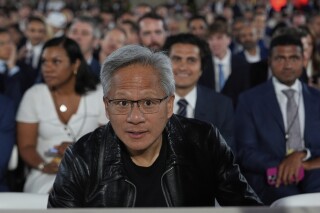
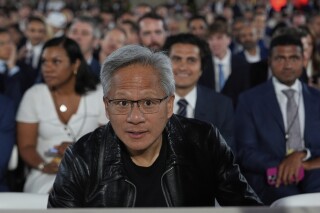
BANGKOK (AP) — Jensen Huang, CEO of artificial intelligence chip giant Nvidia, has confirmed that the company is engaged in discussions with the Trump administration regarding a potential new computer chip specifically designed for the Chinese market. The proposed “B30A” semiconductor aims to cater to China’s burgeoning AI data center needs while adhering to the stringent export controls imposed by the United States.

Introducing the “B30A”: A Response to US Export Controls
Huang’s comments came during a recent visit to Taiwan, where he met with Nvidia’s crucial manufacturing partner, Taiwan Semiconductor Manufacturing Corp. (TSMC), the world’s leading contract chipmaker. The B30A, based on Nvidia’s advanced Blackwell architecture, is reportedly engineered to operate at approximately half the processing speed of Nvidia’s flagship B300 chips. This deliberate reduction in power is a direct response to U.S. national security restrictions, which bar the sale of Nvidia’s most powerful graphics processing units (GPUs) — essential components for developing and deploying sophisticated AI systems — to China.
Precedent with H20 Chips and a New US Tax
This dialogue follows a recent, notable development in US-China tech trade. In April, sales of Nvidia’s H20 chips, another reduced-performance AI accelerator designed for China, were initially suspended. However, following extensive lobbying by Huang and broader trade negotiations, the Trump administration later approved these sales. This approval came with a specific condition: Nvidia, along with competitor Advanced Micro Devices (AMD) for its MI380 chips, must pay a 15% tax to the U.S. government on all sales of these chips to China. Huang expressed appreciation for the ability to sell H20s, though he did not directly comment on the tax, a novel mechanism that allows some restricted tech sales while recouping revenue for the U.S.
Beijing’s Security Allegations Add Complexity
The intricate dance of chip diplomacy is further complicated by allegations from Beijing. The Cyberspace Administration of China, the nation’s internet watchdog, recently posted a notice claiming “serious security issues” with Nvidia’s computer chips. Citing unnamed U.S. AI experts, the administration alleged that these chips possess “mature tracking and location and remote shutdown technologies” and demanded explanations and documentation from Nvidia. Huang expressed surprise at these accusations, particularly as they surfaced after arduous efforts to secure licenses for H20 sales. “We have made very clear and put to rest that H20 has no security backdoors. There are no such things. There never has,” Huang stated, emphasizing ongoing discussions with Beijing to resolve the issue.
US Strategy and China’s Push for Self-Reliance
Adding another layer of tension are unconfirmed reports that Chinese authorities were irked by candid remarks from U.S. Commerce Secretary Howard Lutnick. Speaking on CNBC, Lutnick openly articulated the U.S. strategy to maintain China’s reliance on American chip technology while deliberately limiting access to the most advanced hardware. “We don’t sell them our best stuff,” Lutnick said. “Not our second best stuff. Not even our third best, but I think fourth best is where we’ve come out that we’re cool.” Such statements publicly validate China’s concerns about being supplied with outdated technology, further fueling the ruling Communist Party’s strategic priority of achieving self-reliance in advanced technological sectors, despite its current dependence on foreign semiconductor expertise.
As Washington and Beijing continue to navigate a complex trade relationship – which recently saw a rollback of some non-tariff restrictions with China approving more rare earth magnet export permits and the U.S. lifting curbs on chip design software and jet engines – the future of high-tech chip sales remains a critical barometer of global geopolitical and economic competition. Nvidia, a key player in this high-stakes arena, continues its delicate balancing act between market access and national security concerns.