

Nvidia Navigates US-China Tech Tensions with New AI Chip for Beijing
BANGKOK — Nvidia, a global leader in artificial intelligence (AI) chips, is actively engaged in discussions with the Trump administration regarding the potential sale of a new, specialized semiconductor designed for the Chinese market.
Nvidia Proposes “B30A” for Chinese AI Data Centers
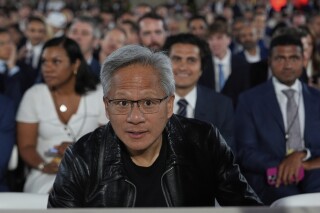
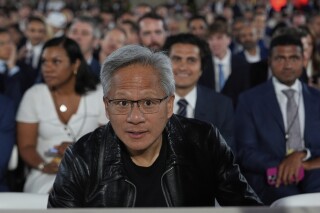
CEO Jensen Huang confirmed these talks on Friday during a visit to Taiwan, where he met with Taiwan Semiconductor Manufacturing Corp. (TSMC), Nvidia’s pivotal manufacturing partner and the world’s largest chipmaker.
The proposed chip, dubbed “B30A,” is intended for AI data centers in China and represents a follow-on to Nvidia’s H20 series. Huang stated, “I’m offering a new product to China for… AI data centers, the follow-on to H20.” However, he emphasized that the decision ultimately rests with the U.S. government, noting, “It’s not our decision to make. It’s up to, of course, the United States government. And we’re in dialogue with them, but it’s too soon to know.”
Performance Tailored for U.S. Export Restrictions
These graphics processing units (GPUs) are critical components used in developing and maintaining advanced AI systems. The B30A, based on Nvidia’s cutting-edge Blackwell technology, is reportedly engineered to operate at approximately half the speed of Nvidia’s most powerful B300 chips. This deliberate reduction in performance is a direct response to stringent U.S. national security restrictions, which currently prohibit the export of Nvidia’s top-tier semiconductors to China.
H20 Approval and Easing Trade Environment
The discussions around the B30A come on the heels of a significant development in April, when the Trump administration approved the sale of Nvidia’s H20 chips to China, a business segment that had previously faced suspension. This approval, however, was accompanied by a new condition: Nvidia must pay a 15% tax to the U.S. government on these sales. Rival chipmaker Advanced Micro Devices (AMD) received a similar mandate for its MI380 chips destined for China. Huang expressed appreciation for the ability to resume H20 sales, though he did not directly comment on the imposed tax.
The complex trade environment has also seen a recent easing of some non-tariff restrictions between Beijing and Washington. China increased permits for rare earth magnet exports to the U.S., while Washington lifted curbs on specific chip design software and jet engines, alongside the H20 chip approvals.
China Raises Security Concerns Over Nvidia Chips
Adding another layer of complexity, Nvidia is simultaneously working to address “serious security issues” raised by China’s Cyberspace Administration, the country’s internet watchdog. The agency recently posted a notice citing alleged “mature tracking and location and remote shutdown technologies” within Nvidia’s computer chips, requesting an explanation and supporting documentation. Huang expressed surprise at the accusation, vehemently denying the existence of any “backdoors” in Nvidia’s products. He affirmed that the company is in dialogue with Beijing to resolve these concerns. “We have made very clear and put to rest that H20 has no security backdoors. There are no such things. There never has. And so hopefully the response that we’ve given to the Chinese government will be sufficient,” he stated.
These security allegations follow earlier reports of Chinese authorities’ dissatisfaction with comments made by U.S. Commerce Secretary Howard Lutnick. Speaking on CNBC, Lutnick suggested the U.S. strategy was to keep China dependent on American chip technology, stating, “We don’t sell them our best stuff. Not our second best stuff. Not even our third best, but I think fourth best is where we’ve come out that we’re cool.”
Geopolitical Tensions Shape Tech Industry
China’s ruling Communist Party has long prioritized technological self-reliance as a strategic imperative, yet the nation continues to rely heavily on foreign semiconductor expertise for a substantial portion of its high-tech manufacturing. Nvidia’s pursuit of a new, U.S.-approved chip for China underscores the delicate balance companies must strike in a globalized tech industry increasingly shaped by geopolitical tensions and national security concerns.
Taijing Wu in Taipei contributed to this report.