


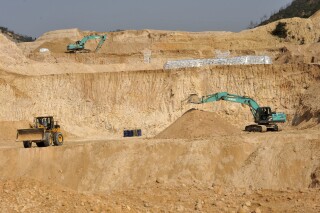
China, the undisputed global leader in rare earth production and processing, has enacted stringent new interim measures, further tightening its grip on these 17 critical elements vital to modern technology and defense. Released Friday by the Ministry of Industry and Information Technology, these regulations underscore Beijing’s strategic intent to centralize control over a resource that is, paradoxically, not truly rare but incredibly difficult and environmentally costly to extract in commercially viable concentrations.
The new rules apply broadly, encompassing rare earths mined within China’s borders and those imported for refining—a significant point given China’s role as a processing hub for materials originating from nations like neighboring Myanmar. Under these measures, companies handling rare earth products will face strict quotas, mandating prior government approval for all operations and requiring meticulous reporting of quantities. Non-compliance will result in severe legal penalties and a reduction in allocated quotas, signaling a clear departure from previous, more fragmented oversight.
Why Beijing is Tightening the Reins
China’s move is a direct response to escalating geopolitical tensions, particularly with the United States. For years, rare earths have been a leverage point in the ongoing trade disputes and technology rivalry. While these elements—including germanium, gallium, and titanium, along with specific “heavy” rare earths like samarium, gadolinium, terbium, dysprosium, lutetium, scandium, and yttrium—are indispensable for products ranging from electric vehicle batteries and smartphone components to advanced fighter jets and wind turbine magnets, their supply chain is heavily concentrated in China.
The current tightening follows a pattern of strategic actions. In April, immediately after former U.S. President Donald Trump imposed a fresh round of tariffs on various trading partners, Beijing introduced new permitting requirements for seven key rare earth elements, citing the need to “better safeguard national security and interests and to fulfill global duties of non-proliferation.” This move sparked considerable concern among manufacturers globally, fearing potential shortages of these vital materials.
In a brief softening of its stance, Beijing announced in June that it would expedite approvals for rare earth exports following U.S. concessions related to access to computer chip design software and jet engines. However, this was quickly followed by a July declaration from China’s Ministry of State Security, which launched a crackdown on alleged rare earths smuggling, reinforcing the message that Beijing intends to maintain firm control over the resource.
China’s Unrivaled Dominance
China’s dominant position in the rare earths sector has been cultivated over decades. Despite mining approximately 70% of the world’s rare earth raw materials, it processes nearly 90% of the global supply. The nation also holds almost half of the world’s known rare earth reserves. Crucially, China possesses a near-monopoly on the advanced technologies required for smelting and separating these complex elements, and has prohibited the export of this specialized know-how.
This concentration of power leaves many industrial nations significantly dependent. For instance, in 2024, the United States sourced a substantial 70% of its total rare earth consumption from China. The remaining supply came from diverse intermediate sources, including Malaysia (13%), Japan (6%), and Estonia (5%), though the U.S. Geological Survey noted that a portion of these non-Chinese supplies originated from mineral concentrates processed in China and Australia.
Uncertainty for Global Industries
While China has indicated a willingness to issue some export permits, particularly excluding military applications, the long-term impact of these new regulations on global supply chains remains uncertain. The highly centralized control over mining, processing, and exports, coupled with stricter environmental standards, suggests a more deliberate and potentially restricted flow of these materials.
For nations like the U.S., which have made reducing reliance on Chinese rare earths a strategic priority, these measures amplify the challenge. Beijing’s demonstrated ability to modulate the approval process as a tool of economic and political leverage means that the global market for rare earths will likely operate under an increasingly controlled and unpredictable environment, pushing other countries to invest more aggressively in diversified supply chains and alternative processing technologies. The new regulations, while not detailing specific quotas, unequivocally signal China’s resolute commitment to exercising stronger, more centralized authority over an industry critical to global technological advancement and national security.