


Russia’s Digital Iron Curtain: The Kremlin’s Intensifying Grip on the Internet
TALLINN, Estonia (AP) — For millions across Russia, the act of going online has transformed into a frustrating, complicated, and increasingly dangerous endeavor. From YouTube videos that fail to load and independent news sites returning blank pages, to cellphone internet connections that vanish for hours or even days, these are not mere technical glitches but calculated disruptions in a long-term, multipronged effort by the Kremlin to assert full control over its digital landscape.
This concerted campaign, described by Human Rights Watch researcher Anastasiia Kruope as “death by a thousand cuts,” involves the systematic adoption of restrictive laws, the banning of non-compliant websites and platforms, and the perfection of technology designed to monitor and manipulate online traffic. Even popular virtual private network (VPN) apps, once reliable tools for circumventing restrictions, are now routinely targeted and blocked.
Adding to the escalating controls, this past summer saw widespread shutdowns of cellphone internet connections across Russia. Simultaneously, authorities adopted a new law that punishes users for merely searching for content deemed illicit by the state. The crackdown extends to popular messaging services, with threats looming over WhatsApp, which boasted over 97 million monthly users in Russia as of April. This coincides with the aggressive rollout of MAX, a new “national” messaging app widely expected to be heavily monitored.
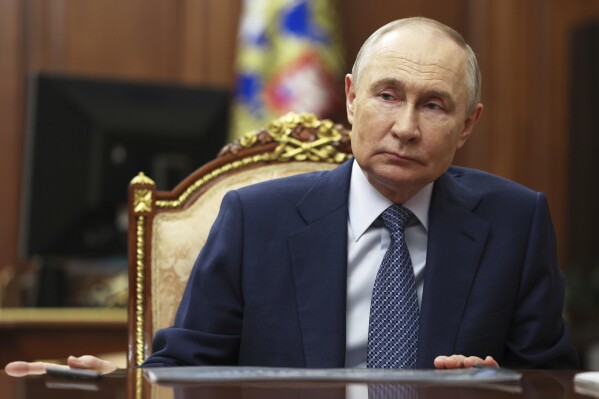
President Vladimir Putin himself has urged the government to “stifle” foreign internet services, ordering officials to compile a list of platforms from “unfriendly” states earmarked for restriction.
A Decade of Mounting Control
The Kremlin’s ambition to control what Russians do, read, or say online isn’t new; its roots stretch back to the large-scale anti-government protests of 2011-2012. These demonstrations, coordinated online and amplified by a burgeoning independent media scene, highlighted the internet’s potential as a platform for challenging authority.
In response, Russia gradually introduced a series of regulations. Early measures included blocking websites, requiring internet providers to store call records and messages, and mandating the installation of equipment allowing authorities to control and even cut off traffic. Plans for a “sovereign internet” capable of isolation from the global network were unveiled. While Russia’s popular Facebook-like platform, VK, eventually fell under the control of Kremlin-friendly entities, and an attempt to block Telegram between 2018 and 2020 largely failed, prosecutions for social media posts and comments became increasingly common, signaling intense state surveillance. Experts at the time largely dismissed these efforts, believing Russia was far from replicating China’s formidable “Great Firewall.”
Post-Invasion Acceleration and Infrastructure Grasp
However, Russia’s full-scale invasion of Ukraine in February 2022 marked a dramatic acceleration in this digital clampdown. Major social media platforms like Twitter, Facebook, and Instagram were blocked, along with Signal and several other messaging apps. The targeting of VPNs intensified, making access to restricted content significantly harder.
YouTube, a platform wildly popular for both entertainment and critical voices like the late opposition leader Alexei Navalny, experienced widespread disruptions last summer, which experts identified as deliberate throttling by authorities. The Kremlin, conversely, blamed YouTube’s owner, Google, for inadequate hardware maintenance in Russia. Further evidence of systemic disruption emerged in June when Cloudflare, an internet infrastructure provider, reported throttling of websites using its services in Russia. Independent news outlet Mediazona corroborated this, reporting similar inhibitions affecting several other prominent Western hosting providers.
Cyber lawyer Sarkis Darbinyan, founder of the Russian internet freedom group Roskomsvoboda, points to a strategic push by authorities to force businesses onto controllable Russian hosting providers. He estimates that approximately half of all Russian websites rely on foreign providers, which often offer superior quality and price. Severing access to these foreign providers effectively renders a “huge number” of global websites and platforms inaccessible within Russia.
A July 30 Human Rights Watch report highlighted another concerning trend: the consolidation of Russia’s internet providers and IP address managers. The cost of obtaining an internet provider license surged from a modest 7,500 rubles (approximately $90) to a staggering 1 million rubles (over $12,300) in the past year. State data further reveals that more than 50% of all IP addresses in Russia are now managed by just seven large companies, with Rostelecom, the state telephone and internet giant, controlling a significant 25% share. HRW’s Kruope asserts that the Kremlin is striving “to control the internet space in Russia, and to censor things, to manipulate the traffic.”
Criminalizing Online Searches and the Rise of MAX
A chilling new Russian law has criminalized online searches for broadly defined “extremist” materials. This sweeping definition can encompass a wide array of content, including LGBTQ+ content, materials from opposition groups, certain songs by artists critical of the Kremlin, and, as recently designated, Alexei Navalny’s memoir. Rights advocates warn this signals a perilous shift towards punishing consumers directly, echoing tactics seen in Belarus, where individuals face routine fines or imprisonment for accessing independent media.
While cyber security expert Stanislav Seleznev of Net Freedom doesn’t anticipate ubiquitous prosecutions, given the challenge of tracking individual searches among Russia’s 146 million citizens, he warns that even a limited number of high-profile cases could effectively deter many from seeking restricted content.
Another significant development is the looming threat to WhatsApp. Lawmaker Anton Gorelkin has publicly stated that WhatsApp “should prepare to leave the Russian market,” with the new “national” messenger, MAX, developed by social media company VK, poised to take its place. Gorelkin believes Telegram will likely remain unaffected. MAX, promoted as a comprehensive platform for messaging, government services, and payments, launched beta tests and reported over 2 million registered users by July. Critically, its terms and conditions explicitly state that user data will be shared with authorities upon request, and a new law mandates its pre-installation on all smartphones sold in Russia. State institutions, officials, and businesses are actively encouraged to transition their communications and blogs to MAX.

Anastasiya Zhyrmont of the Access Now digital rights group noted that both Telegram and WhatsApp experienced disruptions in Russia in July, potentially serving as test runs to assess the impact of future blockages on internet infrastructure. Such tests are not uncommon, as authorities have regularly conducted exercises to cut off the internet from the rest of the world, sometimes leading to regional outages.
Despite these aggressive measures, Darbinyan suggests that deep-seated habits acquired over decades of a “fast and free” internet will be hard to break, and the only way to compel widespread adoption of MAX is to “shut down, stifle” every Western alternative. However, he acknowledges that Russia’s internet regulator, Roskomnadzor, has significantly advanced its capabilities, employing more sophisticated methods to analyze web traffic and identify content for blocking or throttling.
“Years of perfecting the technology, years of taking over and understanding the architecture of the internet and the players,” combined with Western sanctions and company withdrawals since 2022, have empowered Russia’s censorship apparatus, according to HRW’s Kruope. While Darbinyan believes Russia is “not there yet” in completely isolating its internet, the Kremlin’s systematic efforts are undoubtedly “bringing it closer.”