


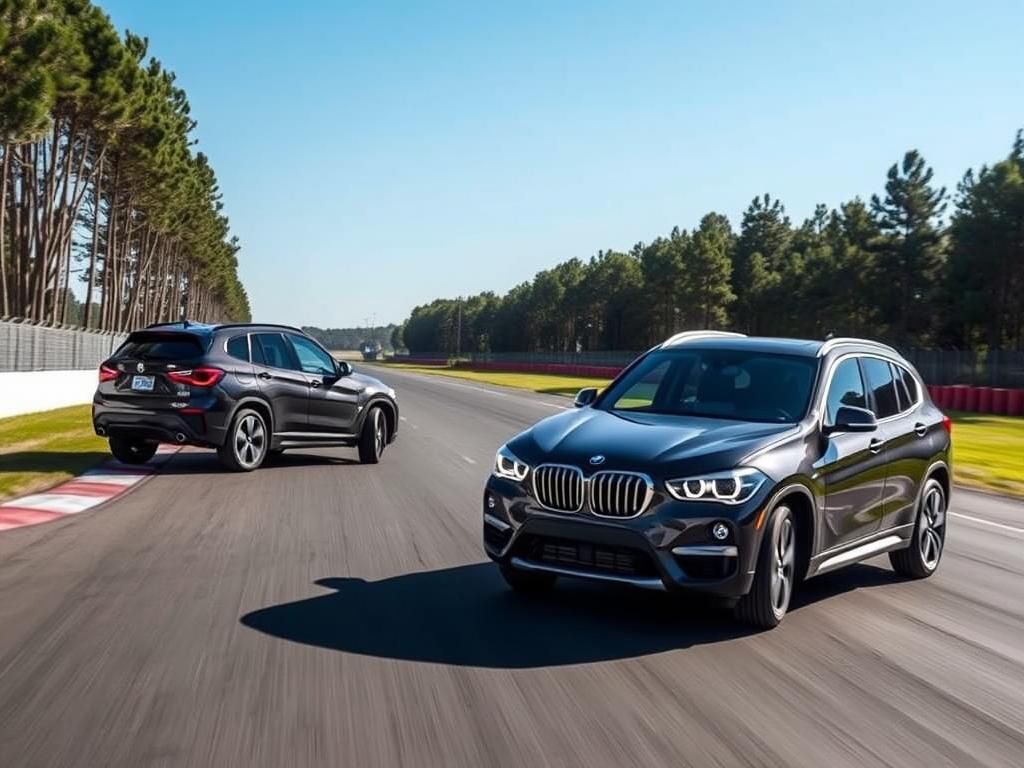
Edmunds Puts Entry-Level Luxury SUVs to the Test: 2025 Acura ADX vs. 2025 BMW X1
A Head-to-Head Battle for Compact Premium Dominance
By Nick Kurczewski, Edmunds Contributor
The burgeoning segment of compact luxury crossover SUVs welcomes a new contender: the all-new 2025 Acura ADX. Positioned as Acura’s most affordable and smallest SUV, the ADX aims to capture buyers seeking a premium experience without the larger footprint or higher price tag of its RDX or MDX siblings. But how does it stack up against a segment stalwart, the 2025 BMW X1? Edmunds’ team of automotive experts put both five-seater, city-friendly models through rigorous testing to determine which offers the superior blend of performance, value, and comfort.
Performance: BMW X1 Zooms Ahead
Under the hood, the 2025 Acura ADX is equipped with a 190-horsepower turbocharged four-cylinder engine paired with a continuously variable automatic transmission (CVT). While front-wheel drive is standard, all-wheel drive remains an optional upgrade. Edmunds’ evaluations, however, revealed a notable deficiency in the ADX’s acceleration: it took a leisurely 9.4 seconds to sprint from zero to 60 mph. This performance falls short of nearly all its direct rivals and significantly trails the BMW X1.
In stark contrast, the 2025 BMW X1 delivers the spirited driving dynamics expected of a luxury vehicle. Its turbocharged four-cylinder engine is more potent, producing 241 horsepower in the entry-level xDrive28i model and an impressive 341 horsepower in the performance-oriented M35i variant. Both are coupled with a seven-speed automatic transmission, and unlike the ADX, all-wheel drive comes standard across the X1 lineup. Edmunds recorded a swift 5.9-second 0-60 mph time for the xDrive28i, a substantial difference that translates to more confident highway merging and passing maneuvers.
Despite their performance disparities, both SUVs boast commendable fuel efficiency. The ADX and the X1 xDrive28i achieve an EPA-estimated 28 mpg combined city/highway. The ADX’s efficiency dips slightly to 27 mpg when equipped with all-wheel drive.
Winner: BMW X1
Features and Value: A Close Contest
From a purely monetary perspective, the Acura ADX appears to hold a clear advantage, starting at an accessible $36,350, including destination charges. This figure is thousands less than the BMW X1’s entry-level price of $42,525. The ADX comes generously appointed with standard features, including synthetic leather upholstery, a 9-inch touchscreen, wireless smartphone connectivity, wireless device charging, and ambient LED interior lighting. Furthermore, it integrates a comprehensive suite of standard driver aids such as blind-spot warning, adaptive cruise control, and lane-keeping assistance.
The BMW X1, while pricier, justifies some of its cost by including all-wheel drive as standard. Its racy M35i variant, offering enhanced performance, commands a starting price north of $50,000. Tech amenities in the X1 are robust, featuring a digital instrument display, a larger 10.2-inch touchscreen, and wireless smartphone connectivity. While it offers fewer standard driver aids than the ADX, the X1 provides certain advanced safety features not available on the Acura.
Winner: Tie
Comfort and Utility: BMW’s Refined Ride
Edmunds’ experts praised the front seats of the ADX A-Spec Advance test vehicle for their comfort, extensive adjustability, and premium leather upholstery. Conversely, the optional M Sport front seats in the X1 test vehicle, while excellent for spirited driving, were found to be potentially too firm for long-distance comfort. Similarly, the X1’s sport-tuned suspension, while enhancing handling, could compromise ride comfort; Edmunds suggests opting for standard seat and suspension settings to maximize the X1’s comfort levels. The ADX offers available ventilated seats, a feature absent in the X1, which can be a significant benefit in warmer climates. However, the X1 distinguishes itself with a noticeably quieter cabin, whereas the ADX exhibits considerable wind and road noise at highway speeds.
In terms of interior space, both SUVs offer respectable roominess. The X1 provides more overall headroom for both front and rear passengers, though the ADX gains a slight edge in rear legroom. Cargo capacity is nearly identical, with the ADX offering up to 24.4 cubic feet of storage, just shy of the X1’s 25.7 cubic feet.
Winner: BMW X1
Edmunds’ Final Verdict
The 2025 Acura ADX presents itself as an attractively priced option in the small luxury crossover segment. However, Edmunds concludes that it struggles to distinguish itself in a field populated by more accomplished competitors. Ultimately, Edmunds recommends the 2025 BMW X1. Its superior driving enjoyment, enhanced luxury, and practical attributes make it the more compelling choice for discerning buyers in this competitive segment.
—
This story was provided to The Associated Press by the automotive website Edmunds.