


Maduro’s YouTube Channel Vanishes Amidst Soaring US-Venezuela Tensions
Digital Blackout: Maduro’s Channel Disappears
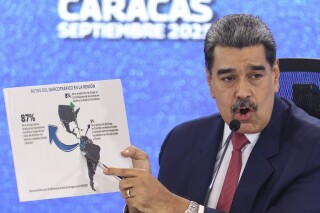
Venezuelan President Nicolas Maduro’s official YouTube account, a primary platform for his public addresses and weekly television show clips, abruptly went offline on Friday, drawing immediate claims from Venezuela’s state-run channel Telesur that it was “eliminated” without explanation. The digital blackout comes as already frosty relations between Venezuela and the United States plunge to new depths, marked by a significant U.S. military deployment in the southern Caribbean.
Google, YouTube’s parent company, has yet to provide a public statement regarding the apparent termination of Maduro’s channel, which boasted a substantial following of more than 200,000 subscribers. However, YouTube’s community guidelines explicitly state that accounts can be removed for “repeated violations” including the dissemination of misinformation, hate speech, or content that “interferes with democratic processes.” This policy stands in stark contrast to the Venezuelan government’s narrative.
Geopolitical Friction Escalates with US Military Deployment
The disappearance of Maduro’s online presence coincides with a dramatic escalation of geopolitical friction. Last month, the United States dispatched eight warships, equipped with long-range missiles and carrying a landing force of 2,000 Marines, to waters near Venezuela’s coast. The Trump administration asserts that this deployment is part of a critical anti-drug trafficking mission aimed at disrupting illicit narcotics flows in the region.
However, Caracas views the naval presence as a blatant act of aggression and a direct affront to its national sovereignty, characterizing it as part of a broader strategy by Washington to destabilize and ultimately overthrow Maduro’s socialist government. The U.S. flotilla has already engaged in kinetic operations, reportedly destroying three speedboats alleged to be carrying drugs and and resulting in the deaths of more than a dozen individuals onboard the small vessels, according to the White House.
Maduro Under Pressure: Indictment, Bounty, and Fraud Allegations
The U.S. has long targeted Maduro, particularly since a federal court in New York indicted him in 2020 on charges of conspiring to traffic cocaine into the United States. White House officials have repeatedly labeled Maduro a “drug cartel leader” who must face justice, even doubling the bounty for his capture to a substantial $50 million.
Further complicating Maduro’s international standing are widespread accusations of electoral fraud. Hundreds of Venezuelan opposition activists presented tally sheets that suggested Maduro suffered a landslide defeat in last year’s presidential election. Crucially, Venezuela’s elections agency, which remains under the control of the ruling socialist party, has consistently failed to publish any supporting tally sheets to substantiate its official declaration of Maduro’s victory.
A Complex Relationship: Engagement Amidst Enmity
Despite the heightened rhetoric and military posturing, a degree of practical engagement persists between the two nations. Venezuela continues to export oil to the United States, and the U.S. regularly conducts deportation flights returning Venezuelan nationals. These ongoing interactions underscore the complex, multi-faceted nature of a relationship fraught with deep political divisions and strategic rivalries.
The Digital Frontline
The removal of President Maduro’s YouTube account adds another layer to this intricate conflict, highlighting the battle not just on land and sea, but also in the digital information space, where narratives are shaped and legitimacy is contested.