


Appeals Court Slashes Trump’s Civil Fraud Fine, Upholds Fraud Finding
NEW YORK (AP) — In a significant development for former President Donald Trump, a New York appeals court on Thursday dramatically reduced the massive financial penalty imposed in a civil fraud lawsuit, while narrowly upholding the lower court’s finding that he engaged in fraud by inflating his wealth for decades. The ruling eliminates a potential half-billion-dollar fine, but maintains a ban preventing Trump and his two eldest sons from serving in corporate leadership within New York for several years.
The Origins of the Lawsuit and Initial Verdict
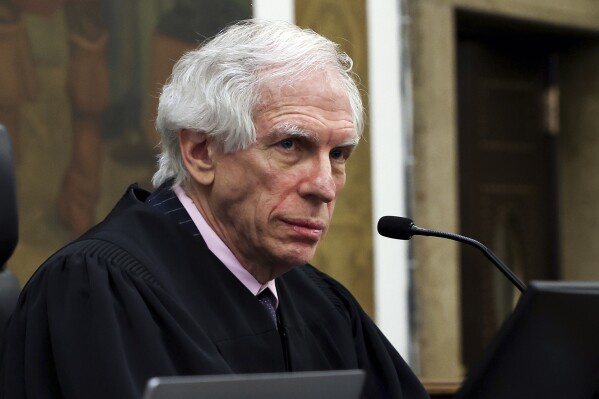
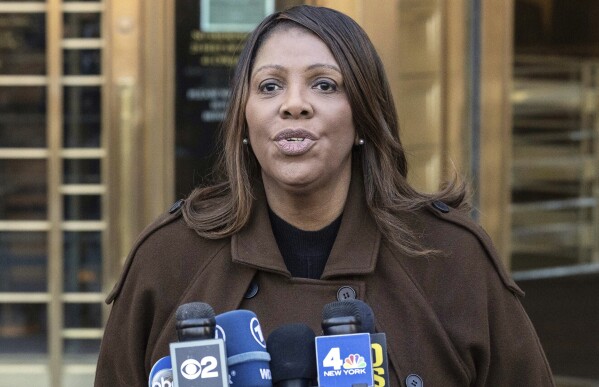
The case originated from a civil lawsuit brought by New York Attorney General Letitia James, a Democrat, who accused Trump and his company, the Trump Organization, of systematically exaggerating his net worth on financial statements provided to lenders and insurers. Following a non-jury trial, Justice Arthur Engoron of the lower court found Trump liable for fraud, ordering him in February 2024 to pay $355 million in penalties. With pre-judgment interest, that sum had swelled to over $515 million for Trump. Additional penalties levied against his sons, Eric Trump and Donald Trump Jr., and other Trump Organization executives brought the total judgment to approximately $527 million with interest. The initial verdict also included prohibitions on Trump serving as an officer or director in any New York corporation for three years, and his sons for two years.
A Sharply Divided Appellate Ruling
The five-judge panel of the state’s mid-level Appellate Division could not reach a full consensus on all aspects of Trump’s appeal, ultimately delivering a complex 323-page ruling that reflected their deep divisions. A majority of the judges, including Dianne Renwick and Peter Moulton (both appointed by Democratic governors), deemed the monetary penalty “excessive.” They wrote, “While harm certainly occurred, it was not the cataclysmic harm that can justify a nearly half billion-dollar award to the state,” adding that it constituted “an excessive fine that violates the Eighth Amendment of the United States Constitution.”
Crucially, the appeals court upheld the core finding of liability for fraud against Donald Trump, the Trump Organization, and his sons. The ruling also left intact the corporate leadership bans: three years for Donald Trump and two years for Eric and Donald Trump Jr., preventing them from holding officer or director positions in New York corporations. During the appeal process, Trump had paused the collection of the full penalty by posting a $175 million bond, a measure that allowed him to continue his business operations without immediate financial duress from this specific judgment.
Reactions and Judicial Dissension
Upon the ruling, Donald Trump declared “TOTAL VICTORY,” echoing a sentiment he had expressed on social media. He claimed the initial judgment of “$550 million” was a result of a “fake case” that had now been “overturned.” Attorney General James, conversely, focused on the upheld fraud finding, stating that the decision “affirmed the well-supported finding of the trial court: Donald Trump, his company, and two of his children are liable for fraud.”
The dissent among the appellate judges underscored the contentious nature of the case. While some agreed that fraud occurred but the penalty was too severe, others questioned the Attorney General’s authority to bring the suit, arguing that affected lenders could have sued themselves (none did). Judge David Friedman, a Republican appointee, was particularly critical of James, writing that her “ultimate goal was not ‘market hygiene’… but political hygiene, ending with the derailment of President Trump’s political career and the destruction of his real estate business.” He concluded, “This bench today unanimously derails the effort to destroy his business.”
Broader Legal Landscape
This appeals court decision marks a significant turn in one of several legal battles confronting Donald Trump as he navigates his political career. Just seven months after his return to the White House, Trump continues to face a complex web of legal challenges. In January 2024, he received an unconditional discharge in his criminal hush money case, sparing him jail time, though he is appealing the conviction. Additionally, federal appeals courts have upheld a jury’s finding that Trump sexually abused writer E. Jean Carroll in the mid-1990s, affirming a $5 million judgment against him. He is also appealing a subsequent verdict requiring him to pay Carroll an additional $83.3 million for further defamation claims.
The appeals court’s decision leaves open a pathway for further appeals to the state’s highest court, the Court of Appeals, suggesting that the legal saga surrounding Trump’s financial practices may not yet be concluded.