

California Union Offers to Scale Back Billionaire Tax Amid Fierce Opposition
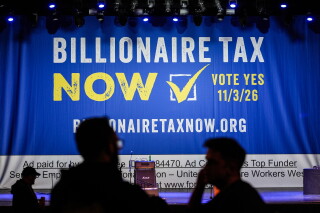
SACRAMENTO, Calif. — A prominent California labor union, the Service Employees International Union Healthcare Workers West (SEIU-UHW), has offered to significantly scale back its controversial proposal for a one-time 5% wealth tax on billionaires. This strategic move comes just one day after the state’s top election official confirmed the original measure garnered sufficient public support to qualify for the November ballot.
The Initial Ambitious Proposal
Initially, the union’s plan was designed to impose a 5% tax on individuals with a net worth exceeding $1 billion as of January 1, 2026. This ambitious proposal aimed to generate an estimated $100 billion. These substantial funds were earmarked primarily to offset federal cuts to healthcare services for low-income residents, with additional allocations for food assistance and education programs.
Widespread Criticism and Concerns
However, the proposal faced intense criticism from a broad spectrum of stakeholders. High-profile figures and organizations including Democratic Governor Gavin Newsom, powerful Silicon Valley tech moguls, the California Medical Association, and the California School Boards Association voiced strong opposition. Critics argued that such a levy would ultimately deter the ultra-wealthy from residing in California, potentially leading to a long-term decrease in state revenue. This concern is particularly acute given that the state’s top 1% of earners contribute nearly half of its personal income tax revenue.
A Revised Offer: 2% Tax on the Table
In response to this staunch pushback, the SEIU-UHW announced on Thursday a revised offer: they would abandon the ballot initiative if Governor Newsom agrees to support a more modest 2% one-time tax. This updated proposal, if agreed upon, would need to be passed by the Legislature, adhering to a crucial June 25 deadline for ballot measure qualification.
Backers Emphasize Necessity
Backers of the tax emphasized its necessity, stating in a letter to Newsom, “A 2% one-time tax on that accumulated wealth is modest by any objective measure especially if it means keeping emergency rooms open and saving patient lives.” They argue it’s a vital mechanism to protect essential services in the face of federal cutbacks, citing the major tax breaks and spending cuts legislation signed by former President Donald Trump.
Opposition Remains Formidable
Despite the union’s concession, the opposition remains formidable. The nonpartisan Legislative Analyst’s Office (LAO) projected that while the original 5% tax could generate tens of billions in its initial years, it could subsequently lead to annual declines of hundreds of millions of dollars in income tax revenues. Wealthy individuals and organizations have already poured millions into fighting the measure. Google co-founder Sergey Brin alone contributed $82 million to “Building a Better California,” a political committee that has amassed over $118 million from fewer than a dozen donors to counteract the billionaire tax initiative.
Governor’s Silence and Legislative Alternatives
Governor Newsom’s office has yet to comment on the union’s latest offer. The state Legislature, meanwhile, has moved forward with budget bills that seek to raise revenue through alternative means, including an extension of a tax on healthcare providers. Senate President pro Tempore Monique Limón, a Democrat, confirmed this approach, stating, “The budget, as approved by the Legislature and now being negotiated with the Governor, does not include the billionaire’s tax. Instead, it reflects additional revenues to address our long-term structural deficit.” This mirrors Newsom’s past opposition to a 2022 ballot measure that proposed increasing taxes on the wealthy for electric car programs, which voters ultimately rejected.