


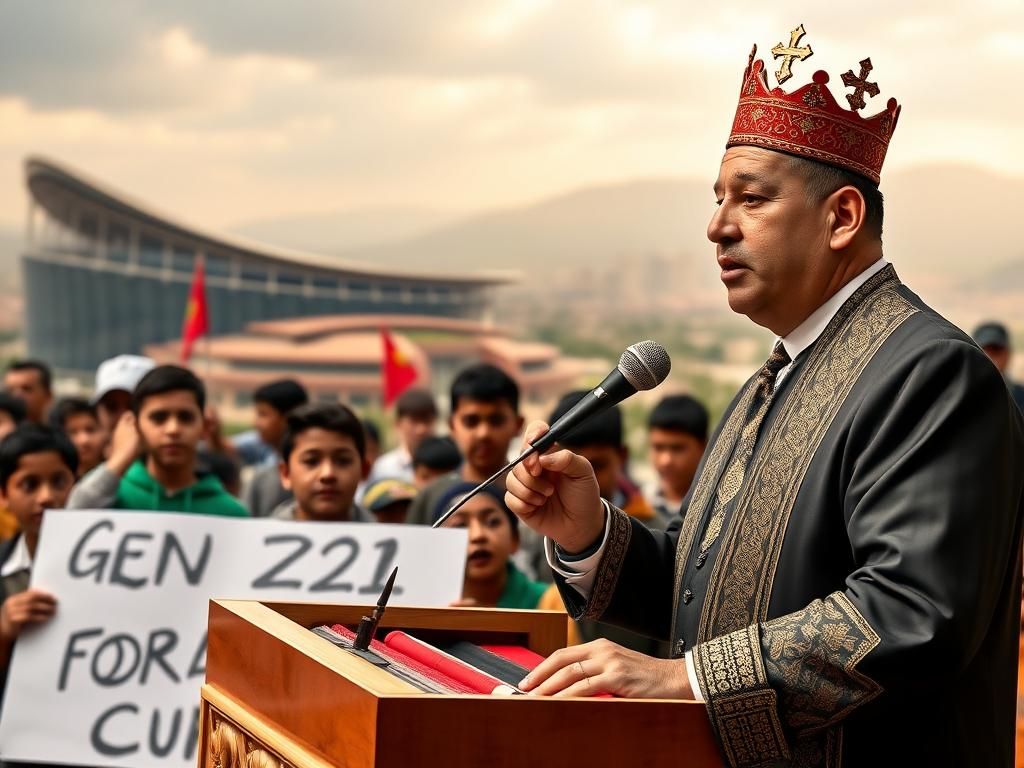
King Mohammed VI Faces Unprecedented Scrutiny Amidst Growing Youth Protests
RABAT, Morocco (AP) — King Mohammed VI of Morocco is poised to inaugurate parliament on Friday, delivering a speech under significantly higher stakes than in previous years. The monarch finds himself in a rare moment of direct public scrutiny as a wave of anti-government protests, primarily spearheaded by the nation’s youth, sweeps across more than a dozen cities. These demonstrations are challenging his government’s spending priorities and demanding immediate reforms.
“Gen Z 212” Demands Accountability
Since September 27, a nascent yet powerful movement, dubbed “Gen Z 212” — named after Morocco’s international dialing code — has rapidly galvanized on platforms like TikTok and Discord. These young Moroccans are articulating profound disillusionment with the slow pace of economic progress and widening social divides. Their central grievance revolves around the government’s lavish expenditures on preparations for the 2030 FIFA World Cup, which Morocco is co-hosting. They argue that these investments come at the expense of essential public services like schools and hospitals, which reportedly suffer from chronic underfunding. Protesters highlight multi-billion dollar investments earmarked for new stadiums and infrastructure as a stark contrast to the daily struggles faced by many citizens, including high youth unemployment rates and rising living costs.
A Shattered Tradition: The King in the Direct Spotlight
Traditionally, King Mohammed VI, who ascended the throne in 1999 and was once affectionately known as the “King of the Poor,” has maintained a deliberate distance from day-to-day political discourse. He often delegated public representation to ministers or other members of the royal family. This strategic elusiveness has been a hallmark of his reign, reinforcing his position above political fray. However, the current unrest has shattered this tradition, thrusting him into the direct spotlight of public anger—a dynamic not seen on this scale since the Arab Spring uprisings of 2011, which prompted constitutional reforms to appease popular demands.
A Direct Appeal to the Monarchy
In an unprecedented move, more than a week before his scheduled address, the Gen Z 212 movement sent a direct letter of demands to the royal palace. This bold appeal underscored both the protesters’ deep-seated faith in the King’s ultimate authority to enact change and the inherent risks of directly criticizing the monarchy, which remains legally and socially taboo. The letter explicitly called for the dismissal of Prime Minister Aziz Akhannouch and his government, the release of political detainees, and the establishment of robust mechanisms to hold corrupt politicians accountable. Chants of “The people want the king to intervene” have echoed through cities like Casablanca and Rabat, reflecting a collective belief that meaningful solutions rest with the monarch.
Beyond Superficial Changes: Intellectuals’ Perspective
While the youth-led movement seeks the King’s intervention, a parallel letter from a group of 60 prominent older intellectuals, dissidents, and activists offered a more critical perspective. They argued that dismissing the Prime Minister, whom they described as holding merely “symbolic authority” and not representing “the true source of executive power,” would be insufficient. Instead, they urged addressing “the deep and structural causes of the anger shaking our country,” suggesting that superficial changes would not quell the underlying tensions.
High Stakes for Morocco’s Future
As Moroccans across the country, particularly the youth, eagerly await King Mohammed VI’s parliamentary address, the stakes are undeniably high. His speech will be scrutinized for any signs of direct acknowledgment of the protesters’ demands and a concrete plan for reform. The challenge for the monarch is to navigate this delicate balance – acknowledging legitimate grievances without undermining the established political order, and demonstrating a genuine commitment to addressing the economic disparities that fuel the widespread discontent. The outcome of this moment could significantly shape Morocco’s political trajectory and the future of its social contract.