


California Utilities Slammed for Chronic Solar Interconnection Delays
SACRAMENTO, Calif. — California’s two largest utilities, Pacific Gas & Electric (PG&E) and Southern California Edison (Edison), are routinely failing to connect solar panels to the state’s electric grid within mandated timelines, missing deadlines for interconnection as much as 73% of the time. This consistent foot-dragging, detailed in a formal complaint filed by a leading solar energy advocacy group, is raising significant concerns about the state’s commitment to renewable energy goals.
The complaint, lodged in late August by the California Solar & Storage Association (CALSSA), urges the California Public Utilities Commission (CPUC) to hold these utility giants accountable for their persistent non-compliance. These delays primarily impact projects exceeding 30 kilowatts, which predominantly serve businesses and constitute the majority of solar installations across the state.
A Pattern of Missed Deadlines
CALSSA’s investigation highlights a troubling pattern. For instance, utilities are allotted a mere 10 business days to acknowledge a customer’s request for interconnection. Yet, PG&E’s median time for this crucial first step stretched to 20 days, with one egregious case extending to 245 days. Another vital stage, the “system impact study”—which assesses how a new solar array will affect the grid and identifies potential hookup issues—saw PG&E meeting its deadline only 49% of the time, while Edison lagged further, complying just 43% of the time. In stark contrast, San Diego Gas & Electric, the state’s third major investor-owned utility, typically adheres to these timelines and was not included in CALSSA’s complaint regarding punctuality.
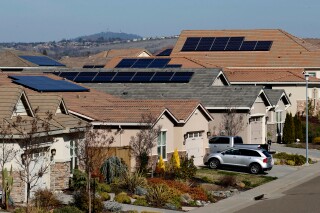
These delays carry substantial financial repercussions for solar panel owners. After investing significant capital in solar cell installations, they face prolonged periods before realizing savings on their power consumption or receiving payments for excess solar energy fed back into the grid.
Regulatory Indifference and Industry Frustration
The complex “interconnection” process, managed by utilities, ensures proper installation and grid integration of solar arrays. Following years of complaints from solar panel owners, the CPUC addressed these issues in a 2020 decision, clarifying the timelines for various interconnection steps, which range from five business days to 90 calendar days.
However, despite these clarified rules, the CPUC “has yet to reprimand utilities for regularly missing these deadlines.” Notably, in its 2020 decision, the commission explicitly rejected a recommendation from a working group—comprising industry representatives and consumer advocates—that proposed “financial penalties” for utilities failing to meet timelines on 95% of projects. The CPUC stated it would first determine if “timeline certainty is improving” before considering such penalties. When contacted for comment, CPUC spokesperson Adam Cranfill declined, citing an “ongoing adjudicatory proceeding.”
Utilities, represented by spokespersons Mike Gazda for PG&E and Jeff Monford for Edison, acknowledge the complaint. Gazda emphasized PG&E’s role in connecting “nearly 900,000 solar customers—more than any other U.S. utility,” and stated the company looks forward to addressing the claims through “appropriate regulatory channels.” Monford affirmed Edison takes “complaints seriously” and is “working with the California Public Utilities Commission to thoroughly address any issues.” Previous utility explanations for delays have included permitting challenges, unfamiliar new technologies, or the involvement of other agencies.
A Disincentive for Green Energy?
Kevin Luo, CALSSA’s policy and market development manager, argues that without tangible penalties, utilities lack an incentive to comply. He suggests a deeper issue: “From their perspective, solar and storage is competition for them. Having people with their own solar and storage reduces the need to continually expand the grid and build out transmission lines.”
This interconnection saga unfolds amidst broader controversy surrounding California’s rooftop solar industry, particularly the “net energy metering” (NEM) program. Designed to incentivize renewable energy adoption by compensating solar customers for excess energy, the program has been significantly altered in its latest iteration, paying “significantly less.” Utilities had argued the prior program created an unfair cost burden on non-solar customers. Three environmental groups challenged these changes in court, and the California Supreme Court ruled last month that lower courts should reexamine the case’s specifics, rather than simply deferring to utility regulators. The ongoing interconnection delays only add another layer of complexity to California’s ambitious clean energy transition.