


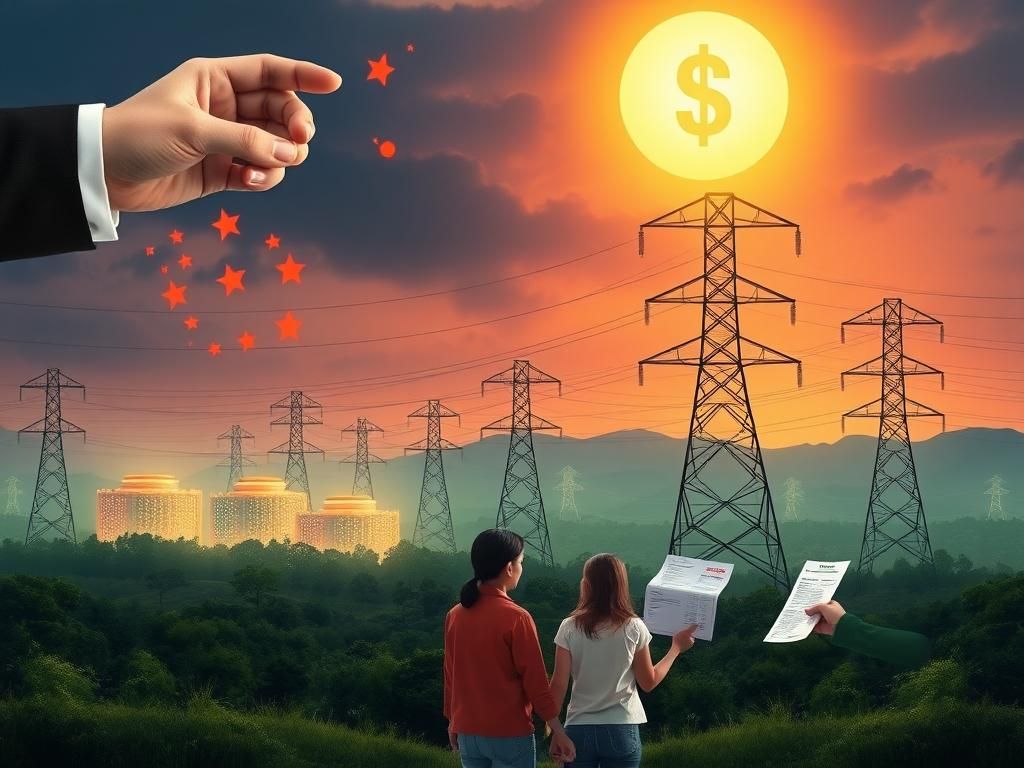
The AI Gold Rush: Private Equity Targets America’s Electric Utilities, Sparking National Debate
A silent transformation is underway in America’s energy landscape, driven by the insatiable demands of artificial intelligence and the burgeoning data center industry. Private investment firms, flush with capital and seeking stable, lucrative returns, are increasingly turning their attention to local electric utilities, igniting a fierce debate over profits, public service, and the future of consumer electricity bills.
Billions of dollars are now flowing from these private equity giants into utility companies across states like New Mexico, Texas, Wisconsin, and Minnesota, collectively delivering power to over 150 million customers through millions of miles of infrastructure. This strategic pivot is no accident, according to finance experts.
Why Utilities? The Lure of Stable Returns in the AI Era
“The reason is very simple: because there’s a lot of money to be made,” explains Greg Brown, a professor of finance at the University of North Carolina at Chapel Hill. He notes that private investment firms, after a successful 15-year run in infrastructure, now have “strong incentives” to acquire data centers, power plants, and the services that support them. This surge in interest is directly linked to the rapid expansion sparked by the late 2022 debut of OpenAI’s ChatGPT and the subsequent AI race.
Larry Fink, CEO of BlackRock, one of the world’s largest asset managers, echoed this sentiment in a July CNBC interview, declaring infrastructure to be “at the beginning of a golden age.” Fink highlighted the “need for trillions of dollars investing in infrastructure related to our power grids, AI, the whole digitization of the economy” and energy.
Deals Spark Controversy Across the Nation
Recent weeks have seen significant movement in the utility sector. Private equity behemoth Blackstone is seeking regulatory approval to acquire Public Service Company of New Mexico, based in Albuquerque, and Lewisville, Texas-based Texas New Mexico Power Co. Earlier this year, Wisconsin approved the buyout of the parent company of Superior Water, Light and Power. Last year, Blackstone also acquired a 19.9% stake in the utility owning Northern Indiana Public Service Co.
The Minnesota Battleground: Allete Buyout Sets a Precedent
However, it is a proposed deal in Minnesota that has become a crucial battleground, potentially setting a precedent for future acquisitions. The fight centers on the buyout of Allete, the publicly traded parent company of Duluth-based Minnesota Power. A subsidiary of BlackRock, in partnership with the Canada Pension Plan Investment Board, aims to acquire Allete, which serves 150,000 customers and operates a diverse portfolio of power sources, including coal, gas, wind, and solar.
The stakes are further elevated by the potential for Google to build a massive data center in southern Minnesota, promising a lucrative boon to whoever controls Minnesota Power.
A Clash Over Public Interest vs. Private Profit
Allete and its prospective buyers, BlackRock and the Canada Pension Plan Investment Board, argue that the acquisition would benefit the public. They contend that private ownership would grant Minnesota Power greater flexibility and patience in raising the substantial capital needed—an estimated $4.3 billion over five years—to comply with Minnesota’s ambitious law requiring utilities to achieve 100% carbon-free electricity by 2040. They also assert that the $6.2 billion buyout price, offering stockholders a 19% premium at $67 per share, would not impact electric rates.
On the other side, a formidable coalition of opponents has emerged, including the state attorney general’s office, industrial users that consume two-thirds of Minnesota Power’s electricity (such as U.S. Steel, Enbridge oil pipelines, and pulp and paper mills), and consumer advocacy groups like the Energy and Policy Institute. They voice grave concerns that private equity’s “extremely aggressive” pursuit of profits will ultimately fall “squarely on the backs of ratepayers” who have no choice in their electricity provider. They also dispute Allete’s claims of financial difficulty, pointing to the company’s own SEC filings indicating it is “well positioned” to meet its financing needs.
Mark Ellis, a former utility executive and consumer advocate who provided expert testimony against the Minnesota Power buyout, warns of a broader trend. He notes that electric utilities are seen as highly valuable long-term investments, generating around 10% returns not merely from selling electricity, but from the upcharge that regulators permit on capital investments like poles, wires, and substations. This model, critics argue, incentivizes utilities to spend more, leading to higher rates for consumers.
Regulatory Skepticism and Dire Warnings
Regulatory bodies have expressed significant apprehension. In July, Administrative Law Judge Megan J. McKenzie recommended rejecting the Minnesota Power deal, stating that evidence revealed the buyout group’s “intent to do what private equity is expected to do – pursue profit in excess of public markets through company control.”
More recently, a utility commission staff analysis echoed these concerns, cautioning that private investors could “load up Minnesota Power’s parent with massive debts, borrow at a relatively low interest rate and turn a fat profit margin from the utility commission granting a generous rate of return.” The staff report concluded with a stark warning for ratepayers: “For the big investors in private equity, this is a win-win… For the ratepayers of the highly leveraged utility, this represents paying huge profits to the owners if the private equity ‘wins’ and dealing with a bankrupt utility provider if it loses – it is a lose-lose.”
With the Minnesota Public Utilities Commission slated for a possible vote on October 3, the outcome of this pivotal case could shape the future of utility ownership and consumer energy costs across the United States. As electricity bills continue to climb nationwide, and growing evidence suggests some residential customers are subsidizing the vast energy needs of Big Tech’s data centers, the debate over who controls America’s power grid has never been more critical.