


Global Aid Shifts: Private Partnerships Emerge as Lifeline Amid Funding Gaps
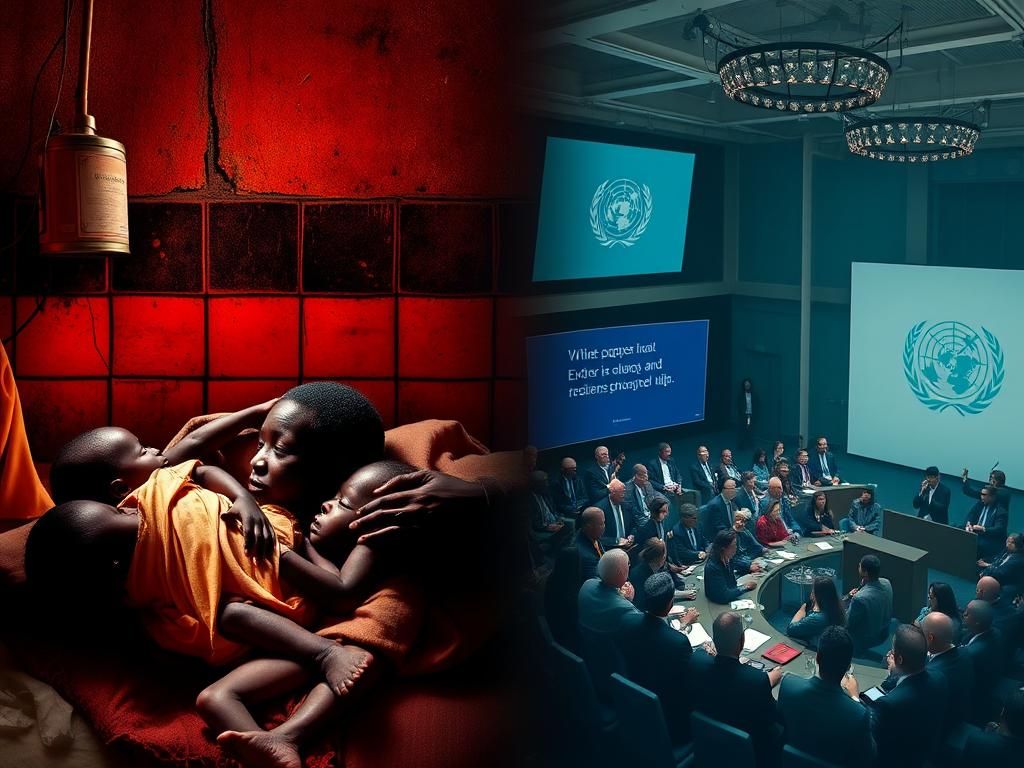
NEW YORK (AP) — In the bustling hallways of a Manhattan hotel, far from the main plenary of the United Nations General Assembly, a brief conversation sparked a potential lifeline for vulnerable newborns in Zambia. An executive from a global antipoverty nonprofit recounted the dire reality of a Zambian hospital where approximately 50 babies are born daily, yet the facility possesses only a single incubator, warmer, and resuscitator. This alarming scarcity, shared in an impromptu exchange, quickly captured the attention of leaders from a corporate-nonprofit alliance dedicated to providing essential medical equipment. By year’s end, Children International President Susana Eshleman optimistically announced, help could be on its way – a testament to the galvanizing power of collaboration amidst a challenging global landscape.
The Funding Gap: A New Reality for Global Aid
This crucial interaction unfolded during a week defined by a dramatic shift in the landscape of international development. The past year has seen significant foreign aid pullbacks, notably from the United States under the Trump administration, and other wealthy nations, leaving a substantial funding void. Organizations previously reliant on government grants are now grappling with severe budgetary constraints. David Miliband, CEO of the International Rescue Committee, revealed his organization alone lost a staggering $600 million in U.S. grants, a blow that underscores the profound impact of these policy changes. Similarly, the United Nations Children’s Fund (UNICEF) is bracing for at least a 20% cut in its revenue next year, prompting necessary staff reductions and a rigorous search for alternative cost-saving measures.
A New Era of Philanthropic Partnerships Emerges
Against this backdrop of reduced governmental support, the annual UNGA week has transformed into an even more critical nexus for private sector and philanthropic engagement. Across Manhattan’s ballrooms and intimate townhouses, a pragmatic and energized spirit pervaded, highlighting the indispensable role corporations and foundations must play in shaping an uncertain future.
Michael Bloomberg and African Development
Billionaire businessman Michael Bloomberg exemplified this shift during his global forum at The Plaza Hotel. He unveiled a groundbreaking partnership with the African Development Bank Group, aimed at channeling increased investment into the African continent. “There’s certainly no shortage of challenges to discuss over there,” Bloomberg remarked, gesturing towards the UN headquarters, “But the truth is, in a world that’s more interconnected and fast-moving than ever, the biggest problems can’t be solved by national governments alone.”
Clinton Global Initiative Reimagined
Former President Bill Clinton’s Global Initiative, which reimagined its format this year to emphasize working groups, saw hundreds of frontline workers, policy experts, foundation donors, and NGO representatives convene at the New York Hilton Midtown. These collaborative sessions, organized into groups of ten, focused on pinpointing specific problems and co-creating solutions. The outcome was a flurry of new commitments, including a social enterprise fund from Kiva Microfunds, backed by corporate foundations, and the establishment of a new Global Network for National Service.
Foundations Step Up: Rockefeller, Gates, and Health Initiatives
Further underscoring this trend, the Rockefeller Foundation pledged $50 million to strengthen international development systems. This commitment, articulated by President Rajiv Shah, includes a critical upgrade to the Famine Early Warning System, originally established by USAID, and a strategic move to diversify its financing to insulate it from political whims. In global health, the Clinton Health Access Initiative announced a partnership with Dr. Reddy’s Laboratories, Unitaid, and Wits RHI to distribute Gilead Sciences’ HIV prevention drug, lenacapavir, across 120 low- and middle-income countries. The Bill & Melinda Gates Foundation mirrored this proactive approach, announcing a similar collaboration with Indian pharmaceutical giant Hetero Labs and committing a substantial $912 million to the Global Fund’s replenishment campaign to combat AIDS, malaria, and tuberculosis.
Innovation and Diversification: The Path Forward
Despite these significant philanthropic investments, leaders in the sector remain clear-eyed about the limitations. Mark Suzman, CEO of the Gates Foundation, emphasized on Wednesday, “There is no possible way any philanthropy, any combination of philanthropies, can fill the gap.”
The call for innovation extends beyond funding. David Miliband urged his sector to enhance the effectiveness of aid delivery through new technologies and aggressively pursue diverse financing streams. He highlighted the potential of newly wealthy nations, such as those in the Gulf, and stressed the importance of appealing to local philanthropies within the recipient countries. Charity Wallace, a former adviser to Laura Bush and head of Wallace Global Impact, noted a fundamental shift in mindset: “Frankly, some people bemoan, as if it was still February and we wish that USAID still existed,” she said, but many now recognize “they have to step up in a different way” in this altered reality.
Renewed Urgency and Collective Action
This year’s UNGA week fostered an atmosphere of heightened urgency and unprecedented coordination among nonprofits. Lingering anxieties about the political climate, including concerns over potential restrictions on the UNGA itself and visa procurement, meant some organizations arrived with reduced staff. Yet, as Suzanne Ehlers, Executive Director of USA for UNHCR, declared when announcing a new $15 million campaign for refugee women’s scholarships, “It’s actually more consequential than ever.”
Matt Freeman, executive director of Stronger Foundations for Nutrition, observed a distinct shift from previous years, where numerous concurrent events often fragmented advocacy efforts. This year, he sensed a powerful spirit of collective action. “That’s been really heartwarming,” he stated, “Because you could imagine in a moment of scarcity that everyone’s elbows become sharper and they’re fighting for the pie.”
A Resilient Future for Global Impact
Kitty van der Heijden, Deputy Executive Director of Partnerships at UNICEF, encapsulated the complex mood of the week—a blend of disappointment over government withdrawals and excitement over burgeoning private sector leadership. Despite facing significant revenue cuts, her resolve was unwavering. “I have no time for depression,” she asserted. “I only have time to build more partnerships, to be out there, to deliver, because I know that we can. And we cannot do it alone.” The UNGA sidelines, traditionally a space for networking, have become a vital proving ground for a new model of global impact, driven by the ingenuity and collaborative spirit of non-governmental actors.