


UNGA 2023: A New Era of Humanitarian Aid Forged Through Unexpected Partnerships
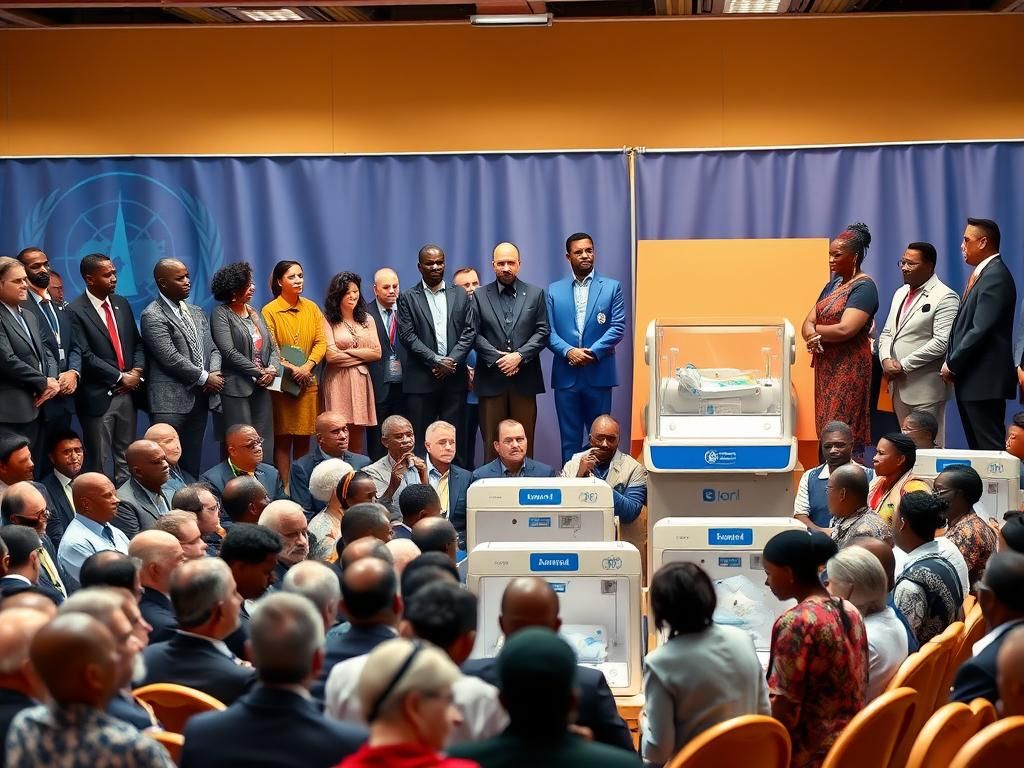
A casual conversation in a bustling hotel corridor during this past week’s United Nations General Assembly (UNGA) high-level meetings has potentially sparked a lifeline for a struggling Zambian hospital, emblematic of a broader shift in global humanitarian efforts. Susana Eshleman, President of Children International, a global antipoverty nonprofit, shared a stark reality from Zambia: a hospital grappling with just one incubator, warmer, and resuscitator for an average of 50 newborns daily. This distressing detail, instead of being met with mere sympathy, captured the attention of leaders from a corporate-nonprofit alliance dedicated to providing medical equipment, prompting swift action that could see crucial aid delivered by year’s end.
“It’s very encouraging and inspiring to be here,” Eshleman remarked, highlighting the vital boost these interactions provide in challenging times. “It feels like a shot in the arm sometimes when the work that we’re doing is hard and the global situation, given all the recent developments, is particularly hard.”
This hopeful exchange unfolds against a backdrop of significant foreign aid reductions from the U.S. and other affluent nations. These cutbacks, which have seen organizations like the International Rescue Committee (IRC) lose an estimated $600 million in U.S. grants, have necessitated a profound re-evaluation of how humanitarian and development work is funded and executed. UNGA week, often described by attendees as a unique “connective tissue,” has emerged as a critical forum for foundations, nonprofits, corporations, and international bodies to forge innovative partnerships and collectively chart a course through an uncertain future.
Philanthropy Steps Up: New Models for Global Challenges
The palpable sense of urgency during this year’s UNGA sidelines led to more pragmatic and focused discussions. Former President Bill Clinton, opening the Clinton Global Initiative (CGI) annual meeting, acknowledged a list of pressing global issues but concluded with a galvanizing call to action: “Be caught trying.”
Indeed, big philanthropy demonstrated a clear intent to engage with the private sector. Billionaire businessman Michael Bloomberg announced a groundbreaking partnership with the African Development Bank Group at his global forum in The Plaza Hotel. This initiative aims to inject more investment into the African continent, underscoring Bloomberg’s belief that “the biggest problems can’t be solved by national governments alone.”
At CGI, which restructured its meetings to emphasize collaborative working groups, hundreds of frontline workers, policy experts, foundation donors, and NGO representatives convened across the New York Hilton Midtown. These sessions fostered numerous new initiatives, from a social enterprise fund launched by Kiva Microfunds alongside corporate foundations to the establishment of a new Global Network for National Service.
Further reinforcing this trend, the Rockefeller Foundation committed $50 million to reimagining international development systems weakened by aid cuts. Rajiv Shah, the foundation’s president, highlighted plans to upgrade the critical Famine Early Warning Systems Network (FEWS NET), originally created by the U.S. Agency for International Development (USAID), and to diversify its financing to safeguard it from political shifts. In global health, the Clinton Health Access Initiative announced a partnership with Dr. Reddy’s Laboratories, Unitaid, and Wits RHI to distribute Gilead Sciences’ HIV prevention drug lenacapavir in 120 low- and middle-income countries. Similarly, the Bill & Melinda Gates Foundation partnered with Indian pharmaceutical manufacturer Hetero Labs for a comparable deal and pledged $912 million to the Global Fund’s replenishment campaign to combat AIDS, malaria, and tuberculosis.
The Indispensable Role of Diverse Partnerships
Despite the significant commitments from philanthropic organizations, leaders underscored that these efforts alone cannot bridge the widening funding gap. Mark Suzman, CEO of the Gates Foundation, unequivocally stated, “There is no possible way any philanthropy, any combination of philanthropies, can fill the gap.” He expressed hope that their substantial contributions would inspire governments, including the U.S., to increase their own commitments.
David Miliband, CEO of the International Rescue Committee, articulated the need for innovation in aid delivery and the exploration of alternative financing streams. He urged the sector to “embrace innovation” and to “persuade newly wealthy countries — like those in the Gulf would be one example — that there’s a real potential to have lifelong impact on the people we’re helping,” while also appealing to local philanthropy in recipient nations.
Nonprofits Adapt with Renewed Vigor
Across the spectrum of global issues—health, climate, migration—nonprofit leaders reported a distinct, heightened sense of purpose at this year’s UNGA events. Concerns about potential cancellations and travel restrictions due to visa issues had initially cast a shadow, with USA for UNHCR Executive Director Suzanne Ehlers recalling genuine worry that “we wouldn’t have UNGA.” Yet, Ehlers, who announced a $15 million campaign for refugee women’s scholarships this week, found the gathering “actually more consequential than ever.”
Charity Wallace, a past adviser to former first lady Laura Bush and head of Wallace Global Impact, observed a shift in mindset. Many now recognize that “they have to step up in a different way” in this new reality, moving past a bygone era of robust governmental aid. Matt Freeman, executive director of Stronger Foundations for Nutrition, noted a “heartwarming” spirit of collective action, a departure from previous years where organizations often vied for the same limited audience in a crowded schedule of concurrent events.
Kitty van der Heijden, Deputy Executive Director of Partnerships at the United Nations Children’s Fund (UNICEF), acknowledged a mix of “disappointment and excitement.” Facing at least a 20% cut in revenue next year, UNICEF is poised to reduce staff and seek cost efficiencies. While lamenting “withdrawal from governments” and a “depression” regarding the multilateral system, van der Heijden expressed an unwavering commitment: “I have no time for depression. I only have time to build more partnerships, to be out there, to deliver, because I know that we can. And we cannot do it alone.”
This year’s UNGA week has thus become a pivotal moment, showcasing a resilient and adaptable global humanitarian landscape where cross-sector partnerships are not just desired, but essential for addressing the world’s most pressing challenges.