


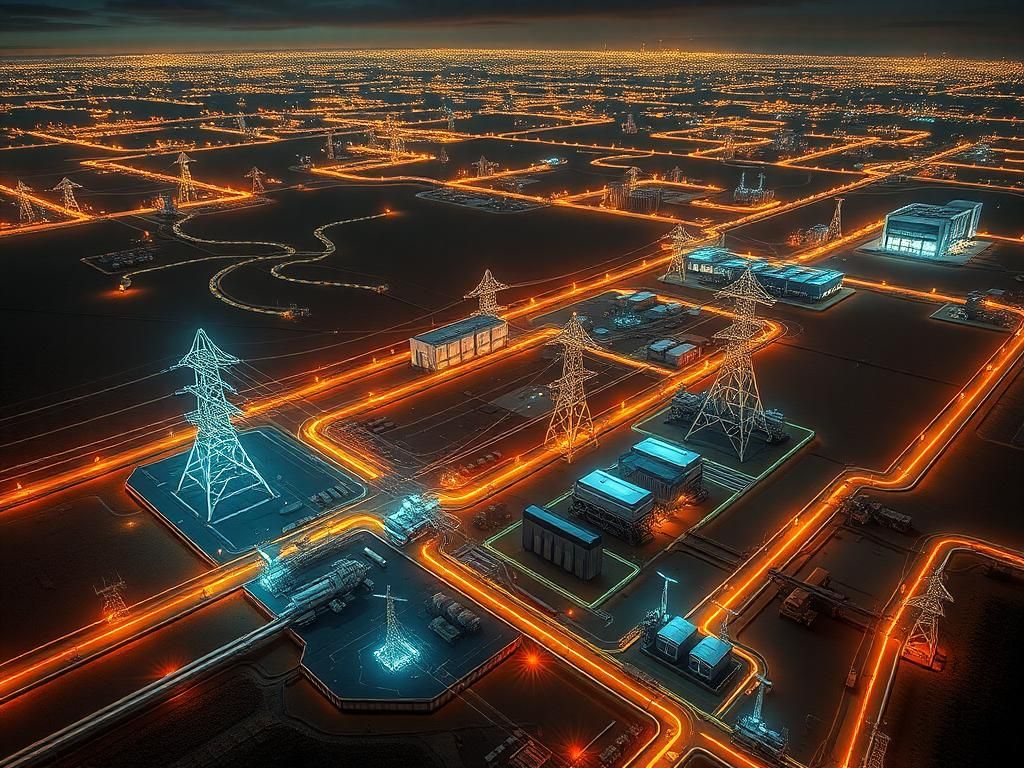
West Texas’s Energy Crossroads: Abundant Gas, Deficient Power Infrastructure Amidst AI Boom
The vast, energy-rich expanse of West Texas, renowned for producing 40% of the nation’s crude oil, sits on an extraordinary abundance of natural gas. Yet, as the burgeoning artificial intelligence industry, alongside cryptocurrency operations and the expanding oil and gas sector, demands unprecedented amounts of electricity, the region finds itself at a critical crossroads: a glaring deficit in the infrastructure needed to convert this gas into power and transmit it to eager data centers.
The challenge is immense. “Meeting this unprecedented demand takes more than production alone,” explains Ed Longanecker, president of the Texas Independent Producers and Royalty Owners Association. “It requires a strong network of pipelines and infrastructure to move natural gas efficiently and ensure reliable power for end users. In Texas, expanding this network has never been more important to keep pace with growth.”
The Soaring Demand for Power
Artificial intelligence, a rapidly evolving sector, powers massive data centers that are incredibly energy-intensive. This surge in demand extends beyond AI to include energy-hungry cryptocurrency mining facilities and even the oil and gas industry’s own increasing operational needs. Jason Jennaro, CEO of FrontierGen, a business analytics company, highlights the sheer scale of this energy appetite. His September report, evaluating Texas oil basins for their energy potential, reveals staggering figures:
- National Demand: The United States will need to add approximately 400 terawatts of energy in the next five years to satisfy AI demand alone. To put this in perspective, 400 terawatts is roughly equivalent to the annual energy consumption of France.
- Texas’s Share: The Electric Reliability Council of Texas (ERCOT), the state’s primary grid operator, forecasts that the state’s grid may need to nearly double in size by 2030, largely driven by these new industrial loads.
Permian Basin’s Disadvantage
Despite its prolific natural gas reserves—a valuable byproduct often associated with crude oil extraction—the Permian Basin is currently at a significant disadvantage. The region’s existing pipeline network, capable of transporting around 6.5 billion cubic feet of natural gas per day, is already experiencing congestion. This lack of adequate transmission infrastructure means that the gas, which could be a lucrative power source, often becomes a financial burden; earlier this year, some oil companies were reportedly paying others to take the gas off their hands. Converting this financial drain into profit by supplying it to data centers represents a massive, yet currently unrealized, opportunity.
In contrast, other major Texas oil and gas basins, such as the Eagle Ford and Haynesville shales, are better positioned. They boast more robust transmission lines, less industrial congestion, closer proximity to liquefied natural gas (LNG) hubs, and more developed fiber optic networks—all crucial components for supporting high-energy consumers.
Billions in Investment, Policy Reforms Needed
Recognizing the urgency, oil companies are already channeling billions of dollars into West Texas for projects aimed at building gas plants to generate electricity. However, the path forward is complex, requiring more than just generation facilities. Longanecker stresses the need for more pipelines and advocates for federal pipeline permitting reform, noting that the approval process can currently drag on for up to seven years.
Optimism is fueled by state-level initiatives. Jennaro is particularly bullish on the Permian Basin Reliability Plan, a legislative measure passed in 2023 by Texas lawmakers. This ambitious plan outlines the construction of new high-voltage transmission lines, with an anticipated completion by 2030, promising to alleviate some of the current bottlenecks.
Texas: At the Forefront of the Fourth Industrial Revolution
“In our opinion, we are entering America’s Fourth Industrial Revolution,” Jennaro asserts. “This revolution will be defined by the creation of large industrial nexus points where substantial amounts of electricity, transmission, natural gas, water, and fiber optics converge.” With its vast energy resources and strategic location, Texas, particularly its energy basins, is poised to be a pivotal player in this transformative era, provided it can overcome its current infrastructure challenges.
This story was originally published by The Texas Tribune and distributed through a partnership with The Associated Press.