

Powell Reiterates Cautious Stance on Interest Rate Cuts Amidst Divergent Fed Views
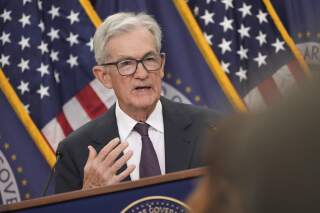
WASHINGTON (AP) — Federal Reserve Chair Jerome Powell on Tuesday reiterated a cautious stance on future interest rate reductions, setting a measured tone that contrasts sharply with the more aggressive calls from some of his colleagues. Speaking in Providence, Rhode Island, Powell underscored the delicate balance the central bank must maintain between its dual mandates of achieving maximum employment and stable prices.
Balancing Act: Employment and Inflation
Just last week, the Federal Reserve enacted its first interest rate cut of the year, reducing its benchmark federal funds rate by 0.2 percentage points, from approximately 4.3% to about 4.1%. While acknowledging a rising unemployment rate and the need to support the labor market, Powell’s remarks offered no indication of an immediate follow-up cut.
“If the Fed were to cut rates too aggressively, we could leave the inflation job unfinished and need to reverse course later and raise rates,” Powell cautioned. Conversely, he noted the risk of keeping rates “too high for too long,” which “the labor market could soften unnecessarily.” This nuanced position echoed his statements from last week’s news conference, where he admitted, “it’s challenging to know what to do.”
Opposing Views Within the Fed
This cautious approach stands in stark opposition to a faction within the Fed’s rate-setting committee, particularly those appointed by former President Donald Trump, who advocate for swifter and more substantial cuts. On Monday, Stephen Miran, who was swiftly confirmed to the Fed board this month just hours before last week’s meeting, argued the Fed should rapidly lower its key rate to a range of 2% to 2.5% from its current 4.1%. Miran, a top advisor in the Trump administration, is expected to return to the White House after his term concludes in January.
Adding to this push, Fed governor Michelle Bowman, also a Trump appointee from his first term, voiced similar sentiments earlier on Tuesday. Speaking in Asheville, North Carolina, Bowman asserted that “it is time for the (Fed) to act decisively and proactively to address decreasing labor market dynamism and emerging signs of fragility.” She warned of being “at serious risk of already being behind the curve in addressing deteriorating labor market conditions,” potentially necessitating faster and larger policy adjustments in the future, citing cooling inflation and a stumbling job market as supportive factors.
Voices of Prudence
Yet, other voices on the committee align with Powell’s prudence. Austan Goolsbee, president of the Federal Reserve’s Chicago branch, expressed caution in a CNBC interview, emphasizing the need for a slow approach given that inflation continues to hover above the Fed’s long-term 2% target. “With inflation having been over the target for 4 1/2 years in a row, and rising, I think we need to be a little careful with getting overly up-front aggressive,” Goolsbee stated.
Economic Implications and External Pressures
The federal funds rate, a critical lever of monetary policy, influences a broad spectrum of borrowing costs for consumers and businesses, including mortgages, car loans, and business investments. Therefore, the pace and magnitude of these cuts have widespread economic implications.
Powell also addressed external economic factors and political pressures. On tariffs, he contradicted Trump administration claims, stating that U.S. companies bear most of the costs, although the pass-through of these costs to consumers “has been later and less than we expected.” Regarding the persistent political attacks on the central bank, Powell firmly asserted the Fed’s independence. “Whenever we make decisions, we’re never, ever thinking about political things,” he declared. “Truth is, mostly people who are calling us political, it’s just a cheap shot. … We don’t get into back and forth with external people.”
The Path Forward
As the Fed navigates these divergent views and complex economic indicators, the path forward for interest rates remains a subject of intense internal debate, with Chair Powell steering a course of deliberate and watchful action to secure both price stability and a robust labor market.