


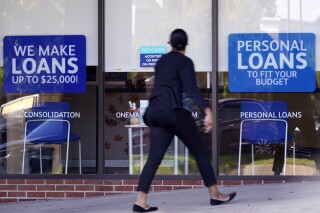
Generation Z’s Credit Scores Face Significant Headwinds Amid Economic Shifts
The financial landscape for Generation Z has grown increasingly challenging over the past year, with new data revealing a notable drop in their average credit scores. A recent report from FICO, the leading credit scoring company, highlights that Gen Z has seen its credit standing erode more significantly than any other demographic, largely attributable to the resumption of federal student loan payments and broader economic instability.
A Deeper Dive into Gen Z’s Declining Credit
Nationally, the average FICO credit score dipped by two points to 715 this year. However, for Gen Z—individuals generally born between the mid-1990s and early 2010s—the decline was steeper, with their average score falling three points to 676. This marks the most substantial year-over-year decrease observed for any age group since 2020, signaling mounting financial stress for young adults. For context, a FICO score, which ranges from 300 to 850, is a critical numerical assessment that helps lenders evaluate an individual’s creditworthiness and likelihood of repaying a loan.

The Weight of Student Loan Debt Returns
The primary driver behind this credit score regression for Gen Z is their disproportionate exposure to student loan debt. The FICO report indicates that a substantial 34% of Gen Z consumers carry open student loans, a figure nearly double the 17% seen across the total U.S. population. The reintroduction of federal student loan delinquency reporting, following a prolonged pandemic-era pause, has directly impacted these scores.
Federal student loan payments were initially suspended by the U.S. Department of Education in March 2020 to provide relief during the economic upheaval caused by the COVID-19 pandemic. While payments officially resumed in October 2023, the Biden administration introduced a one-year “on-ramp” period, extending through October 2024. During this time, missed payments would not immediately result in negative credit reporting to mitigate the financial shock. However, the end of this protective window means that any subsequent delinquencies are now directly affecting borrowers’ credit histories. This follows earlier actions by the Trump administration, which had restarted the collection process for some outstanding student loans that were already in default prior to the pandemic pause, with roughly 5.3 million borrowers facing potential wage garnishments or seizure of tax refunds for unpaid debts.
Navigating a Challenging Economic Landscape
Beyond student loans, young consumers are navigating a tough job market coupled with persistent high inflation, which collectively make it challenging to meet their financial obligations on time. These economic headwinds can significantly impact their ability to secure essential financial services, as a lower credit score often translates to higher interest rates or outright denial for car loans, mortgages, new credit cards, and even auto insurance.
What the Experts Are Saying
“They’ve had so many different ongoing causes of economic instability that have really been with them as they’ve been growing up; those factors make it a lot harder for this generation to stay financially stable,” commented Courtney Alev, a consumer advocate at Credit Karma. Yet, there’s a silver lining, as Tommy Lee, a senior director at FICO, points out that younger consumers possess “the most potential for score improvement” due to their relatively shorter credit histories.
Actionable Steps to Improve Your Credit Score
- Confront Your Score Head-On: Avoiding your credit score out of fear is counterproductive, Alev advises. “You need to know where you stand to be able to take action.” Services like Experian, FICO, and Credit Karma provide free access to your scores. It’s crucial to remember that a credit score is merely a numerical representation of your financial behavior, not a reflection of your personal worth.
- Prioritize On-Time Payments: This is arguably the most critical component of your FICO score, accounting for about 35% of its calculation, according to Lee. Consistently making payments by their due dates, whether the minimum or full balance, is paramount. Setting up automatic payments can be an effective strategy to avoid missed deadlines, especially when managing multiple debts.
- Maintain Low Credit Utilization: Your credit utilization ratio—the percentage of your total available credit that you are currently using—is another significant factor. Experts suggest keeping this ratio between 10% and 30%. While a low percentage is beneficial, a 0% utilization across all accounts isn’t necessarily optimal. If you are struggling with existing debt, it’s generally advisable to avoid taking on new credit.
Building a Stronger Financial Future
Ultimately, credit scores are dynamic, evolving with an individual’s financial habits. As Lee emphasizes, “Your score, if you want to maintain it or improve it, you can do so by exhibiting good credit behavior.” By adopting disciplined financial practices, Gen Z can actively work towards rebuilding and strengthening their credit profiles.