

UNGA Week: A Gathering of Urgency Amidst UN’s Uncertain Future
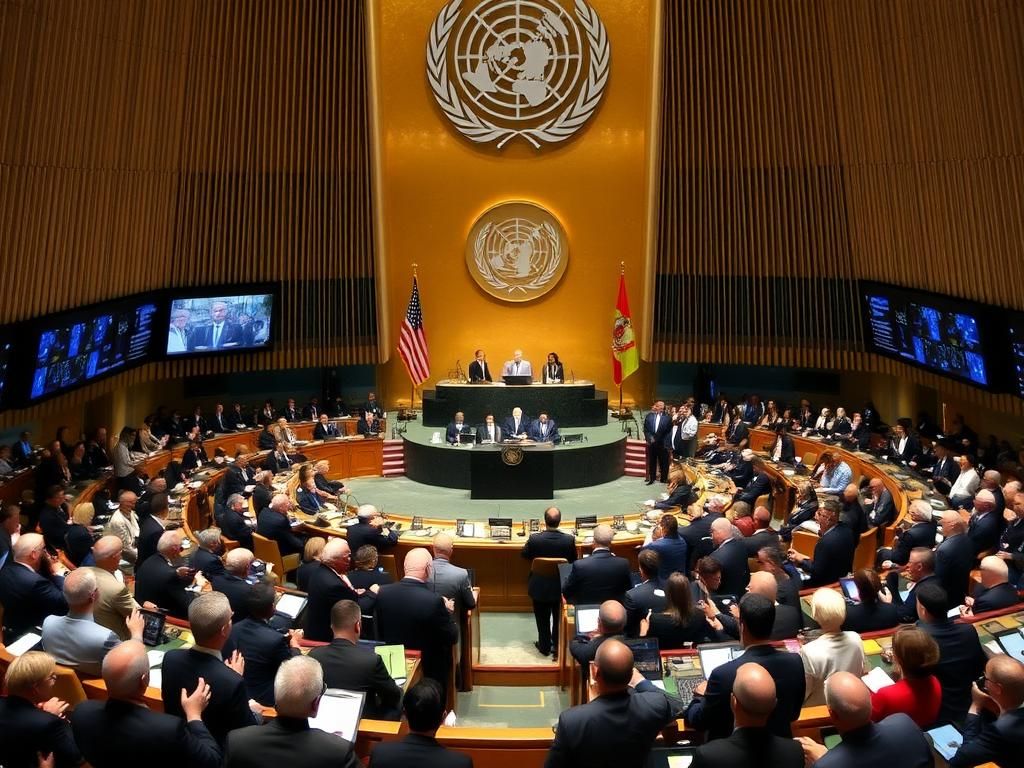
NEW YORK (AP) — Even as the United Nations grapples with an uncertain future marked by significant funding cutbacks and persistent questions of its global relevance, New York City is once again drawing an influx of leading foundations and nonprofits. They arrive this week for the annual General Assembly of world leaders, known colloquially as UNGA Week, for a densely packed schedule of conferences, critical meetings, and networking events aimed at fostering global collaboration.
A Shift in Approach Reflects Global Challenges
However, this year’s UNGA Week carries a distinct weight, with a palpable sense of urgency reflecting the UN’s current struggles. The Bill & Melinda Gates Foundation, a perennial presence, notably delayed the release of its annual report assessing progress toward the Sustainable Development Goals (SDGs). This unprecedented postponement signals uncertainty regarding the future commitment of foreign aid and global health funding from member nations.
Similarly, the Clinton Global Initiative (CGI), established in 2005 by former President Bill Clinton to convene leaders from business, politics, and philanthropy, is altering its format. Instead of focusing solely on pledges, this year’s two-day conference will challenge participants to actively develop concrete new programs and solutions in response to pressing global challenges.
UN Navigates Funding Cuts and Diplomatic Deadlock
These adjustments underscore a broader shift impacting the United Nations itself. The United States, historically the UN’s largest single funder, has initiated actions to freeze or reclaim funding, leading to widespread consequences across UN agencies. For example, the World Food Program (WFP) has faced severe budget shortfalls, forcing major layoffs and program reductions, directly impacting humanitarian assistance worldwide.
Compounding this, the UN’s most powerful body, the Security Council, has struggled to fulfill its foundational mandate—”to save succeeding generations from the scourge of war”—remaining deadlocked on critical interventions in ongoing major conflicts, including the wars in Ukraine, Gaza, and Sudan.
Enduring Relevance and New Collaborative Efforts
Despite these formidable institutional challenges, many attendees maintain that UNGA Week remains an indispensable platform. Kevin Sheekey, a senior adviser to billionaire and former New York mayor Mike Bloomberg, emphasizes the UN’s unique convening power. “It is still the only place that the whole world gets together, and that alone, in my view, is enough to justify its existence,” Sheekey stated.
Since 2017, Bloomberg Philanthropies has hosted a significant forum on the UNGA sidelines, fostering connections between world leaders, businesses, and philanthropic organizations. This year, their focus will zero in on global collaboration and investment opportunities within African countries, with a particular emphasis on the role of sports in development.
Intimate Discussions and Heightened Urgency
The United Nations Foundation, founded by Ted Turner in 1989 to champion cooperation with the UN, meticulously tracks the thousands of public events that proliferate on the sidelines of the General Assembly. George Hampton, one of the foundation’s executive directors, notes that while the sheer number of events remains consistent with previous years, there’s a discernible pivot towards smaller, more intimate roundtables. This shift, he suggests, allows for more frank and substantive conversations, reflecting a growing awareness among participants. “It is clear that the space we have to solve problems is shrinking, the kind of global cooperation table is shrinking as the problems themselves grow,” Hampton observed, adding, “So it does feel there’s a new urgency, a new sense that this time matters more than those before it.”
A Critical Moment for the Global Development Community
Gregory Milne, CEO of the Clinton Global Initiative, echoed this sentiment, drawing parallels to past crises. He noted that CGI’s adaptive changes for this year’s meeting are akin to its responses during pivotal moments like the 2010 Haiti earthquake and the global COVID-19 pandemic. “This is a critical moment for the global development community,” Milne asserted. “But we also know that the CGI community and thousands of organizations that span the public and private sector have always worked to meet the unique and urgent challenges of the time.”
Addressing Gender-Based Violence: A “Free Future” Initiative
An early and impactful event on the periphery of UNGA Week was “Free Future,” hosted by the Ford Foundation, which focused intensely on the critical issue of ending gender-based violence. Speakers, including Nobel Peace Prize laureate and former Liberian President Ellen Johnson Sirleaf, offered reflections on the 30th anniversary of the landmark 1995 UN Conference on Women in Beijing, where numerous pledges were made towards achieving global gender equality.
Sirleaf acknowledged the progress in promoting women leaders and expanding access to opportunities but candidly stated, “We have not done enough.” The conference, co-hosted by Pivotal, Melinda French Gates’ organization, highlighted the profound economic toll exacted by violence. Monica Aleman, international program director at the Ford Foundation, underscored this point, explaining that “Violence has a cost… that money can make a difference in bringing a solution, whether that is through cash transfers or other economic opportunities that you can offer survivors.”
A Beacon of Hope Amidst Turbulence
The “Free Future” gathering, which brought together funders, private companies, advocates, and grantees, served not only to address a vital issue but also to invigorate and inspire attendees ahead of what promises to be an exceptionally demanding week of meetings. Celiné Justice of Pivotal Ventures emphasized the imperative for philanthropies to collaborate more closely than ever and to forge partnerships beyond their traditional allies, ensuring that critical issues like gender-based violence are not overshadowed. While the UN navigate its own turbulent waters, the vibrant constellation of civil society and philanthropic efforts surrounding its General Assembly demonstrates an unwavering commitment to global problem-solving. This robust parallel ecosystem continues to serve as a beacon of hope, pushing forward initiatives and dialogues vital for a world in flux.