


Hyundai Commits $2.7 Billion More to Georgia Plant Amidst Expansion and Diplomatic Hurdles
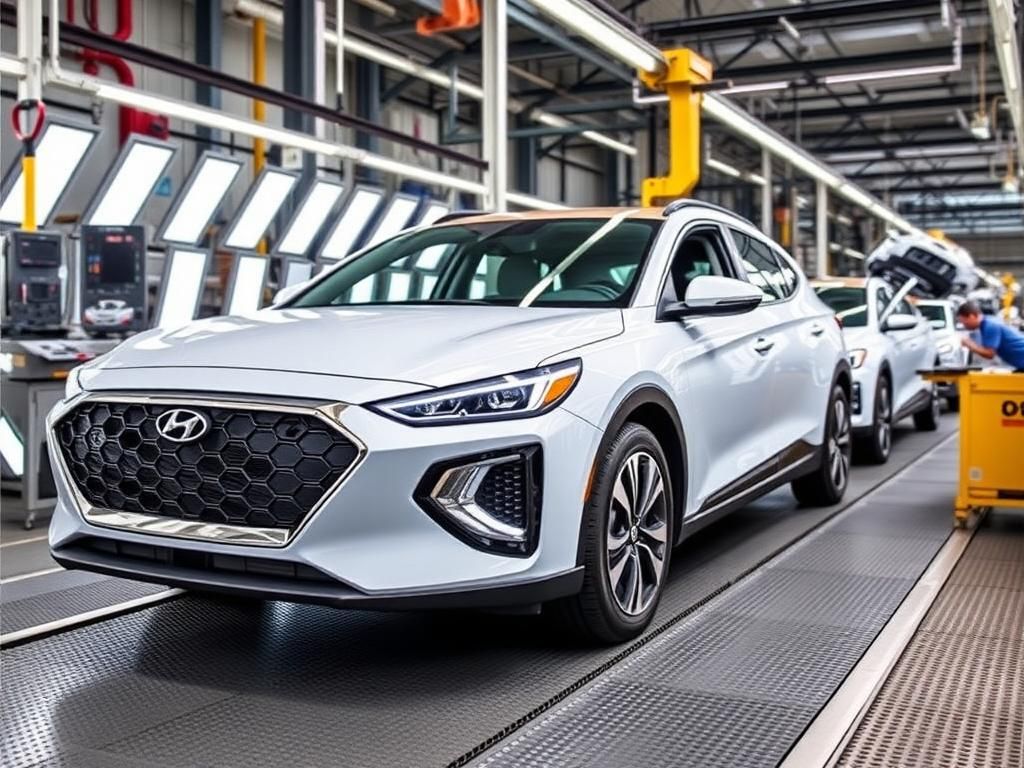
ATLANTA – Hyundai Motor Group has reaffirmed its robust commitment to its Georgia manufacturing hub, announcing a significant $2.7 billion investment to expand its Ellabell plant. This strategic move, detailed on Thursday, aims to bolster production capacity and introduce new electric and hybrid vehicle models, even as the company navigates the repercussions of a recent immigration raid that temporarily halted its battery plant development.
Bolstering Production and Domestic Content
The fresh $2.7 billion infusion is earmarked to boost the Ellabell site’s annual production capacity by an additional 200,000 vehicles over the next three years, pushing the total to an impressive 500,000 units annually. This expansion is part of a larger $5 billion investment Hyundai initially pledged across its U.S. operations last August. With this latest commitment, the total investment in the auto plant alone now stands at $10.3 billion.
The automaker revealed plans to diversify its Georgia output, intending to manufacture 10 distinct models of electric (EV) and hybrid gas-electric vehicles. This is a substantial leap from the current two models being assembled as the plant scales up. Notably, Hyundai will introduce a mid-sized pickup truck, a critical segment in the American market, building on the success of its compact Santa Cruz model launched in 2021.
Hyundai is also driving towards greater localization. The company aims to increase the domestic content of vehicles sold in the United States from 60% to more than 80% by 2030, underscoring its long-term strategy to deepen its roots in the American automotive landscape.
The Shadow of the Immigration Raid
The announcement comes weeks after a contentious immigration raid by federal authorities at the Ellabell site, which led to the arrest of over 300 South Korean citizens. The incident cast a shadow over foreign investment in the U.S. and triggered a diplomatic dispute between Seoul and Washington. Hyundai CEO José Muñoz confirmed that the raid caused a delay of at least two to three months in the startup of the adjacent electric vehicle battery plant, a joint venture with LG Energy Solution valued at $4.3 billion. The facility is now projected to commence operations in the first half of 2026.
Reassurance and Future Vision
Despite the setback, Hyundai executives and Georgia officials have worked to mitigate concerns. Brent Stubbs, Chief Administrative Officer of the Ellabell site, publicly reaffirmed the company’s unwavering commitment, stating in The Atlanta Journal-Constitution that “This situation doesn’t change our plans to continue expanding and localizing in the United States. Our investments in America are part of a long-term strategic plan.”
Georgia Governor Brian Kemp, a staunch advocate for foreign investment, also expressed confidence. Speaking at the groundbreaking of a Rivian Automotive EV plant, Kemp indicated ongoing discussions with the White House to address “visa issues” that could streamline legal permissions for South Korean employees crucial to building and operating these advanced facilities.
Economic Impact and Global Footprint
Beyond the substantial capital investment, Hyundai’s expansion promises significant job creation. The Ellabell complex currently employs 3,129 individuals, a number pledged to grow to at least 8,500 workers by the end of 2031. To facilitate this massive undertaking, state and local governments have provided a comprehensive incentive package totaling $2.1 billion in tax breaks and other benefits.
Globally, this Georgia expansion is a cornerstone of Hyundai’s broader strategy to increase worldwide production by 1.2 million vehicles annually. This includes an additional 250,000 vehicles from Pune, India; 200,000 more from Hyundai’s EV plant in Ulsan, South Korea; and parts for the assembly of 250,000 vehicles in Saudi Arabia, Vietnam, and North Africa. By 2030, Hyundai aims for a global production of 5.6 million vehicles, with 60% being electric or hybrid, focusing on key markets in South Korea, North America, and Europe.
Innovation on the Horizon
Looking ahead, Hyundai is also deepening its investment in robotics and innovative vehicle technology. The company anticipates launching extended-range electric vehicles with gasoline motors by 2027, designed to offer an impressive driving range exceeding 600 miles (960 kilometers). This vision underscores Hyundai’s dedication to advanced manufacturing and sustainable mobility, securing its position as a global automotive leader.