


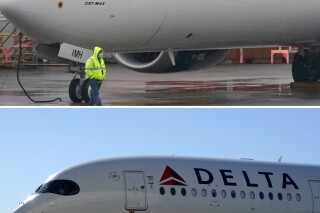
U.S. Revokes Antitrust Immunity for Delta-Aeromexico Joint Venture Amid Trade Spat
Washington D.C. – In a significant escalation of a simmering trade dispute, U.S. Transportation Secretary Sean Duffy announced Tuesday the revocation of antitrust immunity for Delta Air Lines and Aeromexico. This decision, which forces the dissolution of their eight-year-old joint venture, stems from ongoing concerns that Mexico is unfairly disadvantaging U.S. carriers operating within its borders.
A Partnership Grounded by Policy Disputes
Since 2016, the antitrust immunity granted to Delta and Aeromexico allowed them to operate as a single entity on cross-border routes, coordinating flight schedules, pricing strategies, and revenue sharing. This arrangement was designed to foster greater competition and offer more choices to consumers. However, Secretary Duffy asserted that maintaining such a partnership is no longer tenable while Mexico implements policies perceived as detrimental to U.S. airlines.
Duffy’s directive targets specific actions taken by the Mexican government concerning air traffic at Mexico City’s primary gateway, Benito Juarez International Airport. Several years ago, Mexico imposed limits on both passenger and cargo flights at Benito Juarez. Compounding this, in 2022, cargo airlines were mandated to relocate their operations to the newer Felipe Angeles International Airport, situated more than 30 miles (48.28 kilometers) outside Mexico City. This move has been widely unpopular with major international carriers due to the airport’s remote location, which can result in a travel time of up to 2.5 hours from the city center.
Furthermore, the U.S. alleges that Mexico reduced available flight slots at Benito Juarez under the pretext of initiating construction projects, which, according to Secretary Duffy, have yet to materialize. “Empty promises mean nothing. After years of taking advantage of the U.S. and our carriers, we need to see definitive action by Mexico that levels the playing field and restores fairness,” Duffy stated, underscoring the U.S.’s demand for concrete changes.
Mexico’s Stance: Congestion and Technical Decisions
Mexican President Claudia Sheinbaum has previously countered these accusations, stating that the transfer of cargo operations was a purely “technical decision” aimed at alleviating severe congestion at the aging Benito Juarez airport. She maintained that Mexico’s actions were not discriminatory against U.S. airlines but rather a necessary measure to ensure operational safety and efficiency. While acknowledging initial complaints from some U.S. companies regarding the shift, she affirmed that they had ultimately adapted to the new operational landscape. President Sheinbaum firmly asserted that there is “no reason to impose any sanctions related to this matter.”
Economic Fallout and Industry Opposition
Both Delta and Aeromexico have expressed profound disappointment with Duffy’s decision and are currently evaluating their options, including a potential challenge to the order. In regulatory filings, the airlines argue that penalizing them for the actions of the Mexican government is unjust and that the dissolution of their alliance will inflict significant economic harm on both countries. They predict a tangible impact on U.S. jobs, communities, and consumers.
The alliance has been a major facilitator of travel between the two nations. Mexico stands as the top foreign destination for American travelers, with over 40 million passengers flying there last year alone. Data from aviation analytics firm Cirium reveals that Delta and Aeromexico collectively operated more than 30,000 flights between the United States and Mexico in the past year. The airlines estimate that the loss of direct flight connectivity resulting from this order could deter over 140,000 American and nearly 90,000 Mexican tourists from visiting the other country, leading to substantial economic losses.
Despite the claims of unfair advantage, Delta and Aeromexico have maintained that their partnership has not stifled competition. They point to the expansion of competing airlines like Viva and Volaris at Benito Juarez following the collapse of Interjet during the pandemic. However, it is also noteworthy that Aeromexico acquired half of Interjet’s vacated slots, further consolidating its presence at the busy Mexico City hub.
Looking Ahead: January Deadline Looms
Duffy’s order is slated to take effect in January. Until then, passengers can expect no immediate alterations to their existing flights or loyalty program benefits. The coming months will likely see intensive diplomatic efforts and potential legal challenges as both nations and the affected airlines navigate the complex implications of this decision on the vital U.S.-Mexico air travel market and the broader bilateral trade relationship.