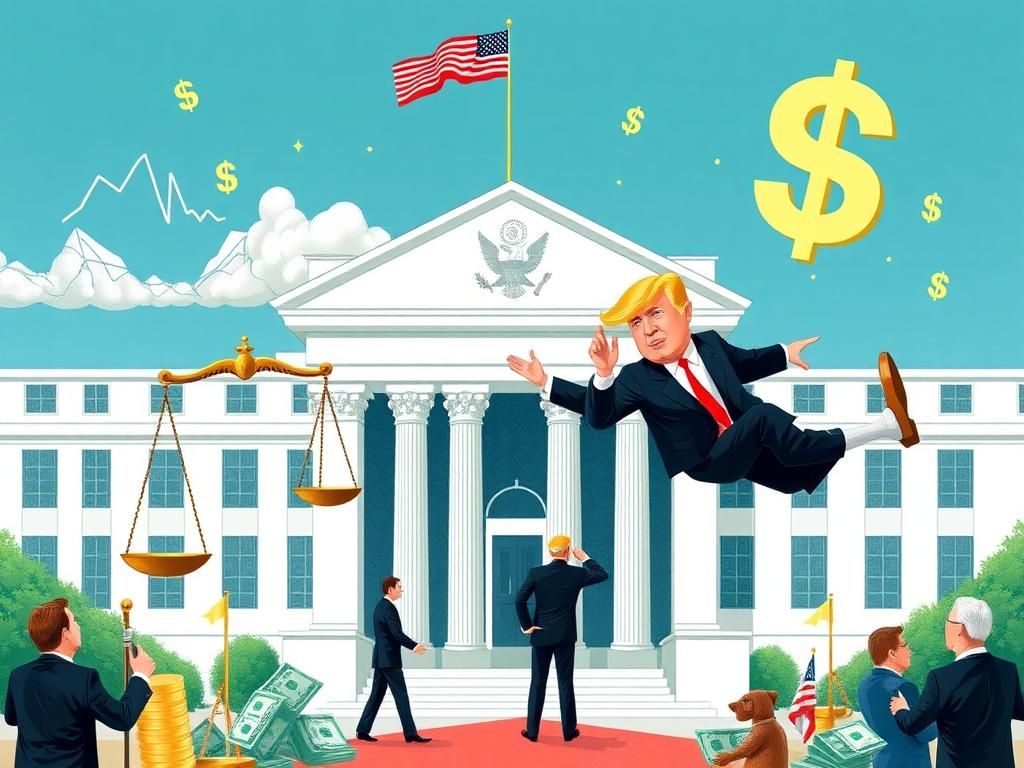


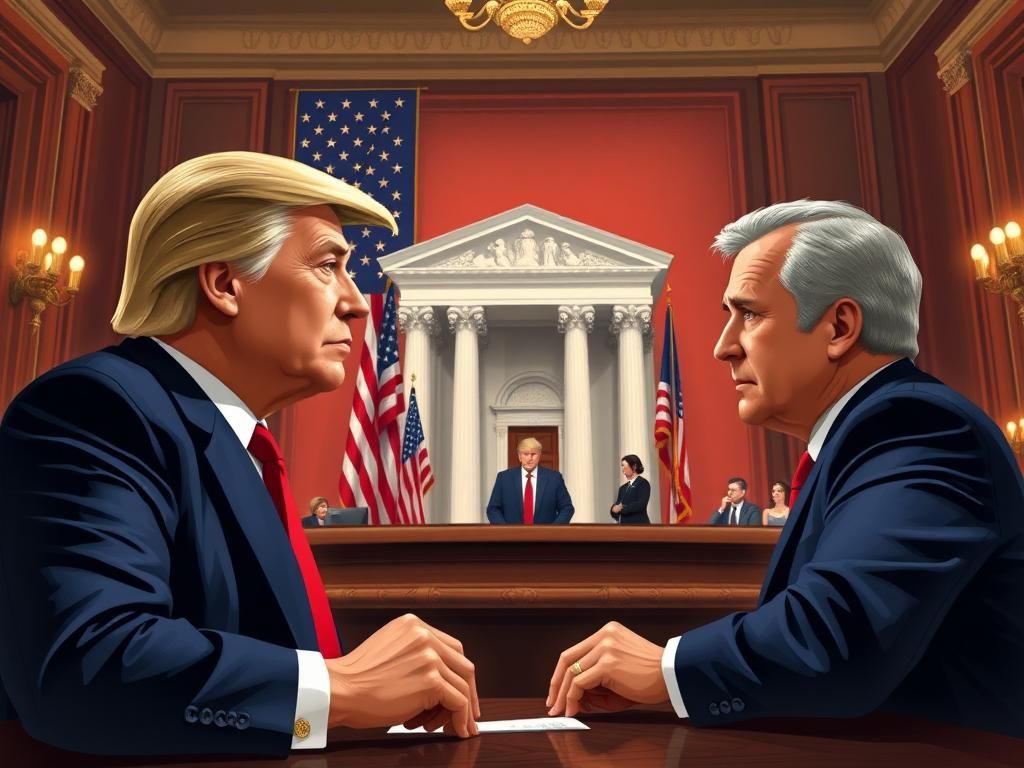
Trump Administration Mounts Aggressive Push to Reshape Federal Reserve Ahead of Key Rate Decision
WASHINGTON (AP) — In an extraordinary and aggressive move, the Trump administration has launched a two-pronged strategy to significantly alter the composition of the Federal Reserve’s powerful board of governors before the central bank convenes for its next critical interest rate decision. The administration is urgently pressing an appeals court to remove Governor Lisa Cook by Monday, September 15th, just days ahead of the Federal Open Market Committee’s (FOMC) scheduled meeting on Tuesday and Wednesday, September 16th-17th. Concurrently, Senate Republicans are accelerating efforts to confirm President Donald Trump’s nominee, Stephen Miran, to an open seat on the board, with a potential vote as early as Monday.
The Push to Oust Governor Lisa Cook
The push to oust Cook stems from accusations of mortgage fraud, which the Trump administration alleges occurred in July 2021, before she was appointed to the Fed board in 2022. Specifically, Cook is accused of appearing to claim two properties as “primary residences,” a designation that can secure lower mortgage rates and smaller down payments compared to declaring a property as a rental or second home. Cook has vehemently denied these charges.
However, U.S. District Court Judge Jia Cobb ruled late last Tuesday, September 9th, that the administration’s initial attempt to fire Cook on August 25th was illegal. Judge Cobb’s decision underscored a crucial legal principle: Federal Reserve governors can only be removed “for cause,” a standard she defined as misconduct committed while in office. Since the alleged mortgage fraud predates Cook’s tenure on the board, the judge found the administration’s grounds for dismissal insufficient, promptly reinstating her.
Undeterred, the Trump administration swiftly filed an emergency appeal, arguing that even if the alleged conduct occurred prior to her appointment, it “indisputably calls into question Cook’s trustworthiness and whether she can be a responsible steward of the interest rates and economy.” The administration is seeking an emergency decision from the appeals court by Monday, September 15th. A successful appeal would see Cook temporarily removed from the board pending a final resolution of her case, thereby preventing her participation in next week’s pivotal FOMC meeting. Should the appeals court rule in Cook’s favor, the administration has indicated it could pursue an emergency ruling from the Supreme Court.
High Stakes for the Upcoming FOMC Meeting
The stakes are particularly high for the upcoming FOMC meeting, where the Fed is widely anticipated to cut its benchmark interest rate by a quarter-point, bringing it to approximately 4.1%. This reduction, if enacted, typically translates over time into lower borrowing costs for consumers and businesses on everything from mortgages and auto loans to commercial credit, influencing economic activity across the nation.
Should Stephen Miran, a former top economic advisor to President Trump, be confirmed by the Senate in time for next week’s meeting, and especially if Cook is sidelined, the dynamics of the FOMC could significantly shift. Miran could potentially advocate for a more aggressive half-point reduction in the Fed’s rate. While Trump’s other appointees to the Fed, Christopher Waller and Michelle Bowman, might align with a larger cut, the 12-member voting committee—comprising the seven members of the Fed’s board and five of the 12 regional bank presidents (who vote on a rotating basis)—still presents a complex balance. Several regional bank presidents have expressed ongoing concerns about persistently elevated inflation, making a unanimous vote for a half-point cut unlikely. It’s plausible that a quarter-point cut could still pass, but potentially with dissenting votes from both those who prefer no cut and those pushing for a more substantial reduction.
This intense legal and political maneuvering highlights the administration’s determination to influence the direction of the nation’s monetary policy, underscoring the delicate balance between political appointments and the fiercely guarded independence of the Federal Reserve.