


By LUCAS LIN and ANANYA PINNAMENENI, The Chronicle
Updated June 10, 2024
Duke University Forges Path in AI Education with Campus-Wide ChatGPT Access and Ethics Initiative
As generative AI reshapes academia, Duke provides advanced tools to thousands while sparking vital discussions on integrity and learning in the digital age.
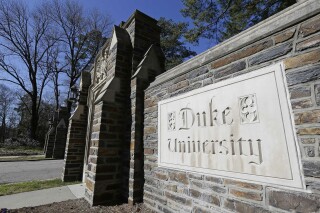
DURHAM, N.C. – In a proactive and significant move to navigate the rapidly evolving landscape of artificial intelligence in higher education, Duke University has positioned itself at the forefront of institutional adaptation. Since the widespread emergence of generative AI tools like OpenAI’s ChatGPT in late 2022, universities globally have grappled with both the immense potential and inherent challenges these transformative technologies present. Duke is now empowering its entire undergraduate student body, along with faculty, staff, and students across its professional schools, with free, unlimited access to ChatGPT-4o, OpenAI’s most advanced multimodal model, effective June 2. This bold step is complemented by the recent launch of DukeGPT, a university-managed AI interface designed to ensure maximum privacy and robust data protection, and a comprehensive Provost’s Initiative aimed at shaping the future of AI in academic life.
Duke’s Comprehensive AI Strategy
The university’s multi-pronged approach underscores a strong commitment to both leveraging cutting-edge technology and fostering critical discourse. On May 23, Duke officially launched a new Provost’s Initiative dedicated to meticulously examining the profound opportunities and challenges AI introduces to student life. This initiative will facilitate campus-wide conversations, involving diverse stakeholders from various departments, and is set to culminate in a detailed report with actionable recommendations by the close of the Fall 2025 semester. Simultaneously, the rollout of ChatGPT-4o access and DukeGPT, an internal AI interface that prioritizes user privacy and robust data security while connecting users to valuable learning and research resources, positions Duke as a leader in responsibly integrating AI into its educational ecosystem.
The Classroom Divide: Embrace vs. Ban
The introduction of generative AI has ignited a spirited debate within Duke’s esteemed faculty, revealing a spectrum of pedagogical approaches. Some professors champion AI as an indispensable learning aid, while others express profound reservations, citing concerns over the erosion of critical thinking and academic integrity.
Dr. David Carlson, an Associate Professor of Civil and Environmental Engineering, exemplifies the former. In his machine learning courses, Carlson adopts a ‘lenient’ policy, permitting students to utilize generative AI provided they maintain full transparency about its use. “You take credit for all of [ChatGPT’s] mistakes, and you can use it to support whatever you do,” Carlson states, acknowledging that while AI tools are “not flawless,” they offer valuable secondary explanations of complex lectures and readings, thereby enhancing comprehension.
Similarly, Dr. Matthew Engelhard, Assistant Professor of Biostatistics and Bioinformatics, encourages AI use, though with a crucial caveat. His ‘pretty hands-off approach’ is predicated on students engaging interactively with these tools to genuinely understand the content. “My approach is not to say you can’t use these different tools. It’s actually to encourage it, but to make sure that you’re working with these tools interactively, such that you understand the content,” Engelhard explains. He cautions against relying on AI as a shortcut, likening it to a calculator that, if overused, can hinder the understanding of fundamental mathematical principles “from the ground up.”
However, the humanities present a different perspective. Dr. Thomas Pfau, the Alice Mary Baldwin Distinguished Professor of English, argues emphatically that generative AI holds “no place” in fields where “questions of interpretation … are really at stake.” He fears that delegating tasks like sentence completion or essay writing to AI risks students “losing [their] voice” and ultimately undermines the university’s core mission of cultivating individual personhood. While acknowledging its potential role in STEM fields, Pfau emphasizes the unique demands of humanistic inquiry.
Echoing this sentiment, Dr. Henry Pickford, Professor of German Studies and Philosophy, highlights the dual function of writing in the humanities: fostering “self-discovery” and “self-expression.” He worries that increased AI access could reduce writing to merely “discharging a duty,” thus bypassing crucial “self-transformation” in students’ beliefs and rationales. Pickford also notes a significant increase in the opportunities for plagiarism, leading him to implement a “stringent AI policy” in his classes. These concerns were also voiced at an Academic Council meeting on August 4, where Professor of History Jocelyn Olcott warned that students who rely on AI without developing humanistic inquiry risk being “replaced” by the very technology they employ in the future.
Adapting Assessment in the AI Era
Faculty members across disciplines report considerable challenges in identifying AI-generated content in traditional assignments, prompting a decisive shift toward innovative assessment methods. Dr. Carlson, for instance, has integrated oral presentations into his class projects, deeming them “very hard to fake” compared to written or coding submissions, which can be more easily influenced by AI.
Dr. Pickford has similarly incorporated oral assignments, requiring students to present and defend arguments verbally. He has also reintroduced in-class exams for courses that previously relied solely on papers for grading, as a means to ensure authentic learning. “I have deemphasized the use of the kind of writing assignments that invite using ChatGPT because I don’t want to spend my time policing,” Pickford explains, highlighting the practical challenges of enforcement. Despite his stricter stance, he acknowledges AI’s utility in generating feedback throughout the writing process, such as evaluating the structural integrity of an outline.
Student Voices: AI as a ‘Tutor’ with Caveats
For students, AI chatbots serve as powerful supplementary tools, though they candidly acknowledge the pitfalls of over-reliance. Junior Keshav Varadarajan utilizes ChatGPT for outlining and structuring written work, as well as for generating code and algorithms. He praises its ability to “explain concepts that are filled with jargon in a way that you can understand very well,” making complex topics more accessible. Yet, Varadarajan admits to sometimes struggling to internalize concepts because AI can lead directly “from the problem to the answer” without deep engagement. He stresses that students ultimately retain responsibility for learning and performing critical thinking tasks.
Conrad Qu, also a junior, describes ChatGPT as akin to “a tutor that’s next to you every single second,” crediting it with enhanced productivity and improved comprehension of course materials. Both Varadarajan and Qu find AI invaluable during time constraints or for tasks requiring minimal effort. However, they concur on avoiding AI for subjects they are genuinely passionate about and wish to explore in depth. “If it is something I care about, I will go back and really try to understand everything [and] relearn myself,” Qu asserts, underscoring a conscious effort to prioritize genuine intellectual engagement.
Looking Ahead: A Divided Future for AI in Academia
As generative AI technologies continue their rapid evolution, a clear consensus on their ultimate role in higher education remains elusive, with faculty members divided on whether the benefits for students ultimately outweigh the costs.
Dr. Carlson maintains a positive outlook, declaring AI “a net positive.” He believes it empowers students to “do more,” offering crucial support for tasks like debugging and writing, thereby making many academic processes “less frustrating.” This perspective emphasizes efficiency and accessibility as key advantages.
Conversely, Dr. Pfau expresses less optimism. He voices concern that future generations of high school graduates may enter college already overly accustomed to chatbots, potentially creating a “competitive disadvantage” for those who choose not to use them. Pfau ultimately places the onus on students to make a conscious decision regarding AI use, urging them to prioritize intellectual growth and self-discovery. “My hope remains that students will have enough self-respect and enough curiosity about discovering who they are, what their gifts are, what their aptitudes are,” Pfau concludes, “something we can only discover if we apply ourselves and not some AI system to the tasks that are given to us.” His words serve as a poignant reminder of the enduring value of personal endeavor and authentic intellectual development in the age of artificial intelligence.