

Trump Seeks to Oust Fed Governor Lisa Cook Amid Escalating Battle for Control
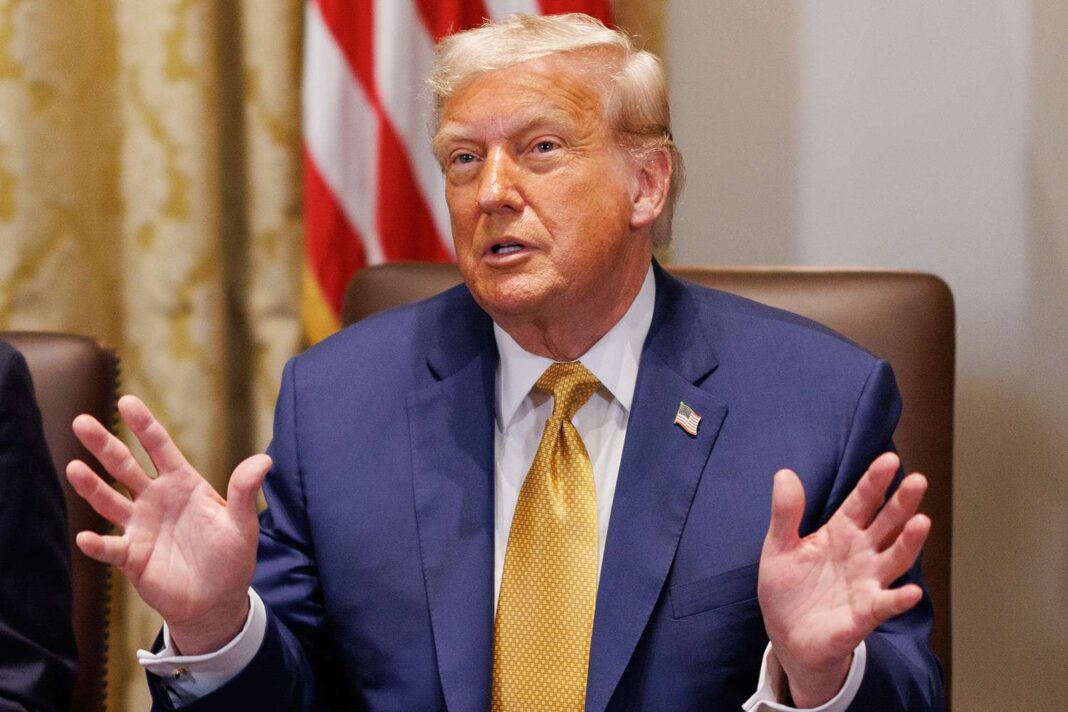
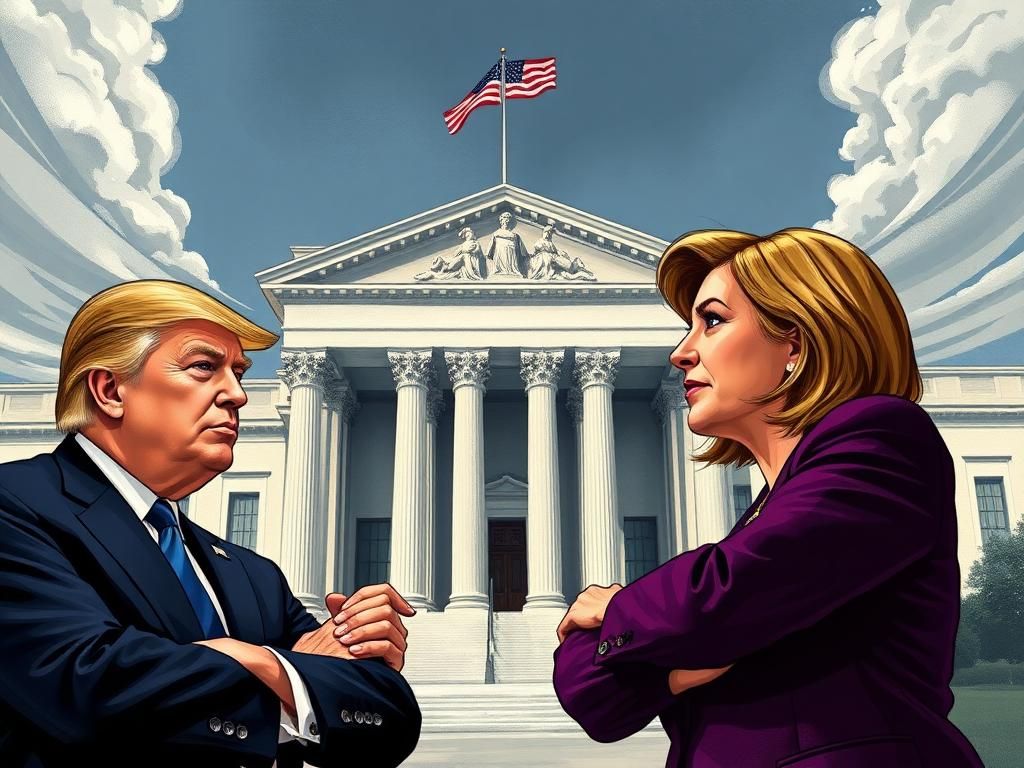
WASHINGTON (AP) — President Donald Trump announced late Monday his intention to fire Federal Reserve Governor Lisa Cook, a move widely seen as a significant escalation in his ongoing efforts to assert greater control over the historically independent institution. The dramatic declaration, posted on his Truth Social platform, cited allegations of mortgage fraud against Cook, brought last week by Bill Pulte, a Trump appointee to the Federal Housing Administration. Cook has previously stated her resolute intention to remain in her post.
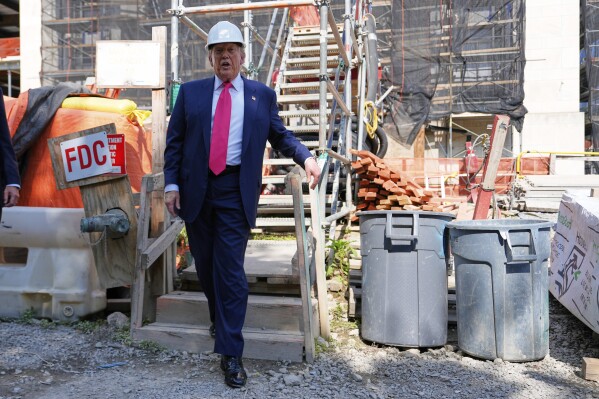
Federal Reserve Chairman Jerome Powell, and Board of Governors member Lisa Cook, right, listen during an open meeting of the Board of Governors at the Federal Reserve, June 25, 2025, in Washington. (AP Photo/Mark Schiefelbein, File)
This latest move comes amidst a prolonged and vocal campaign by President Trump against the Federal Reserve and its chairman, Jerome Powell. Trump has repeatedly criticized Powell for not reducing the Fed’s benchmark short-term interest rate, which currently stands at 4.3%. The President argues that lower borrowing costs are essential to stimulate the economy and decrease the interest the federal government pays on its substantial debt. Powell, however, has maintained that the Fed needs to carefully assess the economic impact of Trump’s sweeping tariffs on imports, which he warns could fuel inflation. Beyond monetary policy, Trump has also accused Powell of mismanaging the U.S. central bank’s extensive $2.5 billion building renovation project.
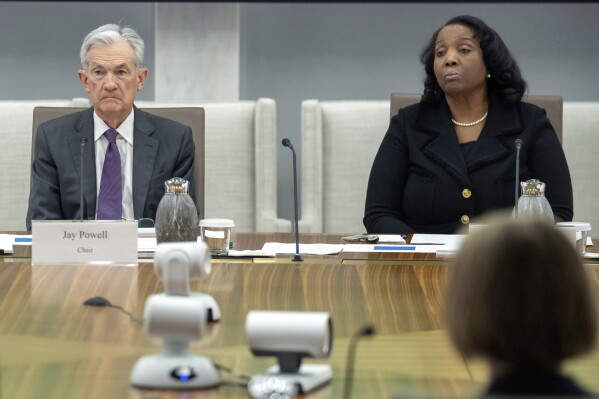
President Donald Trump visits the Federal Reserve during renovations, July 24, 2025, in Washington. (AP Photo/Julia Demaree Nikhinson)
The Bedrock of Independence: Why it Matters
The Federal Reserve, established in 1913, wields immense power over the nation’s economy. By adjusting the short-term interest rate, it can significantly influence borrowing costs for everything from home mortgages and auto loans to credit card debt. A rate cut typically encourages spending, thereby boosting economic growth and job creation. Conversely, an increase aims to cool an overheated economy and combat inflation, though it can lead to slower growth and job losses.
Economists overwhelmingly advocate for an independent central bank, largely because it allows the Fed to undertake politically unpopular, yet economically necessary, actions—such as raising interest rates—to curb inflation. This independence ensures that monetary policy decisions are based on economic data and long-term stability rather than short-term political expediency.
The critical importance of this independence was starkly underscored during the prolonged inflation crisis of the 1970s and early 1980s. Former Fed Chair Arthur Burns faced widespread criticism for allegedly caving to pressure from President Richard Nixon to keep interest rates artificially low leading up to the 1972 election. Nixon, who feared higher rates would jeopardize his re-election bid (which he won in a landslide), saw his influence contribute to an acceleration of painful inflation.
The tide turned with Paul Volcker, appointed Fed Chair by President Jimmy Carter in 1979. In a bold and widely praised move, Volcker aggressively hiked the Fed’s short-term rate to a staggering nearly 20%. While this triggered a severe recession and pushed unemployment to nearly 11% in the early 1980s, his unwavering commitment ultimately brought inflation back down to low single digits by the middle of the decade. Volcker’s decisive action, despite significant public outcry and economic pain, remains a canonical example of the indispensable value of an independent Federal Reserve.
Investor Vigilance and the Specter of Instability
Any attempt to dismiss Fed officials or undermine its independence sends ripples of uncertainty through financial markets. Investors generally prefer a predictable and non-political central bank, believing it is better equipped to manage inflation and maintain economic stability. Market analysts widely predict that a successful effort to fire Chairman Powell, or to force out a governor like Cook, would likely lead to a significant downturn in stock prices and a sharp spike in bond yields. This, in turn, would translate into higher interest rates for consumers on mortgages, auto loans, and credit card debt, effectively raising borrowing costs across the economy.
Checks and Balances: The Limits of Presidential Power
While the Fed enjoys a degree of independence, it is not entirely unaccountable. The President appoints the Fed Chair for a four-year term, and the six other members of the governing board serve staggered 14-year terms, all subject to Senate confirmation. Over time, these appointments allow a president to shape the composition and, consequently, the policy leanings of the Fed. For instance, President Joe Biden has appointed four of the current seven board members: Powell, Cook, Philip Jefferson, and Michael Barr. The recent unexpected departure of Biden appointee Adriana Kugler on August 1st opened another vacancy, for which Trump has already nominated his top economist, Stephen Miran, pending Senate approval. Cook’s term extends until 2038, meaning a successful forced removal would allow President Trump to install a loyalist far sooner.
Even so, replacing the Chair does not guarantee a complete overhaul of monetary policy. The Federal Open Market Committee (FOMC), which sets interest rates, comprises 12 voting members, including the seven governors and presidents of five regional Fed banks.
Furthermore, Congress plays a crucial oversight role. In 1977, lawmakers established the Fed’s “dual mandate” by legislation: to maintain stable prices (defined by the Fed as 2% inflation) and achieve maximum employment. The Fed Chair is also required to testify before both the House and Senate twice annually, providing updates on the economy and interest rate strategy.
The Legal Tightrope: Firing “For Cause”
The question of a president’s power to dismiss a Fed official outside of their term remains legally complex. The Supreme Court, in a recent ruling concerning other independent agencies, indicated that a president cannot fire the head of such an agency simply for policy disagreements. However, removal “for cause”—typically interpreted as demonstrable wrongdoing or negligence—might be permissible. It is this legal nuance that likely unpins the Trump administration’s focus on the Federal Reserve’s building renovation project, potentially seeking a “for cause” pretext to remove officials. Should such an attempt be made, it is widely anticipated that the affected official would mount a robust legal challenge, likely propelling the contentious issue to the Supreme Court for ultimate resolution.