


Maine’s Space Ambitions Take to the Seas: Overcoming Land-Based Resistance for Polar Orbit Dominance
By STACEY ZHANG/The Maine Monitor
BRUNSWICK, Maine — Maine, a state not traditionally associated with space exploration, is aggressively carving out its niche in the burgeoning commercial space industry. However, faced with significant community resistance to land-based launch sites, the quasi-governmental Maine Space Corporation (MSC) is now looking to the vast expanse of the Atlantic Ocean for its launch future, aiming to position the state as a key player in the increasingly vital polar orbit economy.
Created by the Maine Legislature in 2022, MSC’s ambitious goal is to establish Maine as “a national and international destination and authority in launching small launch vehicles and small satellites into polar orbit.” This vision, according to Terry Shehata, executive director of MSC, represents “another industrial revolution,” one that Maine intends to join.
A Coastal Conundrum: Land-Based Resistance Spurs Offshore Pivot
The pivot to sea-based operations is a direct response to the “rocky start” of commercial space endeavors on land. Brunswick-based bluShift Aerospace, a pioneer in small rocket launches utilizing non-toxic biofuel, encountered strong local opposition after its low-altitude test launch of the 20-foot-tall Stardust 1.0 rocket in January 2021 from the Loring Commerce Centre in Limestone. Subsequent attempts to establish launch sites Downeast met with firm rejection.
In March, the town of Steuben voted to prohibit commercial rocket launches and manufacturing facilities after bluShift expressed interest. Similarly, Jonesport enacted a permanent ban on rocket launches and control facilities in July 2022, following bluShift’s proposal to build a launch site on Water Island. Residents in both communities voiced concerns over potential impacts on the vital local fishing industry, noise pollution, fuel-related environmental hazards, and a perceived lack of clear regulations governing the nascent space sector. This pushback ultimately led bluShift to explore launch options outside of Maine, including Florida.
Charting a Course to Sea: Mobile Spaceports and Federal Waters
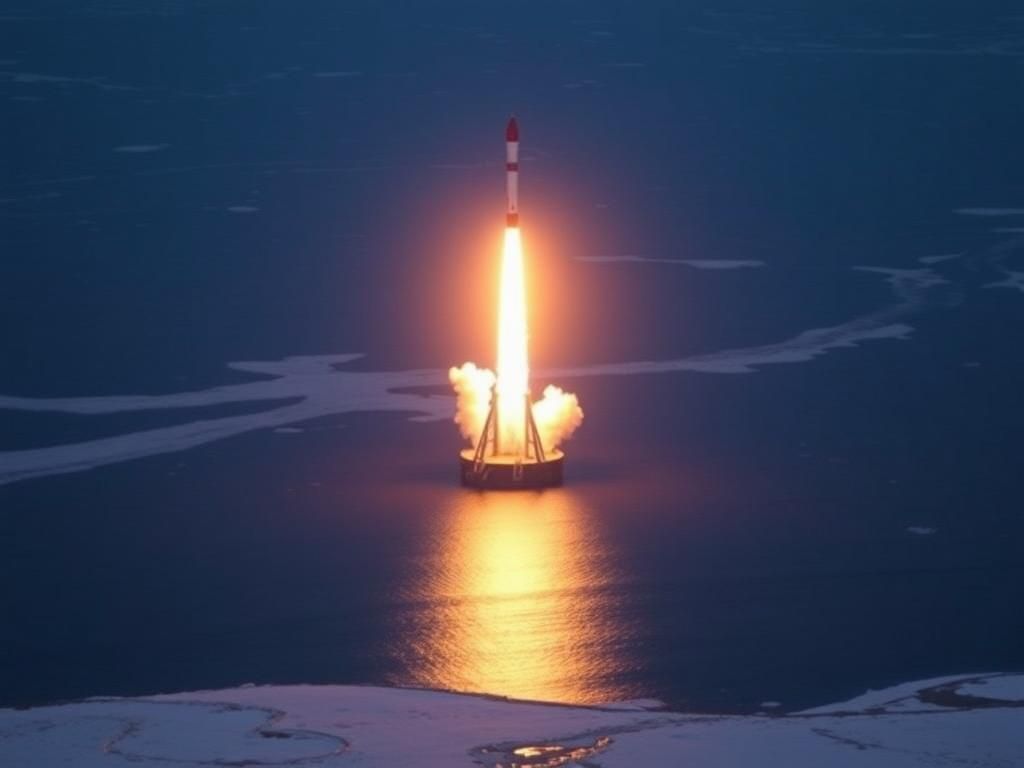
To circumvent these terrestrial hurdles, MSC is actively engaging with The Spaceport Company, a Virginia-based startup specializing in mobile floating spaceports. This company made history in 2023 with the first rocket launch from U.S. waters in the Gulf of Mexico. The plan involves utilizing specialized liftboats to transport rockets and fuel to pre-approved launch points 20 to 100 miles off the Maine coast, placing operations safely within federal waters. These liftboats, capable of operating in 80 to 200 feet of water, can temporarily affix themselves to the seabed via pylons for stability during launch.
MSC is discussing acquiring exclusive rights to use this sea-based platform in the New England area, potentially operating on a subscription model for clients to cover operational costs. While specific details remain under a nondisclosure agreement, MSC is also considering the long-term prospect of developing its own launch platforms.
Maine’s Strategic Advantage: The Polar Orbit Pathway
Maine possesses a unique geographical advantage for space launches, particularly for polar orbits. Unlike equatorial orbits, which are efficiently accessed from southern U.S. states like Texas, California, and Florida, Maine’s far northern location and its eastward-curving coastline provide an optimal trajectory for rockets heading into polar orbit. University of Maine physics professor David Batuski explains that launching directly south from Maine over water allows rockets to reach polar orbits with less fuel consumption, a significant advantage. Satellites in polar orbits, as Shehata notes, can cover the entire planet as the Earth rotates beneath them, making this increasingly desirable for telecommunications, weather monitoring, and data collection.
Building the Infrastructure for a New Space Economy
Beyond launches, MSC is dedicated to fostering a comprehensive space ecosystem within Maine. The organization aims to create 500 jobs by 2030, with projections reaching up to 5,500 jobs over the next two decades.
MSC’s current training facility in Brunswick Landing’s Hangar 5 exemplifies its focus on innovation hubs. Renovations, which began in January and are slated for completion this fall, will equip the facility with specialized machinery — roughly the size of household refrigerators — designed to simulate extreme space conditions for product testing. The organization is also recruiting other New England states and partners to build a regional space economy and is collaborating with Brunswick-based bluShift Aerospace, Ukrainian startup Promin Aerospace, and global technology firm Teledyne Technologies.
Funding for MSC largely stems from a two-year, $426,000 grant from the Maine Technology Institute and an additional $29,000 from the Maine Space Grant Consortium. In a strategic move to access federal research grants, MSC recently filed for 501(c)(3) nonprofit status, a change enabled by a law signed by Governor Janet Mills in June, championed by Maine Senate President Mattie Daughtry (D-Cumberland).
Other key developments include the $6 million John F. Kennedy Aerospace Park in Presque Isle, which broke ground earlier this month. While preceding MSC’s founding and primarily funded by the U.S. Economic Development Administration to attract aerospace research to Aroostook County, MSC is open to future collaborations with the park. Presque Isle-based Valt Enterprizes, which develops “hypersonic delivery systems” and secured a $14.8 million contract with the Department of Defense in September 2024, is slated to be an anchor tenant of the JFK Park and has conducted several undisclosed suborbital rocket launches in Maine under amateur rocketry regulations.
Navigating a Shifting Regulatory Landscape
Despite the enthusiasm, Maine’s commercial space industry operates in a complex regulatory environment. The state currently lacks a dedicated regulatory body for space operations, with departments like the Maine Department of Environmental Protection and the Department of Marine Resources stating they have no direct authority over sea-based rocket launches. However, MSC’s enabling legislation mandates a priority for Maine-based businesses and those that minimize environmental effects.
MSC is actively researching methods to mitigate environmental impacts, including the use of eco-friendly fuels. Its strategic plan commits to public assessment of potential environmental impacts before any infrastructure development, and Senator Daughtry asserts that MSC has “the strictest environmental guidelines of any spaceport complex governing document in the nation.”
Adding another layer of complexity, the Trump administration signed an executive order on August 13 aimed at easing federal regulations on commercial rocket launches. This order seeks to establish certain exclusions under the National Environmental Policy Act and restrict state authority in coastal zones when such authority might impede spaceport development. This move has drawn criticism, with organizations like the Coastal States Organization warning it could undermine states’ ability to manage coastal land under the Coastal Zone Management Act. MSC is closely monitoring these federal developments and plans to institute its own rigorous rules for its clients to mitigate risks.
As Maine looks to the open ocean to launch its space ambitions, MSC Executive Director Terry Shehata remains hopeful that robust environmental research and close community collaboration will pave the way for economic growth while addressing legitimate concerns, rather than allowing the nascent industry to be grounded entirely.