


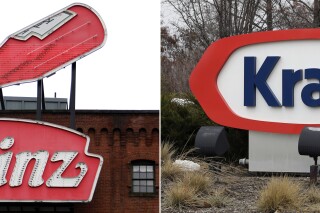
Kraft Heinz Announces Major Split into Two Independent Food Companies
NEW YORK – A decade after its formation in a massive merger, Kraft Heinz, one of the world’s largest food companies, has announced plans to split into two independent entities. The strategic move aims to enhance focus, streamline operations, and better adapt to evolving consumer preferences in the competitive food industry.
The company, a behemoth with iconic brands spanning numerous categories, revealed on Tuesday that it will separate into Global Taste Elevation Co. and North American Grocery Co. While the official names are yet to be finalized, the restructuring marks a significant pivot from the 2015 union that created the food giant.
Two New Entities Emerge
The proposed Global Taste Elevation Co. will house a portfolio of beloved shelf-stable meal brands, including the venerable Heinz sauces, Philadelphia cream cheese, and Kraft Mac & Cheese. This segment will focus on global growth and innovation within these established categories.
Conversely, the North American Grocery Co. will encompass brands such as Oscar Mayer, Kraft Singles, and Lunchables, primarily targeting the North American market. This separation is designed to allow each company to more effectively allocate capital, prioritize strategic initiatives, and foster growth in their most promising areas.
“Kraft Heinz’s brands are iconic and beloved, but the complexity of our current structure makes it challenging to allocate capital effectively, prioritize initiatives and drive scale in our most promising areas,” stated Executive Chair Miguel Patricio, underscoring the rationale behind the ambitious unbundling. The decision follows a strategic review initiated by the company in May.
The Genesis of a Megamerger: A Look Back
The origins of Kraft Heinz trace back to 2013 when billionaire investor Warren Buffett’s Berkshire Hathaway partnered with the Brazilian investment firm 3G Capital to acquire H.J. Heinz Co. for a colossal $23 billion. At the time, this deal stood as the most expensive acquisition ever recorded in the food industry. 3G Capital, renowned for its aggressive cost-cutting strategies and “zero-based budgeting” – a method requiring all expenses to be justified each quarter – quickly implemented changes, leading to hundreds of layoffs at the Pittsburgh-based Heinz, founded in 1869.
In 2015, the stage was set for the megamerger. Kraft, based in Chicago, which had previously spun off its snack division into Mondelez International in 2011, joined forces with Heinz. Buffett and 3G each contributed $5 billion, facilitating a special dividend for Kraft shareholders. The culmination of these efforts birthed the fifth-largest food and beverage company globally, boasting an impressive annual revenue of $28 billion.
Challenges and Shifting Consumer Tastes
Despite its formidable scale, the combined entity encountered significant headwinds. A primary challenge was the seismic shift in consumer preferences, with households increasingly gravitating towards healthier, less processed food options, moving away from traditional packaged goods like Velveeta cheese and Kool-Aid.
The company also struggled to differentiate its products from more affordable private-label store brands. A stark example highlights this competitive pressure: a 14-ounce bottle of Heinz ketchup retails for approximately $2.98 at Walmart, while the equivalent Great Value brand bottle costs a mere 98 cents.
Operational difficulties and supply chain issues further exacerbated the situation. In 2019, Kraft Heinz was forced to slash the value of its prominent Oscar Mayer and Kraft brands by a staggering $15.4 billion. Critics, including many investors, pointed fingers at the company’s relentless pursuit of cost-cutting, arguing it stifled brand innovation and long-term growth.
In an effort to revitalize its portfolio, Kraft Heinz divested its Planters nut business and natural cheese business in 2021, strategically re-investing the proceeds into higher-growth brands such as P3 protein snacks and Lunchables. However, the company’s net revenue has seen a decline every year since 2020, following a temporary sales bump during the pandemic. Most recently, in April, Kraft Heinz lowered its full-year sales and earnings guidance, citing weaker customer spending in the U.S. and the broader impact of President Donald Trump’s tariffs.
The Road Ahead
Carlos Abrams-Rivera, the current CEO of Kraft Heinz, will assume leadership of the North American Grocery Co. once the separation is complete. The board is actively engaged with an executive search firm to identify a suitable CEO candidate for the Global Taste Elevation Co.
Kraft Heinz confirmed that its current headquarter locations in Chicago and Pittsburgh will remain unchanged. The transaction is projected to finalize in the second half of 2026. Following the announcement, shares of the company saw a slight increase before market opening, indicating an initial positive reception from investors regarding the strategic realignment.