

CDC Faces Uncertainty as Jim O’Neill Takes Interim Helm
WASHINGTON (AP) — The Centers for Disease Control and Prevention (CDC), a cornerstone of American public health, has been thrust into a new era of uncertainty with the interim appointment of Jim O’Neill as its director. O’Neill, a former investor and vocal critic of traditional health regulations, steps into the role following a tumultuous week that saw the abrupt ouster of the agency’s previous director, Susan Monarez.
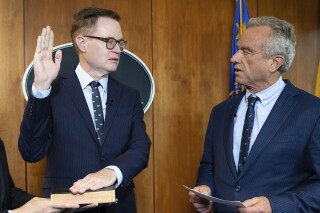
President Donald Trump tapped O’Neill, currently serving as Health Secretary Robert F. Kennedy Jr.’s deputy, for the interim position, replacing Monarez after less than a month in leadership. Monarez’s lawyers have stated her dismissal stemmed from her refusal to “rubber-stamp unscientific, reckless directives and fire dedicated health experts,” painting a stark picture of the internal strife gripping the agency.
A Washington Insider with a Libertarian Vision Amidst Unrest
O’Neill arrives at the CDC without any formal training in medicine or healthcare, holding bachelor’s and master’s degrees solely in humanities. His professional background includes a significant tenure as an associate of billionaire tech entrepreneur Peter Thiel, where he helped manage investment funds and oversaw projects such as a non-profit exploring the development of manmade islands designed to experiment with alternative forms of government outside U.S. territory. This history underscores his libertarian leanings and a skepticism towards established governmental structures.
Despite his association with the current administration’s “outsider” ethos, O’Neill is uniquely a Washington insider, having served six years at the Department of Health and Human Services (HHS) under President George W. Bush. This experience offers a potential, albeit complicated, bridge to navigating the agency’s current unrest.
The CDC has faced a wave of firings and resignations, fueled by efforts from Secretary Kennedy to reshape the nation’s vaccine policies, aligning them with his long-standing suspicions regarding the safety and effectiveness of long-established immunizations. O’Neill, in a social media post on Friday, expressed his anticipation of working with CDC staff and “announcing additions to the senior leadership in the weeks ahead,” while confirming he would continue his duties as HHS deputy.
Navigating Policy and Pressure: O’Neill’s Regulatory Stance and Vaccine Views
Observers like Peter Pitts, a former FDA official under President Bush, note O’Neill’s background as a “health care policy professional” suggests he won’t be a mere “RFK Jr. sock puppet.” However, the critical question remains: “whether the role of CDC director becomes a strictly paper tiger position, where the person only does what they’re told to by the secretary.”
O’Neill’s track record reveals a deep-seated desire for less regulation. During Trump’s first term, he was considered for the FDA commissioner role but sparked alarms with his proposals, most notably suggesting an end to the FDA’s 60-year-old mandate requiring new drugs to be both safe and effective before market entry. He posited that drug effectiveness could be established post-market. Ultimately, Dr. Scott Gottlieb, a supporter of the FDA’s traditional regulatory approach, was nominated.
While not directly affiliated with Kennedy’s “Make America Healthy Again” movement’s critiques of food dyes, fluoride, and ultraprocessed foods, O’Neill did publicly criticize FDA efforts to curb the prescribing of unproven COVID-19 treatments, including the anti-parasite drug ivermectin.
Regarding vaccines, O’Neill has maintained a careful stance. During his June confirmation hearing for the HHS post, he stated, “I support CDC’s recommendations for vaccines. I think that’s a central role that CDC has. It’s mandated in law.” Yet, pressed by Democrat Ron Wyden on Kennedy’s views downplaying vaccine safety and effectiveness, O’Neill responded, “Secretary Kennedy has not made it difficult nor discouraged people from taking vaccines.”
High-Stakes Decisions and Leadership Challenges Ahead
The immediate future holds critical decisions for O’Neill. Within weeks, he is expected to review recommendations from a CDC panel that has been notably reshaped with vaccine skeptics. This group is slated to convene next month to reassess vaccinations for measles, hepatitis, and other conditions that have long been standard components of the government’s childhood immunization schedule.
The tradition dictates that the CDC director signs off on these panel recommendations. Dr. Richard Besser, a former acting CDC director, confirmed that Susan Monarez’s refusal to “automatically sign off” on such committee recommendations was a factor in her dismissal, highlighting the direct pressure O’Neill now faces.
As an acting official, O’Neill’s tenure is federally limited to 210 days unless he receives a formal nomination to the post. Dr. Anne Schuchat, who twice served as acting CDC director, noted that while acting chiefs typically have broad powers (“‘You’re the director. Do what you need to do'”), the situation shifts “if the goal is to have an acting CDC director fulfill a predetermined decision about vaccines.”
Complicating O’Neill’s challenge is the recent exodus of four veteran CDC center directors, leaving the agency with a critical void in leadership experienced in medicine, science, and public health crisis management. This adds another layer of complexity to an already embattled agency, underscoring the formidable task ahead for its new, interim leader.