


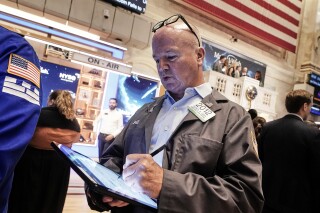
Wall Street Hits New High as Nvidia’s AI Outlook Sparks Post-Market Dip
NEW YORK — Wall Street celebrated a new milestone Wednesday as modest gains propelled the S&P 500 to an all-time high, eclipsing its previous record set just two weeks prior. The benchmark index rose 0.2%, closing at 6,481.40 points, as investors keenly anticipated a crucial earnings report from semiconductor giant Nvidia.
The Dow Jones Industrial Average also climbed, adding 147.16 points, or 0.3%, to reach 45,565.23, while the Nasdaq Composite, heavily weighted with technology stocks, finished 0.2% higher at 21,590.14. Technology companies were the primary drivers of the day’s ascent, offsetting declines observed in communication services and other sectors.
Nvidia: An AI Bellwether Under Scrutiny
The market’s focus largely centered on Nvidia, the undisputed leader in artificial intelligence (AI) chip manufacturing, whose quarterly earnings were released after the closing bell. The company reported revenue and earnings that surpassed Wall Street’s expectations, yet its stock experienced a 3.2% decline in after-hours trading after a marginal 0.1% slip during regular session. The dip was attributed to the company’s indication that sales growth for its highly sought-after AI chipsets had moderated from analysts’ loftier predictions.
Nvidia holds an outsized influence on the broader market due to its dominant position in the burgeoning AI sector. As the primary provider of the advanced chips powering AI technologies, its performance is often seen as a barometer for the entire industry’s health. Jay Woods, chief global strategist at Freedom Capital Markets, underscored its significance, stating, “Saying this is the most important stock in the world is an understatement. The stock’s average move after an earnings release is plus or minus 7.4%, so just an average move will make an impact on the entire market.” This highlights the significant volatility and market-wide ripple effects associated with Nvidia’s financial disclosures.
Leading up to Nvidia’s report, shares of several major software companies, including CrowdStrike Holdings, ServiceNow, Palo Alto Networks, Intuit, and Salesforce, saw gains. This movement occurred despite ongoing concerns throughout the quarter that the rapid advancements in AI could streamline software development, potentially eroding the competitive edge of these established software firms.
Company-Specific Performances
Beyond the tech sphere, corporate earnings reports triggered notable shifts in individual stock prices:
- Cracker Barrel shares surged 8% after the restaurant chain announced it was abandoning plans to change its iconic logo. This reversal followed a significant public outcry on social media, which even drew comment from former President Donald Trump, highlighting the power of public sentiment in corporate decision-making.
- Department store chain Kohl’s experienced a substantial 24% jump, while database platform MongoDB soared 38%. Both companies not only exceeded analysts’ quarterly forecasts but also raised their full-year guidance, signaling strong future outlooks.
- Conversely, J.M. Smucker, the maker of popular jellies and jams, saw its shares slide 4.4% after its latest quarterly results fell short of analyst estimates.
- Other notable decliners included doughnut shop chain Krispy Kreme, down 3.5%, and Paramount Skydance, which dropped 6.5%, marking the biggest decline among S&P 500 companies for the day.
Macroeconomic Landscape: The Fed and Tariffs
In the bond market, Treasury yields mostly declined. The yield on the benchmark 10-year Treasury note slipped to 4.24% from 4.26% the previous day, while the two-year Treasury yield, a key indicator for Federal Reserve policy expectations, dropped more significantly to 3.62% from 3.68%.
Investors continue to closely monitor the Federal Reserve’s stance on interest rates. After a period in late 2024 where the Fed cut its benchmark rate following aggressive hikes in 2022-2023 to combat soaring inflation, the central bank has held rates steady through early 2025. This cautious approach stems from concerns that new tariffs imposed by former President Trump’s administration could reignite inflationary pressures.
President Trump has been in a high-profile dispute with the central bank, pushing for lower interest rates to stimulate economic growth. This feud recently escalated with his attempt to fire Federal Reserve Governor Lisa Cook, who, through her lawyer, announced plans to sue to prevent the action. Trump has also publicly criticized Fed Chair Jerome Powell, often using disparaging nicknames. Despite these vocal attacks, he holds only one of twelve votes on the Federal Open Market Committee, limiting his direct influence on monetary policy.
Market traders are largely confident that the Fed will proceed with an interest rate cut at its next meeting in September. According to data from CME Group, there’s a 90.3% chance that the central bank will reduce the rate by a quarter of a percentage point. “It’s kind of a foregone conclusion from the market that we’re going to get the September interest rate cut,” noted Jed Ellerbroek, portfolio manager at Argent Capital Management, adding, “The bigger question is probably ‘What’s after that?'”
The Fed’s earlier rate hikes successfully tempered inflation while avoiding a significant economic downturn, largely thanks to robust consumer spending and a resilient job market. However, deepening concerns about the job market’s trajectory are now adding another layer of complexity to the Fed’s policy considerations.
Further economic data is anticipated later in the week, with the release of the U.S. personal consumption expenditures (PCE) index on Friday. Economists project that the PCE index, a key inflation gauge preferred by the Fed, will show an annual inflation rate of approximately 2.9% for July. Businesses have consistently cited tariffs as a significant factor contributing to higher operational costs and consumer prices.
Adding to global trade tensions, steep tariffs levied by the Trump administration on India took effect Wednesday. These tariffs, imposed over India’s purchases of Russian oil, now bring the combined duties on the crucial U.S. ally to a substantial 50%, potentially complicating trade relations and global supply chains.