


The Federal Reserve’s Independence Under Siege: Trump’s Latest Challenge
WASHINGTON (AP) — The venerable independence of the Federal Reserve, a cornerstone of U.S. economic policy, has come under increasing pressure from the White House. President Donald Trump recently called for the resignation of Federal Reserve Governor Lisa Cook over an accusation of mortgage fraud, marking the administration’s latest attempt to assert greater control over one of Washington’s most autonomous agencies. Cook, however, has firmly stated she will not vacate her position.
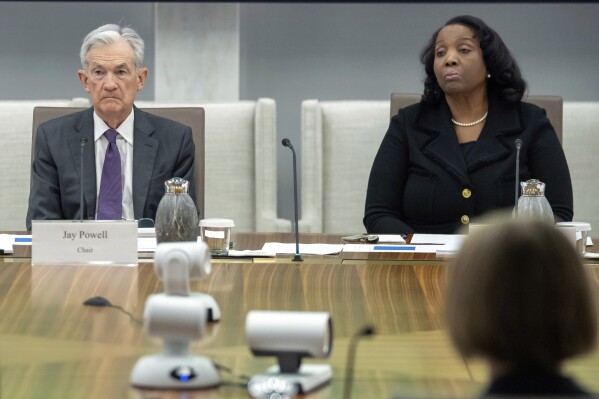
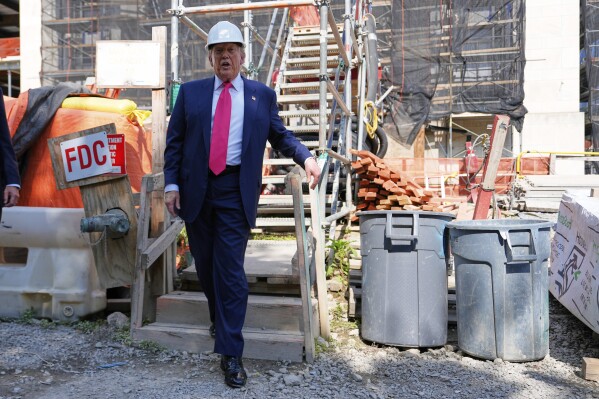
This move follows a series of sharp criticisms leveled by President Trump against Fed Chair Jerome Powell. Trump has repeatedly attacked Powell for maintaining short-term interest rates, arguing that rate cuts are necessary to stimulate the economy. He has even threatened to dismiss Powell and accused him of mismanaging the central bank’s $2.5 billion building renovation project. Powell, who is expected to address these economic tensions at an upcoming symposium in Jackson Hole, Wyoming, has publicly stated the Fed’s intention to observe the economic impact of Trump’s sweeping tariffs, which could potentially fuel inflation.
Why the Fed’s Independence Matters for Your Wallet and the Economy
The Federal Reserve wields immense power over the U.S. economy. Its primary tool, the short-term interest rate, directly influences borrowing costs for consumers and businesses. By lowering rates, the Fed makes it cheaper to take out mortgages, car loans, and credit card debt, encouraging spending and stimulating economic growth and job creation. Conversely, raising rates cools the economy, making borrowing more expensive and combating inflation, though this can lead to job losses.
Economists overwhelmingly advocate for an independent central bank, believing it is better positioned to make difficult, often unpopular, decisions necessary to maintain economic stability. These decisions, such as raising interest rates to curb inflation, might be politically unpalatable but are crucial for long-term economic health.
History offers stark warnings about political interference. During the “Great Inflation” of the 1970s and early 1980s, annual inflation rates soared, peaking at over 13% in 1979. Many economists blame former Fed Chair Arthur Burns for caving to pressure from President Richard Nixon to keep interest rates artificially low ahead of the 1972 election. Nixon, fearing higher rates would jeopardize his re-election, saw his gamble pay off with a landslide victory, but at the cost of spiraling inflation.
The tide turned with Paul Volcker, appointed Fed Chair in 1979 by President Jimmy Carter. Volcker took decisive, albeit painful, action, pushing the Fed’s short-term rate to an unprecedented nearly 20% – a dramatic contrast to today’s 4.3%. These eye-popping rates deliberately triggered a severe recession, pushing unemployment close to 11% and sparking widespread public protests. Yet, Volcker remained steadfast. By the mid-1980s, inflation had plummeted back into the low single digits. Volcker’s unwavering resolve in the face of immense political and public pressure is widely considered a seminal example of the indispensable value of an independent Fed.
Investors Closely Monitor Fed Autonomy
Any move to undermine Powell’s position or the Fed’s autonomy would likely send shockwaves through financial markets. Experts predict a sharp decline in stock prices and a spike in bond yields, which would translate into higher interest rates for government debt, mortgages, auto loans, and credit card debt. The interest rate on the 10-year Treasury, a key benchmark for mortgage rates, would also likely rise significantly.
Investors favor an independent Fed primarily because its decisions are more predictable and grounded in economic data rather than political expediency. Fed officials regularly communicate their policy frameworks, allowing financial markets to anticipate and understand monetary policy shifts. A politically influenced Fed would introduce uncertainty, making it far more challenging for markets to operate efficiently.
Accountability Without Compromising Independence
Despite its independence, the Federal Reserve is not unaccountable. The President appoints the Fed Chair for a four-year term and the six other members of the Board of Governors for staggered 14-year terms, all requiring Senate confirmation. This appointment process allows successive administrations to gradually shape the Fed’s composition and, over time, its policy direction. Currently, four of the seven board members—Powell, Cook, Philip Jefferson, and Michael Barr—were appointed by President Biden. A recent vacancy, left by Adriana Kugler’s unexpected resignation, has prompted Trump to nominate his top economist, Stephen Miran, though Senate approval is required. Governor Cook’s term extends until 2038, meaning any forced removal would allow the President to appoint a loyalist far sooner than otherwise possible.
Furthermore, the Fed’s policy decisions are made by the 12-member Federal Open Market Committee (FOMC), ensuring a broad range of perspectives. Congress also plays a crucial oversight role. The 1977 “dual mandate” legislation specifically tasks the Fed with maintaining price stability (defined as 2% inflation) and achieving maximum employment. Additionally, the Fed Chair is legally required to testify before both the House and Senate twice annually, providing transparency and accountability on economic conditions and monetary policy.
The Legal Battleground: Can a President Fire the Fed Chair?
The question of whether a president can remove the Fed Chair before their term ends is legally complex. A recent Supreme Court ruling concerning other independent agencies suggested that a president cannot fire a Fed Chair simply for policy disagreements. However, removal “for cause” – typically implying wrongdoing or negligence – might be legally permissible. It is this “for cause” provision that the Trump administration may be exploring, potentially leveraging accusations related to the Federal Reserve building’s renovation as a pretext. Any such attempt would undoubtedly face a vigorous legal challenge from Powell and would likely escalate to the Supreme Court, setting a critical precedent for the future of the Fed’s independence.