


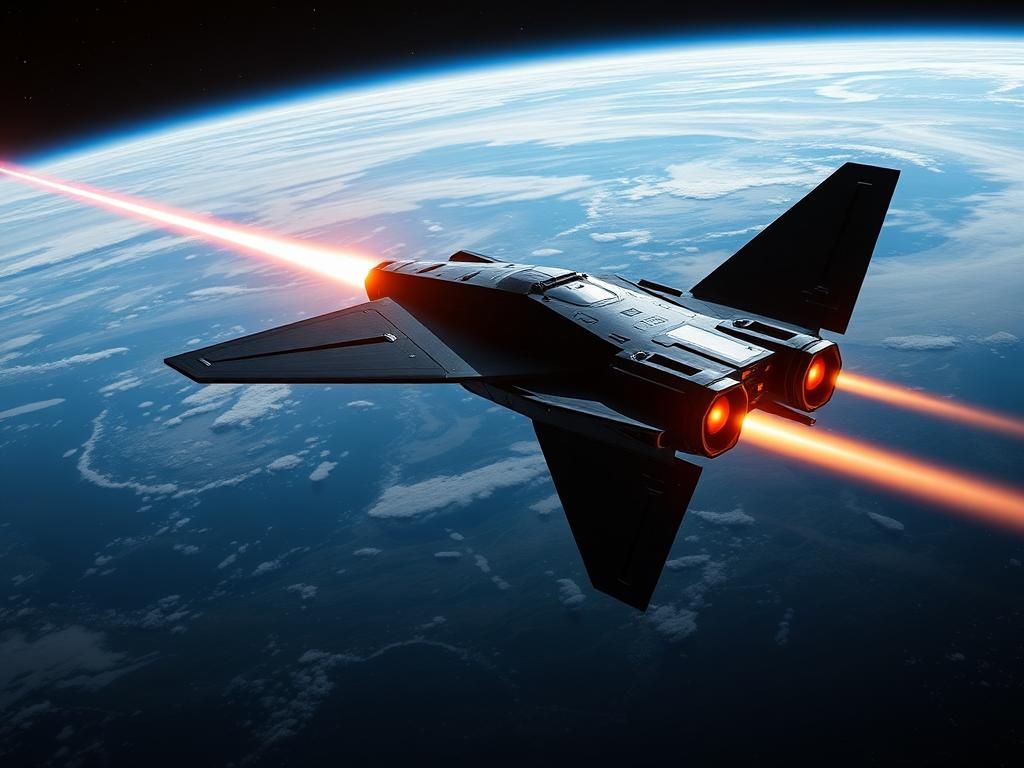
U.S. Space Force’s Secretive X-37B Mini-Shuttle Launches on Eighth Classified Mission
SpaceX propels the uncrewed orbital test vehicle into space for advanced laser communication and GPS-independent navigation experiments
CAPE CANAVERAL, Fla. – A highly secretive U.S. military space plane, the X-37B mini-shuttle, embarked on its eighth classified mission for the U.S. Space Force last Thursday night, August 14, 2025. Launched by SpaceX from Cape Canaveral, Florida, the uncrewed craft is set to conduct a series of undisclosed experiments, including critical tests for laser communications and navigation without reliance on the Global Positioning System (GPS).
The X-37B program, originally initiated by the U.S. Air Force and now managed by the U.S. Space Force, utilizes a fleet of reusable robotic space planes developed by Boeing. First launched in 2010, these vehicles are designed for long-duration orbital missions, carrying out clandestine payloads and advanced technology demonstrations crucial for national security. Each X-37B measures 29 feet (9 meters) in length with a wingspan of nearly 15 feet (4.5 meters), resembling a scaled-down version of NASA’s retired space shuttle.
This latest mission, designated Orbital Test Vehicle-8 (OTV-8), will focus on pioneering technologies vital for future space operations. According to the U.S. Space Force, key objectives include rigorous testing of new laser communication systems, which promise higher bandwidth and more secure data transmission capabilities compared to traditional radio frequencies. Additionally, the mission will explore innovative methods for safe and precise navigation in Earth orbit without depending on GPS signals, a capability that could significantly enhance resilience and operational autonomy in an increasingly contested space environment.
The exact duration of the current flight remains undisclosed, a consistent characteristic of the program’s secrecy. Past X-37B missions have varied significantly in length, ranging from several months to record-setting durations of multiple years. The seventh mission, for instance, concluded in March after circling the globe for a little over a year, demonstrating the vehicle’s impressive endurance and reliability. The classified nature of these missions often fuels speculation about their precise objectives, but military officials consistently emphasize their role in advancing space-based intelligence, surveillance, and reconnaissance (ISR) capabilities, as well as testing new technologies in the harsh environment of space.
The continued deployment of the X-37B underscores the U.S. military’s commitment to maintaining a technological edge in space, exploring capabilities that could redefine future warfare and strategic operations in the increasingly vital domain of Earth orbit.
By HALLIE GOLDEN. AP science writer Adithi Ramakrishnan contributed to this report.