


Nvidia Pitches De-Powered AI Chip to China Amidst U.S. Export Controls
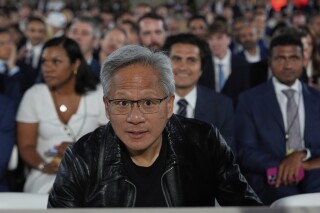
Nvidia, the global leader in artificial intelligence chip design, is actively engaging in discussions with the U.S. government regarding a proposed new semiconductor specifically designed for the Chinese market. CEO Jensen Huang confirmed these talks about a potential “B30A” chip, intended for AI data centers, during a recent visit to Taiwan, a crucial hub for chip manufacturing. This development unfolds amidst stringent U.S. national security restrictions that currently bar the sale of Nvidia’s most advanced AI semiconductors to China, aiming to limit Beijing’s access to technology that could enhance its military and surveillance capabilities.
Navigating Export Controls with a De-Powered Alternative
According to Huang, the “B30A” chip is envisioned as a successor to the “H20” chip, which received U.S. approval for sale to China in April. However, the H20 came with a notable condition: a 15% tax imposed by the U.S. government on those sales. This strategy by Washington seeks to permit some trade while ensuring advanced capabilities remain restricted, a policy also seen with fellow chipmaker Advanced Micro Devices (AMD), which faces a similar 15% tariff on its MI380 chips destined for China.
The proposed B30A chip, leveraging Nvidia’s cutting-edge Blackwell technology, is reportedly engineered to operate at approximately half the speed of Nvidia’s flagship B300 chips. This deliberate reduction in processing power is a strategic move to comply with U.S. export controls, aiming to provide China with AI capabilities suitable for commercial applications, yet falling below the thresholds deemed critical for national security by the U.S. government.
“I’m offering a new product to China for … AI data centers, the follow-on to H20,” Huang stated. He emphasized, “That’s not our decision to make. It’s up to, of course, the United States government. And we’re in dialogue with them, but it’s too soon to know.”
Recent Trade Easing and Lingering Suspicions
The ongoing dialogue surrounding the B30A chip follows a period of broader trade negotiations between Beijing and Washington. These discussions recently led to a reciprocal easing of some non-tariff restrictions, with China approving more permits for rare earth magnets to be exported to the U.S., while the U.S. lifted curbs on chip design software and jet engines. Nvidia’s H20 chip sales were part of these concessions, approved after direct lobbying efforts by CEO Huang.
Despite these advancements, the path to unrestricted trade remains complex. The Cyberspace Administration of China, the nation’s internet watchdog, recently issued a notice alleging “serious security issues” with Nvidia’s computer chips. The notice cited unnamed U.S. experts who claimed the chips possess “mature tracking and location and remote shutdown technologies,” requesting Nvidia to explain and provide documentation on these purported risks.
Huang expressed surprise at the accusation, vehemently denying any security vulnerabilities. “We have made very clear and put to rest that H20 has no security backdoors. There are no such things. There never has,” he asserted, adding that Nvidia is engaged in discussions with Beijing to address these concerns.
Adding to the complexities are unconfirmed reports that Chinese authorities were displeased by comments from U.S. Commerce Secretary Howard Lutnick. Speaking on CNBC, Lutnick articulated the U.S. strategy to maintain China’s reliance on American chip technology: “We don’t sell them our best stuff. Not our second best stuff. Not even our third best, but I think fourth best is where we’ve come out that we’re cool.” Such statements, widely interpreted as confirming a deliberate policy to supply China with less advanced technology, have likely fueled China’s suspicion and its push for technological independence.
China’s ruling Communist Party has consistently made self-reliance in advanced technology a top strategic priority. The ongoing U.S. export controls and the perceived limitations on chip access only serve to reinforce Beijing’s determination to develop its own robust semiconductor industry, a critical component in the global technological arms race. The approval, or rejection, of Nvidia’s B30A chip will be another significant indicator of the evolving and often contentious technology relationship between the world’s two largest economies.