


Nvidia Seeks Approval for New AI Chip in China Amid Escalating Tech Tensions
BANGKOK (AP) — Nvidia, the world leader in artificial intelligence (AI) chips, is currently engaged in sensitive discussions with the Trump administration regarding the potential sale of a new, specialized computer chip designed specifically for the Chinese market. This comes as the company navigates a complex geopolitical landscape marked by stringent U.S. export controls and escalating tech rivalry between Washington and Beijing.
Nvidia CEO Confirms Dialogue on New Chip for China
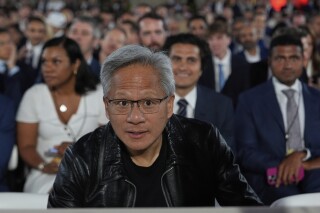
Speaking from Taiwan on Friday, where he was meeting with Taiwan Semiconductor Manufacturing Corp. (TSMC), Nvidia’s primary manufacturing partner and the globe’s largest contract chipmaker, CEO Jensen Huang confirmed the ongoing dialogue. The proposed semiconductor, reportedly designated “B30A,” is intended for AI data centers in China, serving as a successor to the recently approved H20 chips. “I’m offering a new product to China for… AI data centers, the follow-on to H20,” Huang stated. However, he emphasized that the final decision rests with the U.S. government, adding, “We’re in dialogue with them, but it’s too soon to know.”
B30A: A Less Potent Chip for Compliance
These highly sought-after chips are Graphics Processing Units (GPUs), powerful devices critical for developing and maintaining sophisticated AI systems. However, the B30A is specifically engineered to be less potent than Nvidia’s cutting-edge semiconductors, such as the B300. This deliberate reduction in performance is crucial for compliance with U.S. national security restrictions, which prohibit the sale of top-tier AI chips to China to prevent their use in military applications and to slow China’s technological advancement. The B30A, based on Nvidia’s advanced Blackwell technology, is reported to operate at roughly half the speed of the full-power B300 chips.
Navigating Market Demand and Export Controls
The delicate balance for Nvidia involves satisfying both market demand in China, a critical revenue stream, and the export control requirements of the U.S. government. Huang expressed appreciation for the Trump administration’s recent decision to approve sales of Nvidia’s H20 chips to China. This approval, however, came with a notable condition: Nvidia must pay a 15% tax to the U.S. government on these sales. Rival chipmaker Advanced Micro Devices (AMD) faces a similar levy on its MI380 chips destined for China.
China Raises Security Concerns Over Nvidia Chips
Adding another layer of complexity to the trade relationship, China’s Cyberspace Administration (CAC), the country’s internet watchdog, recently raised “serious security issues” concerning Nvidia’s chips. The CAC’s public notice cited claims by unnamed U.S. AI experts alleging that these chips possess “mature tracking and location and remote shutdown technologies.” Nvidia’s CEO voiced surprise at these accusations, firmly stating, “We have made very clear and put to rest that H20 has no security backdoors. There are no such things. There never has.” The company is actively discussing the matter with Beijing to alleviate concerns, especially after having worked diligently to secure licenses for the H20 chips.
Broader U.S.-China Tech Standoff
The broader context includes recent U.S.-China trade talks that saw both nations ease some non-tariff restrictions. China greenlit more permits for rare earth magnet exports to the U.S., while Washington, in turn, lifted curbs on chip design software and jet engines, a move that followed lobbying efforts by companies like Nvidia to get H20 chips approved. These developments unfold against a backdrop of public comments by U.S. officials, such as Commerce Secretary Howard Lutnick, who stated on CNBC that the U.S. strategy is to keep China reliant on American chip technology, supplying only “fourth best” chips.
China’s Quest for Technological Self-Reliance
For China’s ruling Communist Party, achieving self-reliance in advanced technology remains a paramount strategic objective. Despite significant investment, the nation still heavily depends on foreign semiconductor expertise, particularly from companies like TSMC and Nvidia. The ongoing negotiations and accusations underscore the high-stakes technological standoff, where economic interests and national security concerns collide, shaping the future of global AI development and supply chains.