


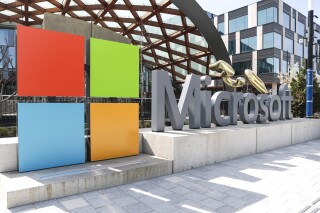
Microsoft Headquarters Rocked by Protests, 18 Arrested Amid Demands to Sever Ties with Israel
Redmond, Washington – A two-day worker-led protest at Microsoft’s headquarters escalated on Wednesday, resulting in the arrest of 18 individuals as employees demanded the tech giant sever its business ties with Israel amidst the ongoing conflict in Gaza. The demonstrations intensified just as Microsoft announced an “urgent” review into allegations that its Azure cloud computing platform is being utilized by the Israeli military for mass surveillance of Palestinians.
Protests Escalate: Confrontation and Arrests
The protests, which began on Tuesday with approximately 35 individuals occupying a plaza between office buildings, took a more confrontational turn on Wednesday. Unlike the previous day where protesters dispersed after a request from Microsoft, Wednesday’s participants “resisted and became aggressive” when informed by police they were trespassing, according to the Redmond Police Department. Demonstrators visually conveyed their message by splattering red paint, reminiscent of blood, over a prominent Microsoft landmark sign.
Police spokesperson Jill Green confirmed the arrests, stating, “We said, ‘Please leave or you will be arrested,’ and they chose not to leave so they were detained.” The 18 individuals were taken into custody on multiple charges, including trespassing, malicious mischief, resisting arrest, and obstruction; it remains unconfirmed how many of those arrested were Microsoft employees.
The Catalyst: Allegations of Azure Use in Palestinian Surveillance
The catalyst for the intensified protests is a recent report by British newspaper The Guardian, alleging that the Israeli Defense Forces (IDF) have used Microsoft’s Azure cloud platform to store phone call data obtained through the mass surveillance of Palestinians in Gaza and the West Bank. Microsoft, late last week, issued a statement promising an investigation by the law firm Covington & Burling, asserting that “Microsoft’s standard terms of service prohibit this type of usage” and that the report’s “precise allegations… merit a full and urgent review.”
Prior Scrutiny and Microsoft’s Responses
This latest scrutiny follows a February report by The Associated Press, which uncovered previously unpublicized details about Microsoft’s extensive partnership with the Israeli Ministry of Defense. The AP revealed that military use of commercial artificial intelligence products, including Azure, surged by nearly 200 times after the deadly October 7, 2023, Hamas attack. The Israeli military reportedly leverages Azure to transcribe, translate, and process intelligence gathered through mass surveillance, which can then be cross-referenced with Israel’s in-house AI-enabled targeting systems.
Following the AP’s initial report, Microsoft commissioned a review that, according to the company, found no evidence its Azure platform or AI technologies were used to target or harm individuals in Gaza. However, Microsoft did not publicly share a copy of this review or disclose who conducted it, leading to skepticism among critics.
“No Azure for Apartheid” Group Leads Ongoing Employee Activism
The promise of a second review proved insufficient for the “No Azure for Apartheid” group, the employee-led organization at the forefront of these protests. For months, this group has been vocal in its opposition to Microsoft’s technology contracts with the Israeli military, arguing that the technology is “being used to surveil, starve and kill Palestinians.” The group’s frustration is not new; Microsoft previously fired an employee in May for interrupting CEO Satya Nadella’s speech with protest, and two others in April during the company’s 50th anniversary celebration for similar demonstrations. On Tuesday, the protesters notably posted an online call for a “worker intifada,” a term evoking the Palestinian uprisings against Israeli military occupation.
Microsoft’s Stance Amidst the Protests
In response to the arrests and ongoing demonstrations, Microsoft released a statement reaffirming its commitment to “continue to do the hard work needed to uphold its human rights standards in the Middle East, while supporting and taking clear steps to address unlawful actions that damage property, disrupt business or that threaten and harm others.” The company stated it would share the findings of the latest review by Covington & Burling upon its completion.