


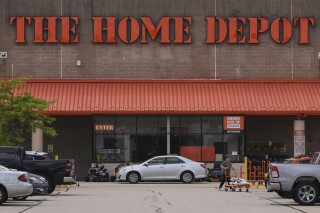
Home Depot’s Q2 Sales Edge Up Amid DIY Focus, Yet Miss Wall Street Projections
Consumers gravitate towards smaller home improvement projects as high mortgage rates and inflation curb major renovations, impacting the retail giant’s fiscal performance.
Atlanta, GA — Home Depot, the nation’s largest home improvement retailer, reported a modest improvement in its fiscal second-quarter sales, signaling a shift in consumer spending habits. While revenue climbed from the previous year, the figures ultimately fell short of Wall Street’s optimistic forecasts, reflecting the ongoing impact of economic uncertainties on homeowner spending.
For the three months ending August 3, Home Depot recorded $45.28 billion in revenue, an increase from $43.18 billion in the same period last year. However, this figure did not meet analysts’ expectations of $45.41 billion, as polled by FactSet. A crucial indicator of retail health, sales at stores open at least a year, rose by 1% overall, with U.S. comparable store sales showing a slightly stronger increase of 1.4%. Despite a slight decline in customer transactions by less than 1%, the average amount spent per shopper increased to $90.01, up from $88.90 in the prior-year period.
Profitability saw a minor dip, with the Atlanta-based company earning $4.55 billion, or $4.58 per share, compared to $4.56 billion, or $4.60 per share, in the second quarter of the previous year. After removing certain items, adjusted earnings per share stood at $4.68, missing the anticipated $4.72 per share.
Industry analysts attribute Home Depot’s performance to consumers prioritizing smaller, more manageable home improvement and gardening projects. Neil Saunders, managing director of GlobalData, noted that “Home Depot is getting the lion’s share of this growth and remains the number one destination for consumers due to strong customer service, a comprehensive range, and sharp pricing.” This focus on value, Saunders added, will be particularly beneficial as consumers become increasingly price-conscious in the current economic climate.
The broader U.S. housing market continues to exert pressure on retailers like Home Depot, as homeowners defer larger renovation endeavors due to elevated borrowing costs and persistent inflation. The housing market has been in a significant sales slump since 2022, when mortgage rates began their upward climb from historically low pandemic-era levels. Sales of previously owned homes in the U.S. slid in June to their slowest pace since September of last year, further hampered by high mortgage rates and a national median sales price that surged to an all-time high of $435,300. Overall, home sales last year reached their lowest levels in nearly three decades.
Looking ahead, Home Depot remains steadfast in its fiscal 2025 projections. Chair and CEO Ted Decker stated on Tuesday that the second quarter results were “in line with our expectations,” noting that “the momentum that began in the back half of last year continued throughout the first half as customers engaged more broadly in smaller home improvement projects.” The company reaffirmed its forecast for total sales growth of approximately 2.8% and anticipates an adjusted earnings decline of about 2% from the $15.24 per share reported a year earlier.