


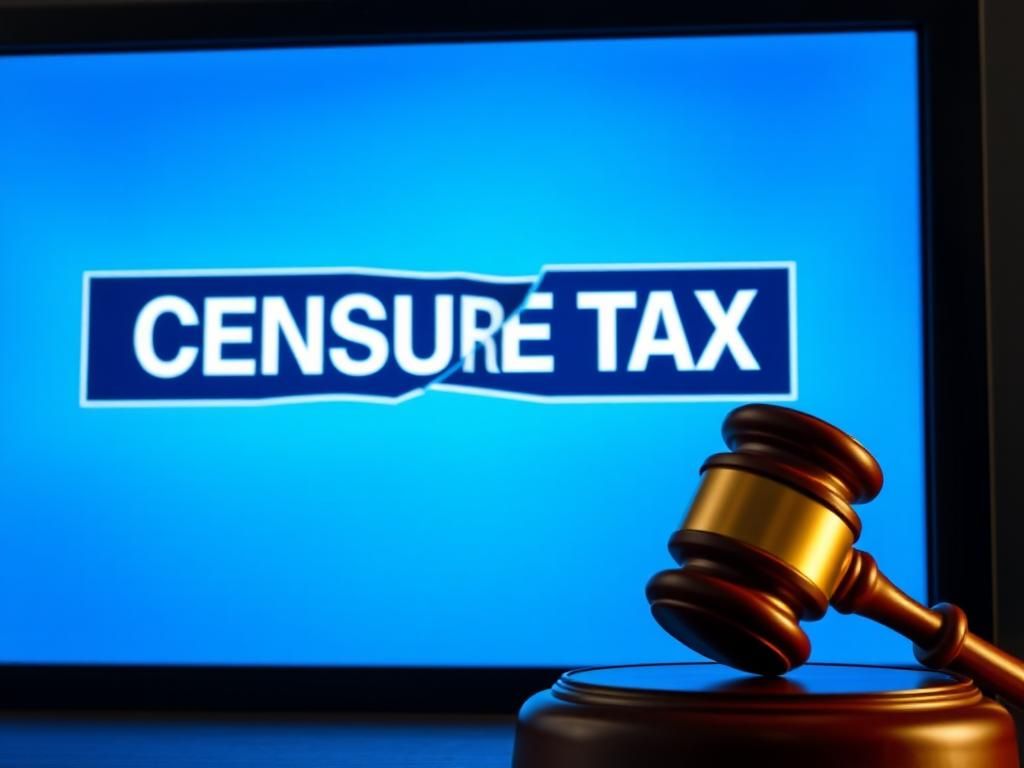
Maryland’s Digital Ad Tax Suffers Major Blow as Appeals Court Cites Free Speech Violation
ANNAPOLIS, Md. (AP) — A federal appeals court has dealt a significant setback to Maryland’s pioneering digital advertising tax, ruling that a crucial provision violated the constitutional right to free speech. The unanimous decision by the 4th U.S. Circuit Court of Appeals on Friday asserted that blocking major tech companies from informing their customers about the tax’s impact on pricing amounted to unconstitutional censorship.
The Controversial Tax and Its Purpose
The controversial levy, which targets internet advertising giants like Meta, Google, and Amazon, was enacted with the ambitious goal of overhauling the state’s tax methods to reflect the evolving digital economy. Maryland officials had projected the tax could generate approximately $250 million annually, earmarked to fund a sweeping statewide K-12 education reform initiative. However, the legislation included a contentious clause that explicitly forbade companies from passing on the tax as “line items, surcharges or fees” to their customers.
Court Rules Against “Unconstitutional Censorship”
Judge Julius Richardson, writing for the appeals court, drew a historical parallel to the Colonial-era Stamp Act, emphasizing that “criticizing the government — for taxes or anything else — is important discourse in a democratic society.” The plaintiffs, including prominent trade associations representing the tech industry, argued that Maryland lawmakers were attempting to shield themselves from public scrutiny and political accountability by silencing companies on the specifics of the tax burden. “A state cannot duck criticism by silencing those affected by its tax,” Judge Richardson concluded.
Industry Praises Ruling as Victory Against Censorship
This legal victory was swiftly praised by industry groups, with Paul Taske, co-director of the NetChoice Litigation Center, stating, “Maryland tried to prevent criticism of its tax scheme, and the Fourth Circuit recognized that tactic for what it was: censorship.”
Case Sent Back for Remedy, Legal Battles Continue
The ruling reverses a prior decision by U.S. District Judge Lydia Kay Griggsby, sending the case back to her court with instructions to determine an appropriate remedy in light of the appeals panel’s findings. While the Maryland Comptroller, Brooke Lierman, who is the defendant in the case, and the state attorney general’s office have declined to comment following the ruling, the legal battle continues. The digital ad tax remains challenged in multiple legal venues, including the Maryland Tax Court.
Understanding Maryland’s Digital Ad Tax Structure
Enacted in 2021 after the Democratic-controlled Maryland General Assembly overrode a veto by then-Republican Gov. Larry Hogan, the law imposes a progressive tax rate based on a company’s global annual gross revenues. The rates are structured as follows:
- 2.5% for businesses with over $100 million in global gross annual revenue;
- 5% for companies earning $1 billion or more;
- 7.5% for those making $5 billion or more;
- A maximum of 10% for companies with $15 billion or more in global revenue.
The outcome of this ongoing legal challenge is being closely watched by other states across the nation that have been considering similar taxes on online advertising.