

Landmark Trial of Jimmy Lai Puts Hong Kong’s Freedoms on Trial
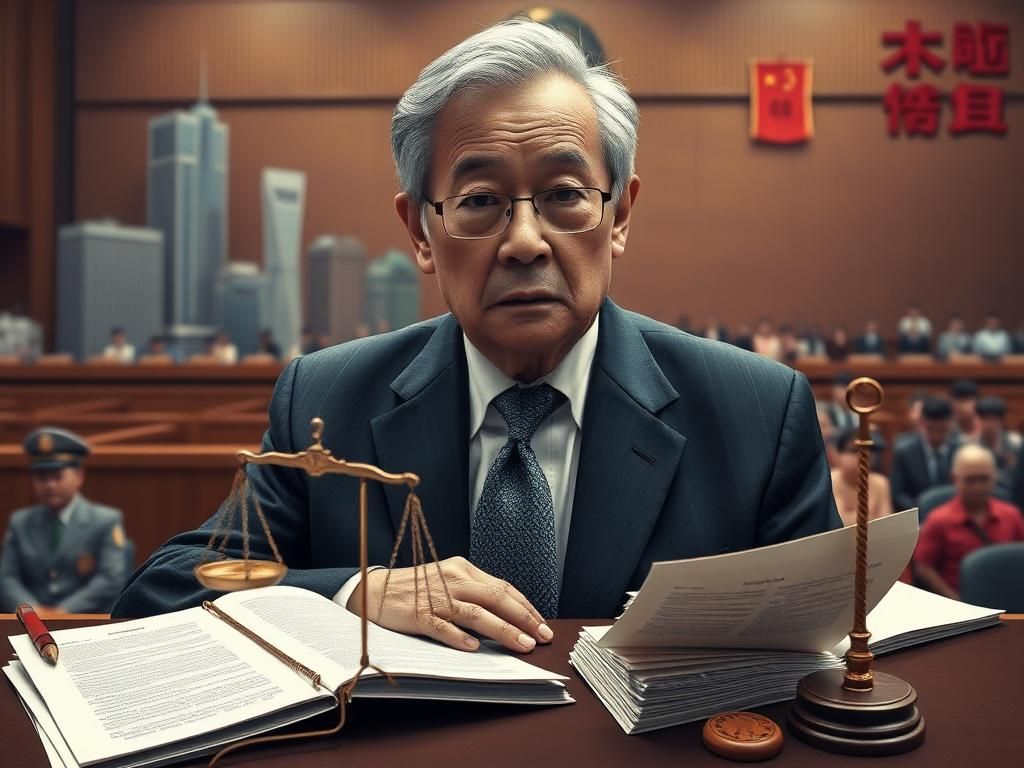
HONG KONG (AP) — A pivotal legal battle for press freedom and judicial independence in Hong Kong reached a critical juncture on Monday, as a court began hearing final arguments in the landmark national security trial of Jimmy Lai, the 77-year-old founder of the now-defunct pro-democracy newspaper Apple Daily.

The Charges Against a Media Mogul
Lai, a prominent critic of Hong Kong’s government, faces charges of colluding with foreign forces to endanger national security and conspiring to issue seditious publications, offenses that could lead to a life sentence if he is convicted.
Lai’s arrest in 2020 under the sweeping national security law, imposed by Beijing following widespread anti-government protests in 2019, marked a significant escalation in the city’s crackdown on dissent. Prosecutors allege that Lai actively encouraged foreign countries, particularly the United States, to take punitive actions against Beijing, purportedly “under the guise of fighting for freedom and democracy.” This accusation lies at the heart of the prosecution’s case, painting Lai as an orchestrator of external interference.

Lai’s Testimony and Denials
During his extensive testimony, which has contributed to the trial stretching nearly 150 days—far exceeding the initial estimate of 80 days—Lai denied directly asking then-U.S. Vice President Mike Pence and then-Secretary of State Mike Pompeo to intervene against Hong Kong and China during the 2019 protests. However, under cross-examination regarding an Apple Daily report that stated he had indeed made such requests for sanctions against Beijing and Hong Kong leaders, Lai conceded that he must have discussed the matter with Pompeo, as he had no reason to doubt his own newspaper’s reporting. Crucially, Lai maintained that he would not have advocated for foreign sanctions after the national security law came into effect on June 30, 2020.
Health Concerns and Trial Delays
The proceedings have encountered several delays, most recently due to adverse weather conditions and concerns over Lai’s health. On Friday, his lawyer, Robert Pang, informed the court that Lai had experienced heart palpitations while in prison, prompting judges to request that he first secure a heart monitor and necessary medication. The Hong Kong government, however, swiftly responded to what it described as attempts by foreign media to mislead the public, asserting that a medical examination found no abnormalities and that Lai’s medical care in custody was entirely adequate.
International Outcry and Diplomatic Pressure
Lai’s prolonged detention, including periods of solitary confinement, has drawn significant condemnation from foreign governments and international human rights organizations. Former U.S. President Donald Trump, prior to his second term in November, had publicly stated his intention to discuss Lai’s release with Chinese leader Xi Jinping, declaring, “One hundred percent, I will get him out.” More recently, in a Fox News radio interview released last Thursday, Trump clarified that while he denied a “100%” guarantee, he had “already brought it up” and would “do everything I can to save him.” Conversely, China has vehemently accused Lai of inciting anti-China sentiments in Hong Kong and staunchly opposes what it views as interference by other nations in its internal affairs.

Public Support Amidst Uncertainty
The intense public interest in the case was evident on Monday, as dozens of individuals, including former Apple Daily reader Susan Li, braved the rain to secure a seat in the main courtroom. Expressing concern for Lai’s visibly thinner appearance, Li stated, “I wanted to let him know we are still here,” underscoring the enduring support for the embattled media figure.
Hong Kong’s Eroding Freedoms
The trial unfolds against the backdrop of Hong Kong’s unique constitutional status. When the former British colony was returned to China in 1997, Beijing pledged to preserve the city’s civil liberties and high degree of autonomy for 50 years under the “One Country, Two Systems” framework. However, critics argue that this promise has been significantly eroded following the implementation of the national security law, which Chinese and Hong Kong authorities insist was essential for maintaining stability and order in the Asian financial hub. The timing of the verdict remains uncertain, leaving the fate of Jimmy Lai and the broader implications for Hong Kong’s freedoms in the balance.