


U.S. Government Unveils Landmark Rule to Revolutionize Commercial Drone Operations
The federal government has proposed a landmark rule designed to significantly ease restrictions on commercial drone operations, particularly those flying beyond the operator’s visual line of sight (BVLOS). Announced Tuesday, this new regulation aims to replace a cumbersome waiver process, which has seen 657 approvals to date, with a clear, standardized framework, propelling the drone industry into a new era of possibilities.
A Long-Awaited Leap for the Drone Industry
For years, the burgeoning drone industry has advocated for such a rule, recognizing that BVLOS capabilities are crucial for unlocking widespread applications. “This draft rule is a critical step toward enabling drone operations that will enhance safety, transform commercial services, and strengthen public safety with drones as a force multiplier,” stated Michael Robbins, president & CEO of the Association for Uncrewed Vehicle Systems International.
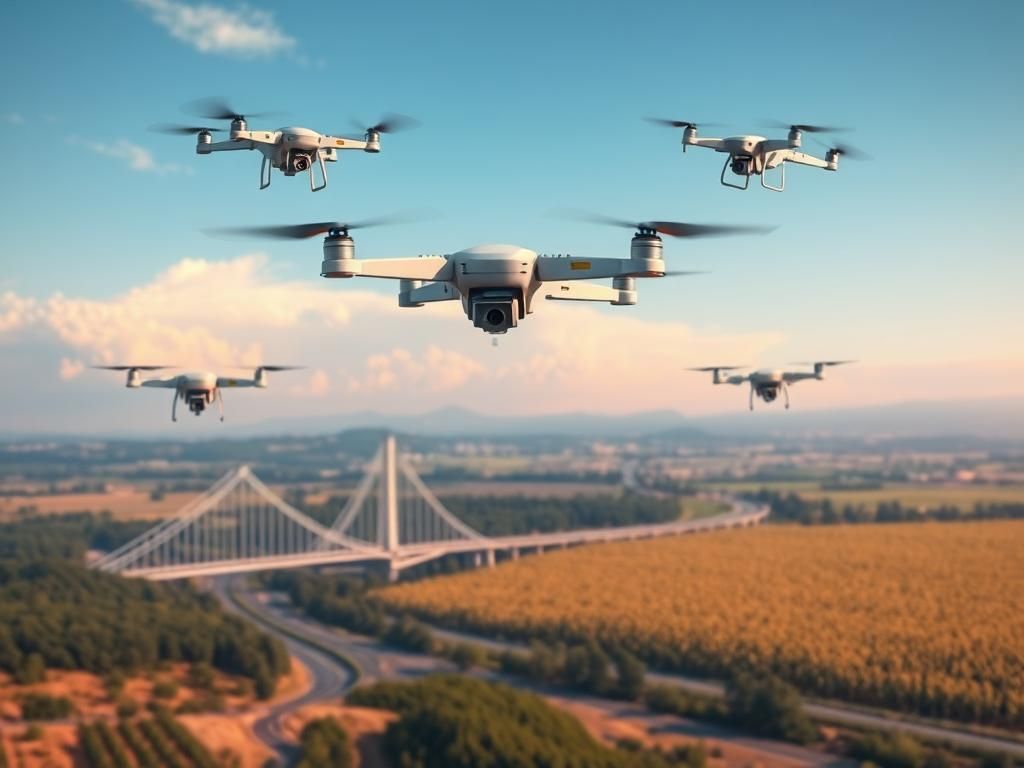
The implications are vast: from drone deliveries expanding beyond test zones to efficient inspections of critical infrastructure like bridges and power lines, and even large-scale agricultural tasks such as spraying fertilizer across thousands of acres. Companies like Amazon, which previously secured a waiver for its drone delivery trials in College Station, Texas, and Tel Aviv-based Flytrex, operating in Texas and North Carolina, are poised to benefit significantly. Yariv Bash, Flytrex co-founder and CEO, hailed it as “a foundational milestone that paves the way for drone delivery to scale across more communities in the U.S.”
Key Provisions of the Proposed Rule
Under the proposed rule, drones will be permitted to fly beyond visual line of sight under specific conditions: at altitudes below 400 feet and for drones weighing up to 1,320 pounds (including payload). A cornerstone of the new framework is robust collision-avoidance technology, ensuring drones maintain safe distances from traditional aircraft and other unmanned systems. Federal Aviation Administration (FAA) Administrator Bryan Bedford emphasized these precautions are crucial to prevent disruptions to aviation, especially around airports.
Addressing Regulatory Lag
This regulatory overhaul comes after years of industry calls for modernization. As Lisa Ellman, CEO of the Commercial Drone Alliance, noted, “While the technology has rapidly advanced over the last decade, our regulatory framework in the United States has failed to keep pace. Drone operators must navigate a labyrinth of ill-suited regulations designed for crewed aircraft.” The urgency for this rule was underscored by executive orders issued by then-President Donald Trump in June, directing the Transportation Department to accelerate its release, also incorporating measures against terrorism, espionage, and public safety threats.
Prioritizing Safety and Security
Safety remains a paramount concern. The rule explicitly prohibits drone flights over large open-air gatherings such as concerts, sporting events, or crowded parks. The FAA collaborated closely with the Department of Homeland Security during the rule’s development to address potential security risks, including lessons learned from the war in Ukraine, concerns about drones smuggling drugs across borders, and the persistent threat of collisions with airliners.
Lessons from Incidents: The Southern California Collision
A recent incident highlights the critical need for clear regulations: Earlier this year in Southern California, a small drone collided with a “Super Scooper” plane battling wildfires. The rogue drone punched a hole in the plane’s left wing, grounding the aircraft for several days for repairs. Authorities traced the 56-year-old drone operator, who admitted to recklessly launching his DJI quadcopter to observe fire damage over the Pacific Palisades, despite an FAA flight restriction. He lost sight of the drone after it traveled approximately 1.5 miles before striking the plane. Under the new rule, commercial and recreational operators seeking BVLOS capabilities will be required to undergo background checks and obtain certification, ensuring accountability and adherence to safety protocols. Individuals flying drones without such approval will still face current restrictions.
What’s Next?
The public now has a 60-day window to provide comments on the proposed rule, with finalization expected later this year. This move by the U.S. government marks a significant step towards fully integrating unmanned aerial systems into the national airspace, promising innovation while upholding safety and security.