


Learn How to Learn: Google AI Chief Stresses Vital Skill for the Future Amidst Rapid AI Evolution
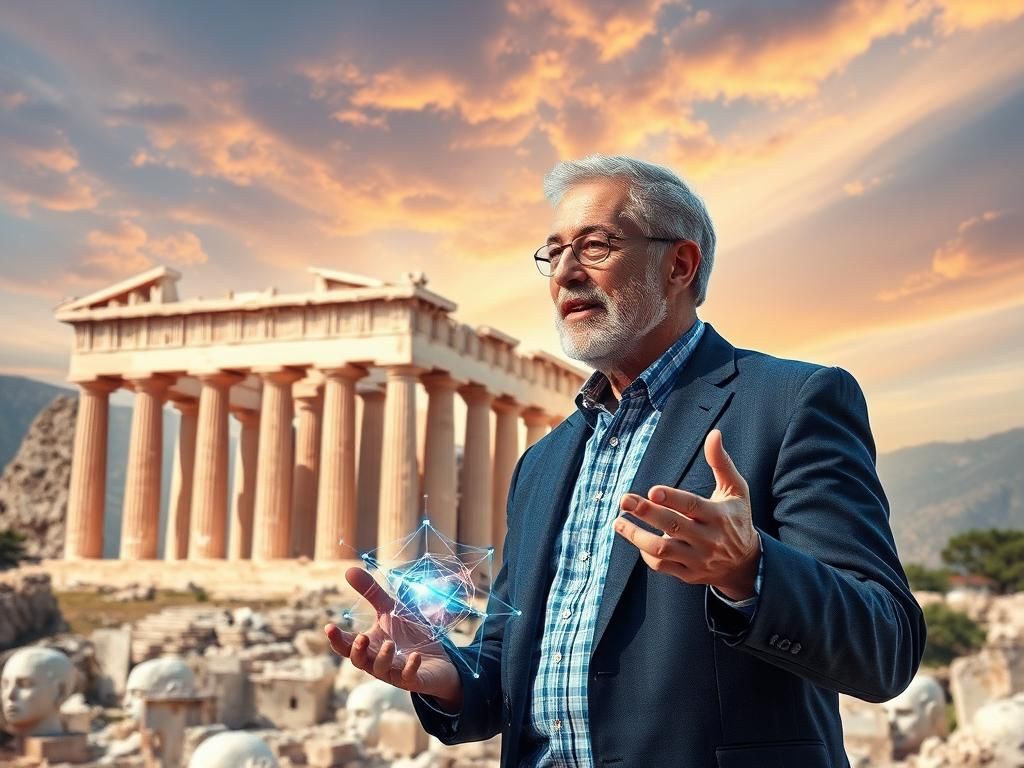
ATHENS, Greece (AP) — In an era defined by accelerating technological shifts, Google’s leading artificial intelligence scientist and recent Nobel laureate, Demis Hassabis, declared on Friday that the most vital skill for the upcoming generation will be the ability to “learn how to learn.” Speaking at an ancient Roman theater nestled at the foot of the majestic Acropolis in Athens, Hassabis underscored the urgent need for a new pedagogical approach as AI continues to reshape education, careers, and daily life at an unprecedented pace.
The CEO of Google’s DeepMind, a renowned neuroscientist and former chess prodigy, painted a vivid picture of a future where conventional skill sets may quickly become obsolete. “It’s very hard to predict the future, like 10 years from now, in normal cases. It’s even harder today, given how fast AI is changing, even week by week,” Hassabis told a captivated audience. “The only thing you can say for certain is that huge change is coming.”
The Dawn of Artificial General Intelligence and “Radical Abundance”
Hassabis shared a compelling, albeit ambitious, projection: artificial general intelligence (AGI) – a futuristic concept envisioning machines possessing human-level cognitive abilities across a broad spectrum of tasks – could emerge within the next decade. This development, he asserted, promises “dramatic advances” and a potential future of “radical abundance,” despite acknowledging the inherent risks and challenges associated with such a powerful technology.
To navigate this rapidly evolving landscape, Hassabis championed the development of “meta-skills.” Beyond foundational disciplines like mathematics, science, and the humanities, he emphasized the critical importance of understanding how to acquire knowledge efficiently and optimize one’s approach to new subjects. “One thing we’ll know for sure is you’re going to have to continually learn … throughout your career,” he stressed, highlighting continuous adaptation as the bedrock of future professional success.
DeepMind’s Legacy and Nobel Recognition
Demis Hassabis co-founded the London-based research laboratory DeepMind in 2010, which Google subsequently acquired four years later in 2014. His groundbreaking work earned him a share of the prestigious 2024 Nobel Prize in chemistry. This recognition was for his pivotal contributions to developing AI systems that can accurately predict protein folding – a monumental scientific breakthrough with profound implications for medicine, drug discovery, and understanding biological processes.
Greece’s Stance: Bridging Innovation with Social Equity
Hassabis’s address was followed by a discussion with Greek Prime Minister Kyriakos Mitsotakis, who had met with the AI leader earlier to explore avenues for expanding AI integration into government services. Mitsotakis, however, tempered the optimism with a stark warning about the potential for escalating global financial inequality if the benefits of burgeoning tech companies and AI are not broadly distributed.
“Unless people actually see benefits, personal benefits, to this (AI) revolution, they will tend to become very skeptical,” the Prime Minister cautioned. “And if they see … obscene wealth being created within very few companies, this is a recipe for significant social unrest.”
In a lighter moment reflecting local priorities, Mitsotakis publicly thanked Hassabis, whose father is Greek Cypriot, for graciously rescheduling his presentation to avoid conflicting with the European basketball championship semifinal between Greece and Turkey. Greece ultimately lost the hotly contested game with a final score of 94-68.
The discourse in Athens underscored a global imperative: as AI charges forward, society must prioritize not only technological advancement but also equitable access to its benefits and the cultivation of adaptable human skills to thrive in a perpetually changing world.