


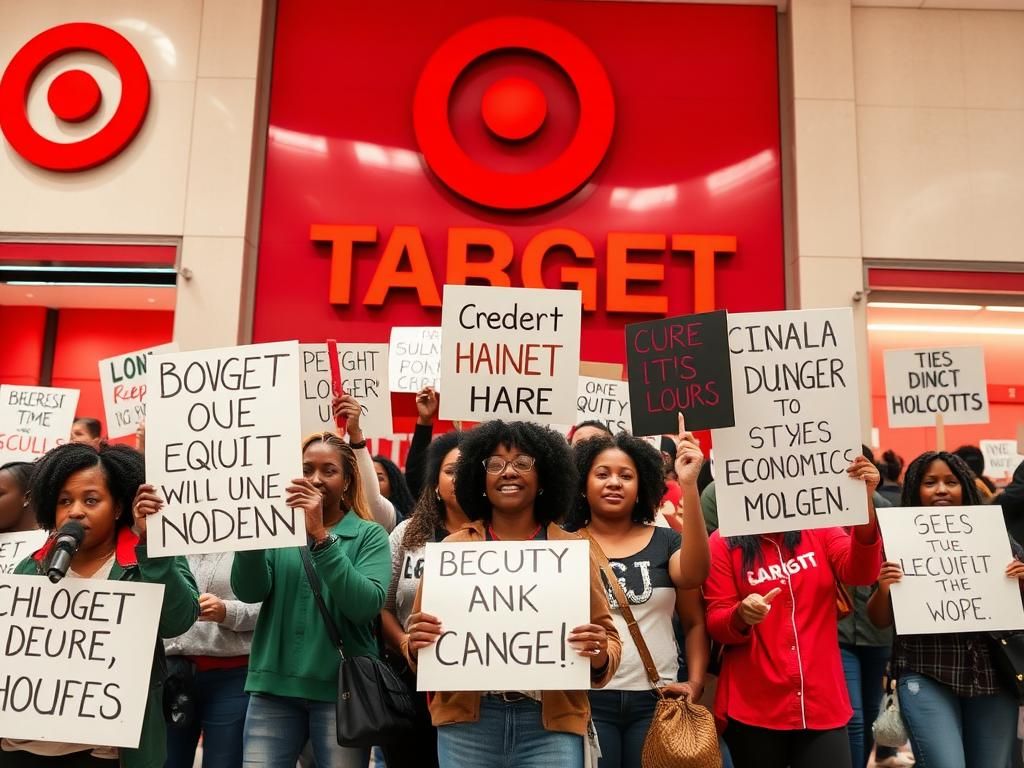
Target Boycott Nears 200 Days, Activists Claim Victory as CEO Steps Down
MINNEAPOLIS, MN — A national consumer boycott against retail giant Target, initiated nearly 200 days ago, is being hailed by organizers as a potent display of collective action as the company announced its long-serving chief executive will step down. While Target frames the leadership transition as a planned event, activists see it as a hopeful, albeit incomplete, sign that their persistent pressure is making a tangible impact. They vow to continue their campaign until the corporation fully reinstates its commitments to diversity, equity, and inclusion (DEI).
The Genesis of Discontent: Target’s DEI Reversal
The boycott began in January, during Black History Month, after Target, following in the footsteps of other major retailers like Amazon and Walmart, scaled back its diversity, equity, and inclusion initiatives. This decision sparked outrage among civil rights advocates who viewed it as a betrayal of promises made in the wake of widespread social justice protests.
Just a few years prior, in 2020, Target had publicly committed to significant DEI advancements following the murder of George Floyd, which ignited national conversations on racial inequality. The company pledged to increase the representation of Black team members by 20% over three years and invest $10 million in social justice organizations. In 2021, Target further promised to dedicate over $2 billion towards Black-owned businesses by the end of 2025. However, the unexpected announcement in January to conclude these hiring and advancement goals served as the catalyst for the nationwide boycott.
Leadership Shift Amidst Scrutiny
Last week, organizers gathered outside Target’s Minneapolis headquarters, buoyed by the news that Brian Cornell, who has led Target for 11 years, will be stepping down in February 2026. He will transition to the role of executive chair of the board, with Chief Operating Officer Michael Fiddelke set to take the helm.
“It’s been now nearly 200 days, and what all the statistics and economics are showing is that since that boycott was announced on that Monday — every single week since then — Target foot traffic in nearly 2,000 stores has declined sharply and continues to decline,” stated Jaylani Hussein, a leading organizer of the National Target Boycott movement.
High-profile civil rights activists, including the Rev. Al Sharpton and the Rev. Jamal Bryant, have amplified these calls for accountability, deeming Target’s retreat from DEI as a profound betrayal. Sharpton even met with Cornell in April, but according to reports, no concrete resolutions emerged from their discussions.
Unpacking the Numbers: Boycott vs. Market Trends
While boycott organizers, such as the Washington-based DC Boycott Target Coalition, attribute the falling foot traffic “in no small part” to their cross-country efforts, retail analysts offer a more nuanced perspective. Stacey Widlitz, president of investment research firm SW Retail Advisors, suggests that Target’s sales struggles may largely stem from existing operational issues, such as disorganized stores and inconsistent inventory, rather than solely its DEI stance. “The consumer has a very short memory. If you have great, compelling product at value prices, they’ll forgive you,” Widlitz noted.
Indeed, data from Consumer Edge indicates a 19% decline in the number of Americans who regularly shop at Target since 2021, with a corresponding 17% rise in those who do not. The analysis also revealed a demographic shift since last year: regular Target shoppers identifying as Democrats decreased by 13%, while Republican customers increased by 13%. The precise reasons for these partisan shifts, including a $1 million donation by Target to a past presidential inauguration, remain subject to interpretation.
It is also important to note that Cornell’s departure was not entirely sudden. In September 2022, Target’s board extended his contract for an additional three years and eliminated a mandatory retirement policy for chief executives at age 65, indicating a longer-term succession plan.
A Legacy of Economic Action: The Power of Boycotts
Social justice advocates emphasize that boycotting remains a powerful tactic for corporate accountability, with a rich history spanning over 160 years. This strategy traces its roots to Reconstruction-era “Buy Black” campaigns, designed to leverage Black American economic influence, and famously includes the Montgomery Bus Boycott of the Civil Rights Movement. More recently, the NAACP orchestrated a 15-year economic boycott of South Carolina over its display of the Confederate battle flag, concluding in 2015 after the flag’s removal from statehouse grounds following the Charleston church massacre.
The economic power of Black Americans continues to grow, with annual buying power estimated at $2.1 trillion, according to Nielsen research over the last 25 years. This substantial influence forms the backbone of sustained boycott efforts.
The Path Forward: Demands for Cultural Transformation
Despite the leadership change, organizers like the DC Boycott Target Coalition assert that “The leadership change doesn’t mean anything without a culture change.” They pledge to maintain pressure on Target until the company prioritizes its diversity goals.
Nekima Levy Armstrong, a civil rights attorney and former president of the Minneapolis NAACP, underscored the unwavering commitment of the movement. “We’re expecting that Target is making good on the promises that it made. Otherwise there’s no point of discussion regarding calling off this boycott,” she stated. “We’re asking people to join us, get involved and hold Target accountable for its actions.” The battle for corporate responsibility, according to organizers, is far from over.