

Fatal Explosion Rocks U.S. Steel’s Clairton Coke Works, Leaving Two Dead, Ten Injured
The powerful blast at the Pennsylvania facility, North America’s largest coking operation, prompts an intensive investigation into safety protocols and operational history.
By AUDREY McAVOY
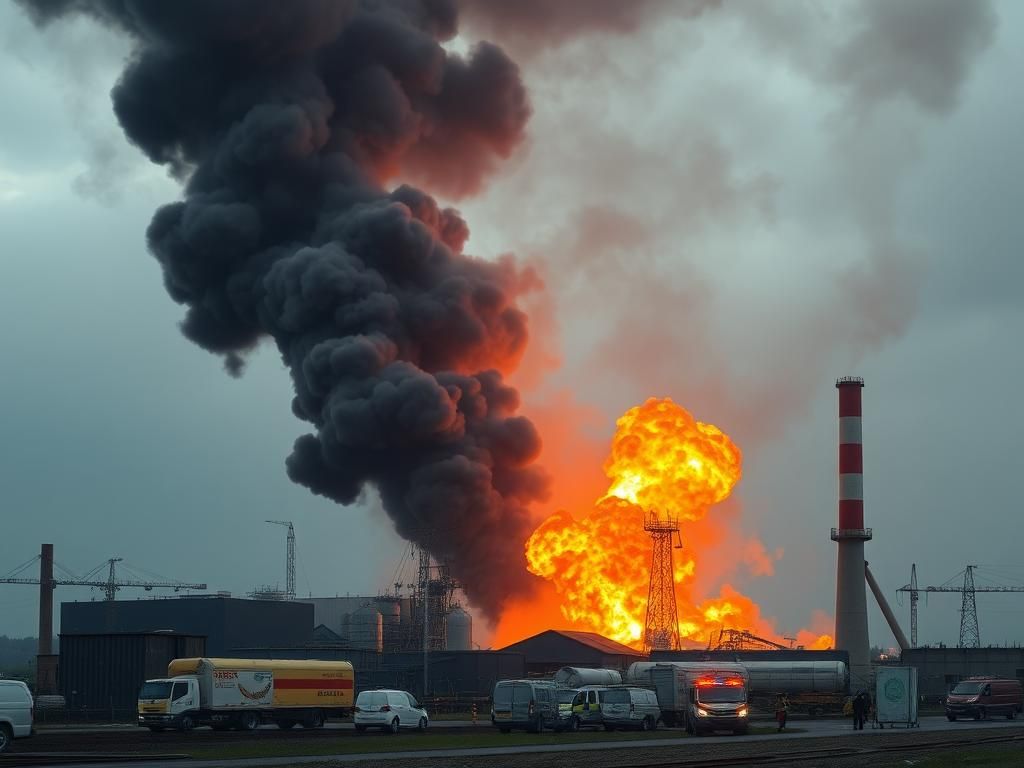
CLAIRTON, Pa. – An explosion at the U.S. Steel plant south of Pittsburgh, the Clairton Coke Works, claimed the lives of two individuals and injured ten others early this week. The powerful blast, which occurred around 10:50 a.m. Monday, sent plumes of black smoke into the sky and was reportedly felt in nearby communities, triggering immediate emergency responses and a brief public safety advisory.
U.S. Steel CEO has publicly committed to a thorough investigation to ascertain the cause of the incident. Union officials have also pledged their cooperation to ensure accountability and a comprehensive review.
Immediate Aftermath and Casualties
The initial explosion was followed by several smaller blasts, creating a chaotic scene for first responders. Allegheny County Emergency Services swiftly cordoned off the area, urging residents to stay clear to allow emergency personnel access. Hours after the initial event, one worker was successfully rescued from the smoldering wreckage, offering a glimmer of hope amidst the tragedy.
The injured were transported to area hospitals. Allegheny Health Network treated seven patients, with five discharged within hours, indicating less severe injuries for some. The University of Pittsburgh Medical Center (UPMC) Mercy, the region’s sole Level I trauma and burn center, admitted three patients, suggesting more critical conditions for those individuals.
Clairton Coke Works: An Industrial Giant with a Complex History
The Clairton Coke Works is one of four major plants in Pennsylvania owned by U.S. Steel, a company that has stood as an enduring symbol of American industrialization for over a century. Located in the Mon Valley, a region deeply intertwined with the steel industry, Clairton Coke Works holds the distinction of being North America’s largest coking operation.
The plant’s primary function is to convert coal into coke, a critical component in the steel-making process. This involves baking coal in specialized ovens at high temperatures to eliminate impurities, a process that, while essential for producing strong steel, generates coke gas—a dangerous mixture of methane, carbon dioxide, and carbon monoxide.
A Pattern of Past Incidents
This week’s explosion is not an isolated event in the plant’s history. The Clairton Coke Works, employing 1,400 workers, has a documented record of previous explosions and fatal accidents:
- September 2009: A maintenance worker lost their life in an explosion.
- July 2010: An explosion injured 14 employees and six contractors. Following this incident, the Occupational Safety and Health Administration (OSHA) levied fines of $175,000 against U.S. Steel and a subcontractor for safety violations. While U.S. Steel appealed its $143,500 portion of the fines, the amount was later reduced through a settlement.
- 2014: The most recent fatality prior to this week occurred when a worker suffered fatal burns after falling into a trench, according to OSHA records.
- February [current year, implied]: A “buildup of combustible material” ignited due to a problem with a battery, causing an “audible boom.” Two workers received first aid but were not seriously injured.
Persistent Environmental Concerns
Beyond workplace safety, the Clairton Coke Works has also been a subject of significant environmental scrutiny. Following Monday’s blast, the county health department initially advised residents within a 1-mile (1.6-kilometer) radius to shelter indoors. This advisory was later lifted after air monitors indicated that levels of soot and sulfur dioxide did not exceed federal standards.
However, the plant has a history of air quality issues. In 2018, a Christmas Eve fire severely damaged pollution control equipment, leading to prolonged releases of sulfur dioxide. This incident prompted Allegheny County to issue warnings for residents to limit outdoor activities, with many reporting difficulty breathing and an acidic, rotten-egg smell in the air for weeks. U.S. Steel settled a subsequent lawsuit by agreeing to invest $19.5 million in equipment upgrades and dedicate $5 million to local clean air initiatives.
Medical studies conducted after the 2018 fire revealed a doubling in the number of asthma patients seeking treatment, with those living near the plant experiencing increased symptoms such as coughing, wheezing, and shortness of breath. Furthermore, in 2019, U.S. Steel reached an $8.5 million settlement for another lawsuit related to air pollution from the Clairton facility.
U.S. Steel’s Evolving Legacy and New Ownership
Founded in 1901 by industrial titans J.P. Morgan and Andrew Carnegie, U.S. Steel has long symbolized American industrial might, with its steel contributing to landmark structures like the United Nations building in New York City and the New Orleans Superdome. For decades, it dominated the global steel market before facing stiff competition from Japan and, more recently, China over the past 40 years.
In a significant development for the company’s future, Japan’s largest steelmaker, Nippon Steel, finalized a nearly $15 billion acquisition of U.S. Steel in June. This deal, which took over a year to complete, navigated national security concerns and presidential politics in a key battleground state. The agreement includes a unique “golden share” provision, granting the U.S. government the authority to appoint a board member and retain influence over company decisions impacting domestic steel production and global market competition. The merger has created the world’s fourth-largest steelmaker, solidifying a new chapter in the storied history of U.S. steel production.
This comprehensive incident underscores the critical balance between industrial operations, worker safety, environmental stewardship, and the evolving landscape of global manufacturing. Investigations into the exact cause of the explosion are ongoing.