


Data Centers Fueling Power Bill Hikes: States Grapple With Big Tech’s Energy Demands
As electricity costs soar across the nation, a growing chorus of consumer advocates and energy analysts is pointing to an increasingly powerful culprit: the insatiable energy appetite of Big Tech’s data centers. This surge in demand, driven largely by the artificial intelligence (AI) boom, is forcing states to confront how to protect ordinary households and businesses from bearing the financial burden of massive new power infrastructure investments.
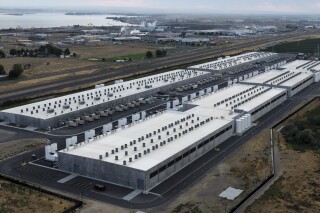
HARRISBURG, Pa. — Electric bills are climbing for millions of Americans, and while numerous factors contribute to these increases, compelling new evidence suggests that the burgeoning power demands of data centers are playing a significant, and often disproportionate, role. These vast server farms, operated by tech giants like Microsoft, Google, Amazon, and Meta, can consume more electricity than entire cities, such as Pittsburgh, Cleveland, or New Orleans, dwarfing the energy needs of traditional industrial facilities.
The unprecedented demand from these facilities is prompting a rapid expansion of power plants and transmission lines, a build-out costing billions of dollars. Historically, the expenses for such infrastructure were distributed proportionally among various classes of electricity consumers. However, experts argue this traditional model is breaking down under the weight of AI-driven data center growth.
“A lot of this infrastructure, billions of dollars of it, is being built just for a few customers and a few facilities and these happen to be the wealthiest companies in the world,” states Ari Peskoe, who directs the Electricity Law Initiative at Harvard University. He adds that addressing this imbalance is a “can of worms” that could pit different ratepayer groups against each other.
Mounting Evidence and Financial Impact
Recent reports underscore the scale of the problem. Data and analytics firm Wood Mackenzie, in a study analyzing 16 states, found that 20 proposed or existing specialized rates for data centers are often insufficient to cover the cost of constructing a new natural gas power plant. This suggests that without higher, more tailored rates, residential, commercial, and industrial ratepayers are effectively subsidizing the enormous power consumption of these tech hubs.
Further compounding concerns, Monitoring Analytics, the independent market watchdog for the mid-Atlantic grid, released research in June indicating that a staggering 70%—or $9.3 billion—of last year’s increased electricity costs in that region were attributable to data center demand. This alarming figure paints a clear picture of a “massive wealth transfer” from average citizens to some of the world’s most profitable corporations, as described by Monitoring Analytics.
States Begin to Push Back
Amid a “massive outcry” from consumers, as characterized by Charlotte Shuff of the Oregon Citizens’ Utility Board, more than a dozen states are now taking action. Their strategies vary, but generally involve pressuring major power grid operators, studying data center impacts on bills, or compelling data center owners to bear a larger share of local transmission costs.
Last year, a coalition of five governors, led by Pennsylvania’s Josh Shapiro, pushed back against PJM Interconnection, the mid-Atlantic grid operator, after power prices spiked nearly sevenfold. They warned that customers were “paying billions more than is necessary.” While PJM has yet to propose specific solutions, Monitoring Analytics is advocating for a requirement that data centers procure their own power, thereby avoiding a cross-subsidy from other ratepayers.
In Oregon, a known data center hot spot, lawmakers passed legislation in June mandating state utility regulators to develop new, presumably higher, power rates for data centers. This comes as electric bills in the state have risen by 50% over the past four years, leading to a record number of disconnections. Similarly, New Jersey‘s governor signed legislation last month commissioning state utility regulators to study “unreasonable rate increases” linked to data centers and to develop a specialized rate structure.
Other states, including Texas and Utah, are actively seeking to prevent future supply-and-demand crises that could leave ratepayers vulnerable to blackouts or inflated costs.
Challenges and Conflicting Incentives
Despite these efforts, some officials downplay the role of data centers. Tricia Pridemore, president of the National Association of Regulatory Utility Commissioners, points to broader issues like a tightened electricity supply and the increasing costs of replacing aging infrastructure and hardening grids against extreme weather. The Data Center Coalition maintains its members are committed to paying their “fair share.”
However, pinning down the precise impact remains a challenge due to a lack of transparency. In Indiana, where utility regulators approved a settlement involving Amazon, Google, and Microsoft regarding data center payments, consumer advocate Kerwin Olsen noted that state law does not require large power users to publicly disclose their electricity usage, making it difficult to verify if they are truly paying their fair share of transmission costs.
Adding to the complexity, a March report from Harvard University’s Environmental and Energy Law Program highlighted that both utilities and states have inherent incentives to attract large customers like data centers. Utilities, seeking rate approval from regulators, may offer “special deals” to these favored customers, effectively shifting those discounted costs onto regular ratepayers, often shielded by state laws.
In Pennsylvania, an emerging data center hub, the state utility commission is actively drafting a model rate structure aimed at ensuring data center developers bear the true costs of infrastructure upgrades. “We’re talking about real transmission upgrades, potentially hundreds of millions of dollars,” said commission chairman Stephen DeFrank. “And that’s what you don’t want the ratepayer to get stuck paying for.”
The debate continues as states balance economic development with the financial well-being of their citizens, all while the demand for computational power, particularly for artificial intelligence, shows no signs of slowing. The question of who truly pays for the future of Big Tech’s energy needs remains a central, and costly, dilemma.